Showing posts with label Guns in America. Show all posts

Wednesday, August 07, 2019

Ban Military-Style Assault Weapons!

Last weekend saw two mass shootings, one in El Paso, Texas, and one in Dayton, Ohio. The one in El Paso was done with an AK-47 semi-automatic assault rifle:

AK-47 assault rifle

The AK-47 is a military-style weapon. Many of us have erroneously assumed that private ownership of AK-47s and similar semi-automatic, military-style weapons is protected by the Second Amendment of the U.S. Constitution — but it's not! According to Barry Mendelsohn's letter in today's Washington Post (scroll down to find it):

In the written 5-to-4 District of Columbia v. Heller Supreme Court decision, which dramatically expanded the Second Amendment rights of individuals to possess guns outside of militias, Supreme Court Justice Antonin Scalia explicitly excluded military-style weapons from that right.

According to this article about the Heller decision:

The Supreme Court stated, however, that the Second Amendment should not be understood as conferring a “right to keep and carry any weapon whatsoever in any manner whatsoever and for whatever purpose.” The Court provided examples of laws it considered “presumptively lawful,” including those which:

  • Prohibit firearm possession by felons and the mentally ill;
  • Forbid firearm possession in sensitive places such as schools and government buildings; and
  • Impose conditions on the commercial sale of firearms.

The Court noted that this list is not exhaustive, and concluded that the Second Amendment is also consistent with laws banning “dangerous and unusual weapons” not in common use at the time, such as M-16 rifles and other firearms that are most useful in military service.

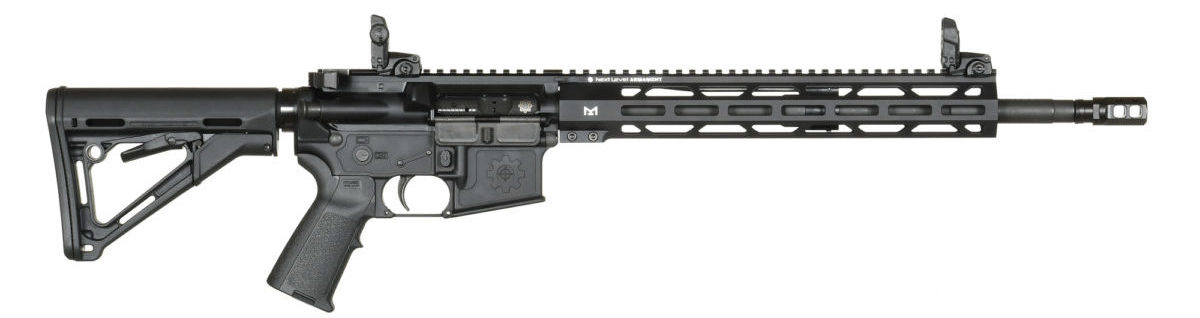
The AK-47 qualifies as a type of weapon that is "most useful in military service." So does the similar AR-15 assault rifle:

AR-15 assault rifle

Therefore, banning the AK-47 and the AR-15 would not violate Heller. Banning weapons like these would prevent untold numbers of mass shootings in America. So let's ban all privately owned military-style assault weapons now!


Sunday, November 12, 2017

"Do Gun Rights Make Us Freer?"

Elizabeth Bruenig
The title of this blog post echoes the headline of a piece by Elizabeth Bruenig in today's Sunday Washington Post. The title of the piece as rendered online is "Do we really understand the Second Amendment anymore?" In it, Bruenig ties today's debate over gun rights and the Second Amendment to various notions of "the good" which Western philosophers have debated.

Do gun rights make us freer? The answer to that question, writes Bruenig, depends on whether the freedom to own guns advances that which, as a separate category of thought from liberty itself, can be deemed "the good."

Until the 17th century, Christian philosophers such as St. Augustine and Thomas Aquinas held that "service to the good" trumped liberty as the prime desideratum of humankind. Beginning in the 17th century, though, "the good" as a rationale for liberty gave way to freedom itself as the single desideratum of any pluralistic, democratic society such as our own.

Hence Bruenig's worry that "freedom unchained from the good" is actually making us less free today, as we hunker down and try to protect our families from mass murder at the hands of crazed gun wielders.

While I think Bruenig's view is well taken, I think she misses something. Her vantage point is indeed quite a valid Western one; still, if we shift focus to the spiritual philosophies of the East, we are likely to discover that "the good" is not some external reality above and beyond the nature of our human souls. It is instead something that comes from within our own minds and hearts. In a Buddhist or even a quasi-Buddhist understanding, that which makes us "good" is:


  • Being compassionate to others
  • Being self-compassionate
  • Being spiritually "on center"


Most of us would agree with the importance of being compassionate to others. Being self-compassionate, though: what does that mean? I am learning about the theory of self-compassion from Kristen Neff's excellent book Self-Compassion: The Proven Power of Being Kind to Yourself. Neff writes:

From the Buddhist point of view, you have to care about yourself before you can really care about other people. If you are continually judging and criticizing yourself while trying to be kind to others, you are drawing artificial boundaries and distinctions that only lead to feelings of separation and isolation. This is the opposite of oneness, interconnection, and universal love — the ultimate goal of most spiritual paths, no matter which tradition.

"You have to care about yourself before you can really care about other people": that seems to invite each of us to be maximally self-indulgent, and not necessarily compassionate toward others, right? Actually, says Neff, wrong. She tells us that she herself once worried about just such a result:

"If I’m too self-compassionate, won’t I just be lazy and selfish?" It took me a while to get my head around [the idea of self-compassion]. But I slowly came to realize that self-criticism — despite being socially sanctioned — was not at all helpful, and in fact only made things worse. I wasn’t making myself a better person by beating myself up all the time. Instead, I was causing myself to feel inadequate and insecure, then taking out my frustration on the people closest to me.

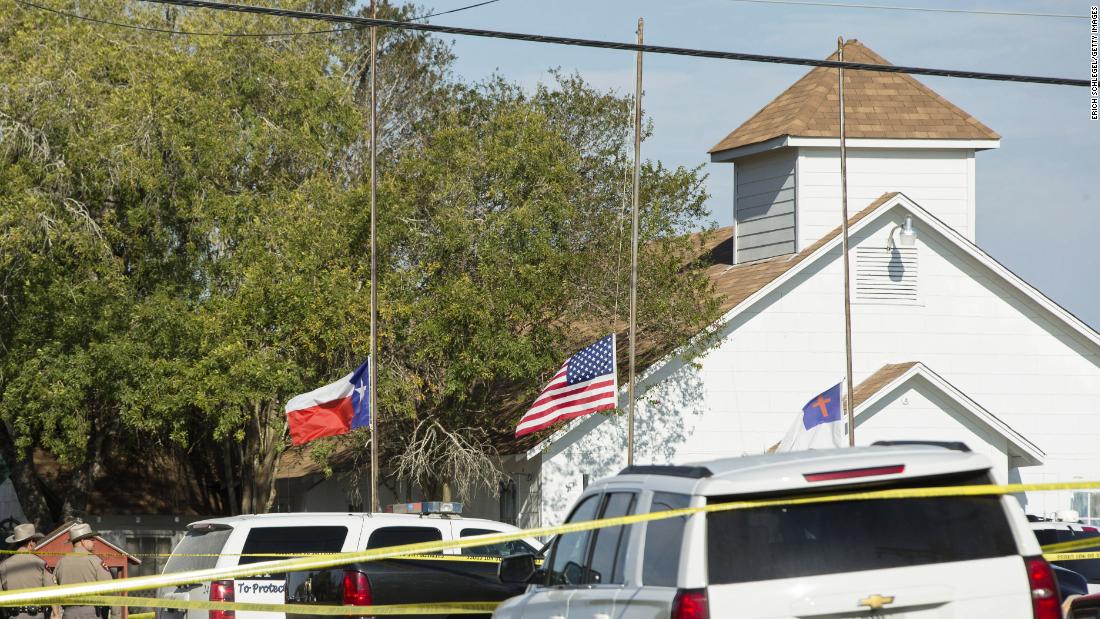
In the recent mass shooting at Sutherland Springs, Texas, the shooter (Devin Patrick Kelley) was taking out his frustration over a marital breakup on a church congregation of which his estranged wife and her extended family were members.

First Baptist Church at
Sutherland Springs, Texas

Did Kelley tend to "beat himself up" over his own inadequacies? We can never really be sure about that, but we can reasonably guess that Kelley's personal self-esteem had been wounded by the breakup of his marriage, that he was feeling separated and isolated from the rest of humanity, and that he was driven to his heinous deed by his overwhelming self-righteous anger. His ego and wounded self-esteem were in control of his actions. And Neff writes that "the relentless pursuit of self-esteem" is what drives our souls off-center:

Although thousands of [scholarly] articles [have] been written on the importance of self-esteem, researchers [are] now starting to point out all the traps that people can fall into when they try to get and keep a sense of high self-esteem: narcissism, self-absorption, self-righteous anger, prejudice, discrimination, and so on. ... self-compassion [is] the perfect alternative to the relentless pursuit of self-esteem.

Neff accordingly writes of the crucial importance of "staying centered." Her book is a guide to doing just that. Although it is not a religious book, it is in fact a spiritual one.

Hence my "yes, but" reaction to Bruenig's piece. I feel that our society and culture tend to push us away from our proper spiritual center. I am just realizing that I am quite off center, myself. Fortunately, my own off-centeredness doesn't incline me to gun violence. Yet I also realize that there are inevitably going to be those of us who cannot say the same, and who will pack heat as a way of coping with their antisocial feelings. One of these sick people was Devin Patrick Kelley.

Put in terms of "the good," what I am saying is that it is not really sane to consider the liberty to own guns as an absolute right, the philosophical search for "the good" notwithstanding, unless we also consider the desperate need for all of us — not to mention our culture as a whole — to find ways of being much more spiritually "on center" than we currently seem to be today.

Let us try self-compassion, then, and see whether it really leads us to true compassion for others and to being more "on center" spiritually.


Saturday, March 23, 2013

Assault weapons ban dead in Congress :-(

Senate Majority Leader
Harry Reid
On March 19, 2013, Majority Leader Harry M. Reid (D-Nev.) announced that he will not bring a bill banning military-style assault weapons to the floor of the U.S. Senate for an up-or-down vote.

Sales of semiautomatic rifles of the AR-15 type, such as the Bushmaster .223-caliber recently used by Adam Lanza in Newtown, CT, to kill 20 schoolchildren and 6 adults at Sandy Hook Elementary School, ought to be banned by law, but lobbying pushback by the National Rifle Association in the aftermath of Newtown has nixed the deal. Sen. Dianne Feinstein (D-Calif.) introduced legislation reinstating the 1994 ban which lapsed in 2004, and it even managed to get out of committee. The Senate Judiciary Committee, headed by Sen. Patrick Leahy (D-Vt.), on March 14 approved Feinstein's bill. But Reid, needing 60 votes to break a Republican filibuster on the Senate floor, said he could get fewer than 40 votes for it.

"Lacking the numbers to overcome a likely Republican filibuster," says an editorial by The Washington Post, "[Reid] was reluctant to force a floor vote that could imperil the reelection prospects of several of his fellow Democrats. Lacking the numbers to overcome a likely Republican filibuster, he was reluctant to force a floor vote that could imperil the reelection prospects of several of his fellow Democrats."

Not exactly a profile in courage, I'd say, Sen. Reid.

So it's dead, for now, at the federal level. Unless someone manages to amend the bill that actually has reached the Senate floor to put the assault weapons ban back in. Fat chance of that happening, though.

How sad.

Maryland Gov.
Martin O'Malley
Now it's up to individual states to do the right thing. My state, Maryland, has a forward-looking governor, Martin O'Malley, a Democrat, who has introduced tough gun control legislation in the General Assembly. It would ban sales of AR-15-type weapons ... except that the Judiciary Committee of the House of Delegates is seriously considering watering it down.

That's a bad idea, and a recent editorial from The Baltimore Sun tells why. I think everyone should read it and consider it. It says that

... such weapons show up again and again in mass shootings. According to Mother Jones magazine, which has cataloged every mass shooting in the United States since 1982, about a quarter of all mass shooters had assault weapons, and more than half had assault weapons, high capacity magazines, or both ...

What makes these weapons so deadly? They are civilian copies of military weapons designed with features that make them more lethal.

The AR-15, for example, has a pistol grip, which helps a shooter pull the trigger more quickly and to better control the recoil, allowing him to fire more rapidly with more accuracy. It also enables shooting from the hip and spraying fire from side to side — something that would be deadly when firing into a crowd but useless in a self-defense situation.

When fired rapidly, a gun's barrel can quickly become too hot to handle. A barrel shroud, common on many of the models listed in the governor's bill, enables a shooter to hold the gun with a second hand without burning himself. A forward grip, which is somewhat less common, achieves the same purpose.

A folding, detachable or telescoping stock helps make an assault weapon easier to carry and conceal. That is frequently a factor in mass shooting situations.

A threaded barrel allows the easy attachment of a silencer or a flash suppressor. The latter prevents the shooter from being temporarily blinded by the muzzle flash, particularly in low-light conditions, enabling him to fire more quickly and accurately. It also helps conceal the position of the shooter ...


Yes, the same rifle models are often used legitimately for target shooting and hunting. Yes, some semiautomatic handguns that would not be banned can be just a lethal as the semiautomatic rifles that would. And yes, there are huge numbers of these rifles already out there that will still pose a threat: guns that many potential miscreants will have easy access to if they, as Adam Lanza's slain mother would have done, can but pass a background check.

But banning the sale of new military-style assault weapons, even if that has to be done at the state level only, will save innocent lives. And that's what counts most here.


Wednesday, January 02, 2013

Ban semiautomatic assault weapons?

I say yes! Semiautomatic rifles, aka "assault weapons," ought to be banned. The Bushmaster .223-caliber rifle recently used by Adam Lanza in Newtown, CT, to kill 20 schoolchildren and 6 adults at Sandy Hook Elementary School (not to mention Lanza's mother and Lanza himself) ought to be ancient history.

But wait! Don't Americans have a Second Amendment right to keep and bear whatever arms they desire?

Bushmaster .223-Cal. Rifle
with "Banana Clip"
Ammo Magazine

"A well regulated Militia, being necessary to the security of a free State, the right of the people to keep and bear Arms, shall not be infringed." So reads the Second Amendment to the U.S. Constitution, and the National Rifle Association believes it covers the right to possess AR-15s and similar semiautomatic rifles, such as AK-47s, not to mention semiautomatic handguns that likewise can fire numerous rounds of ammunition in very short order. (The Bushmaster .223 is one of several versions of the AR-15 being sold.)

Unlike fully automatic firearms that keep firing bullets as long as the trigger is pulled back, semiautomatics require a separate trigger pull for each round fired.

Bolt-Action Rifle
(Sliding bolt is on the
right, near the trigger)

Older rifle and shotgun designs are not semiautomatic. In addition to requiring one trigger pull per round, they require that each new round be loaded into the firing chamber individually by manually operating a bolt or lever near the trigger or pumping a handle beneath the barrel.

Fully automatic firearms have been banned since the 1930s, when gangsters and mobsters used Tommy guns to mow one another down. Semiautomatic pistols have been in common use for many decades, and semiautomatic "long guns" — basically rifles, but also shotguns — have become the most popular firearms purchased in America. Yet new purchases of long semiautomatics were outlawed, albeit temporarily, between 1994 and 2004, after which the assault weapons ban was allowed to perish by Congress. In the wake of Newtown, Senator Dianne Feinstein (D-Calif.) wants now to reinstate that ban.

Should that happen? I say yes, but ...

... will banning these weapons prospectively rather than retrospectively — that is, not allowing new semiautomatic rifles to be made, bought, or owned while "grandfathering in" existing ones — do any good?

And would such a ban pass constitutional muster?

I have looked in vain for statistics on how many semiautomatic rifles are currently owned in the U.S., but given that various versions of semiautomatic rifle are being called our most popular firearms today, sales-wise, there have to be millions in existence already. No one knows exactly how many pistols, rifles, and shotguns Americans own, taken all together, but I have seen estimates of 290 million, or nearly one per person. If 1/3 of those are rifles, and if 3/4 of the rifles are semiautomatic, then there must be some 72.5 million semiautomatic rifles abroad in the land. And that's likely an underestimate.

I can't see the good in doing no more than turning off the tap now on new semiautomatic rifles, if that many already exist and won't happily be relegated to the trash heap by their owners.

So I think we need to do something about those long-format semiautomatic weapons presently possessed and dearly cherished by gun owners throughout the land. My remedy? Tax the hell out of them, while also setting up a federal buyback fund (admittedly pricey) to take up weapons that owners don't want to pay the tax on.

By "taxes" I mean federal fees — steep ones — to license every gun owner and to register every firearm in the land that has not been disabled and is in good working order. Just as we pay a fee to renew our driver's licenses and auto registrations, gun owners should have to shell out money on an annual basis for exercising their right to keep and bear arms.

That means there needs to be a registry at the federal level for gun owners and for the guns they own.

So there ought to be a ban on newly minted semiautomatic rifles and a tax on those that exist at present, augmented by a buyback of weapons that owners don't want to be taxed on.

Would all this pass constitutional muster? I don't think anyone can say for sure.

Justice Antonin Scalia

In its 2008 decision in District of Columbia v. Heller, the U.S. Supreme Court found that the Second Amendment supports an individual's right to possess a firearm for purposes of self-defense. Justice Antonin Scalia wrote the decision for a 5-4 conservative majority.

The idea that the right to bear arms belongs to an individual and not just a group, such as a state militia, was established by the Heller decision for the first time in U.S. constitutional law. Gun-control proponents such as myself took gas at that, but Scalia and the majority on the court said, seemingly once and for all, that self-defense using firearms in the home is a constitutionally protected part of the fabric of American life.

The Heller decision added to and clarified the court's position in United States v. Miller in 1939:

Like most rights, the Second Amendment right is not unlimited. It is not a right to keep and carry any weapon whatsoever in any manner whatsoever and for whatever purpose: For example, concealed weapons prohibitions have been upheld under the Amendment or state analogues. The Court’s opinion should not be taken to cast doubt on longstanding prohibitions on the possession of firearms by felons and the mentally ill, or laws forbidding the carrying of firearms in sensitive places such as schools and government buildings, or laws imposing conditions and qualifications on the commercial sale of arms. Miller’s holding that the sorts of weapons protected are those “in common use at the time” finds support in the historical tradition of prohibiting the carrying of dangerous and unusual weapons.

It seems likely that, in view of Heller, a ban on semiautomatic rifles would pass constitutional muster only if:

  1. These rifles are properly deemed "dangerous" weapons, and/or
  2. These rifles are properly deemed "unusual" weapons, and/or
  3. These rifles are not clearly used for "self-defense."

When I say "and/or" above, I mean that it's not clear how the Court might conjoin these three criteria in reaching a decision on a newly instituted assault weapons ban.

Heller established the right of individuals to own firearms for self-defense in the home and left open the extent to which that right applies to the use of weapons for self-defense outside the home. I think it would be hard to claim that weapons such as the Bushmaster .223, sold as "sporting" rifles that are intended for hunting and target shooting, are self-defense weapons in either context ... but I am not going to bet the farm on it.

Dangerous? Unusual? We know from the wording of the decision that the Heller majority upheld, in broad brush strokes, historical bans on weapons that qualify as both dangerous and unusual. What about weapons that are one but not the other? The numbers of AR-15s in American hands today clearly make them, to say the least, not uncommon. How "dangerous" must they be before that characteristic overrides the fact that so many of them presently exist?

30-Round Magazine
for an AR-15 Rifle

Moves are afoot not only to ban such wea­pons, but also the high-capa­city ammu­nition maga­zines that hold more than 10 rounds. If such a maga­zine ban were en­acted, it would mani­festly reduce the danger posed by semi­automatic rifles. It there­fore might ulti­mately convince the Court that the as­sault weapons ban per se does not meet the Miller/Heller test.

If the Court struck down a new assault weapons ban, we would even more than before need (I think) to place a steep tax on guns and gun ownership. As I say, that would require that we license owners and register guns. And those are moves that have never before been tested constitutionally. I have no idea whether they would pass muster, but I do know that their first hurdle would not be the courts. It would be Congress and the political will of the nation.