Wednesday, December 07, 2016

The Rich Get Richer ...

"A Bigger Economic Pie, but a Smaller Slice for Half of the U.S.," says an important article in today's New York Times. Patricia Cohen's article cites a just-published study by economists Thomas Piketty, Emmanuel Saez and Gabriel Zucman that shows U.S. income inequality has risen apace since 1980:


The incomes of those in the bottom half of the economy have basically flatlined. Those of the top 1% concurrently ballooned:


Why this has happened is a contentious subject. Sure, wages for wage-earners have stagnated, jobs have disappeared. The top 1% get their incomes mostly from investment income, and the economy has grown in such a huge way, overall, as to generate a lot of that.

The economic growth has reflected successful entrepreneurship in Silicon valley and elsewhere. Entrepreneurship is the driving force behind investment income.

In an earlier era, the growth would have been shared by those in the lower half. That hasn't been happening for quite a long time.

Why not? Cohen writes:

N. Gregory Mankiw, an economist at Harvard who is familiar with the new research ... argues that large disparities in income more often than not accurately reflect widely varying economic contributions.

The entrepreneurs and their investors, in other words, now contribute a lot more to economic growth than do the ordinary folks in the bottom 50 percent. "That is a switch from the 1980s and 1990s," writes Cohen, "when gains in income were primarily generated by working."

In short, working at ordinary jobs isn't paying off as much as it used to.

The new study, unlike earlier ones about income inequality, takes into account the value of public benefits like Medicaid and the Affordable Care Act ("Obamacare"). People in the lower half of the economy (see here) pay tiny amounts of income tax ... if any at all. So various governmental programs combine with the progressiveness of income taxes to redistribute income downward. Still, the bottom half have been flatlining.

This is one of the defining issues of our time.


* * *

My question is — and it's an irreverent one for a liberal — how can this be happening, given the capaciousness of the safety net?

The bottom graph above suggests the flatlining began as early as 1960, before the arrival of the Great Society of President Lyndon Johnson. True, the share taken by the top 1% also remained about the same from 1960 to 1980. Only after the Reagan Revolution which began in 1980 did the take of the top percentile begin to soar. So one might contend that massive income inequality began with Reagan.

But copious income redistribution downward began with the Kennedy-Johnson era. Why hasn't it offset the immense gains at the top better than it has?

The redistributive government policies of the past 50-plus years have kept the ordinary folks below the midline from losing ground in terms of their real average pre-tax income. But neither have they gained. Is the widening disparity entirely explained, then, by trends that have boosted the fortunes of the wealthiest among us?

Clearly, there have been such trends, and we liberals are right to decry them. But are they the whole of the story?

Conservatives say no, that the various forms of government aid and "welfare" make for a disincentive to work. Cohen:

[Republican House Speaker Paul] Ryan argues that aid to the poor is ultimately counterproductive because it undermines the incentive to work.

One reads the same thought in the words of J.D. Vance in the bestselling book Hillbilly Elegy. He writes (italics mine):

Mamaw [Vance's grandmother, who mainly raised him] listened intently to my experiences at Dillman’s [grocery store]. We began to view much of our fellow working class with mistrust. Most of us were struggling to get by, but we made do, worked hard, and hoped for a better life. But a large minority was content to live off the dole. Every two weeks, I’d get a small paycheck and notice the line where federal and state income taxes were deducted from my wages. At least as often, our drug-addict neighbor would buy T-bone steaks, which I was too poor to buy for myself but was forced by Uncle Sam to buy for someone else. This was my mind-set when I was seventeen, and though I’m far less angry today than I was then, it was my first indication that the policies of Mamaw’s “party of the working man”— the Democrats— weren’t all they were cracked up to be.

Vance is writing about his life and upbringing as a "hillbilly" transplant from the coal-mining area of Kentucky to a city in Ohio where his family had moved to get work. He tells of much dysfunctional behavior, but also of the less frequently found opposite. Many of the so-called "hillbillies" of whose community he was part were decent and hardworking, while some were "content to live off the dole."

So to what extent is it true that "the dole" actually hurts those in the bottom half of the economy? What would be the result if we phased out most income-redistribution policies? Would things get better rather than worse?


Thursday, December 01, 2016

Up Next: Civil War Among Us Democrats?

Liberal Democratic columnist E.J. Dionne Jr. writes in today's Washington Post:

A panicky abandonment of their core commitments is the last thing Democrats need ... An effort to reach out to the white working class cannot be seen as a strategy for abandoning people of color, Muslims or immigrants, or for stepping back from commitments to gender equality, or for withdrawing support for long-excluded groups.

On the other hand, he asks:

... whether it’s time for “the end of identity liberalism."

And says:
... liberalism needs to root its devotion to [the principle of] inclusion in larger principles and should not allow itself to be cast (or parodied) as simply about the summing up of group claims ... Democrats, who gave us the New Deal and empowered the labor movement, should be alarmed by the flight of the white working class.

Dionne quotes New York Times opinion writer Mark Lilla:

“If you are going to mention groups in America, you had better mention all of them. If you don’t, those left out will notice and feel excluded.”

At stake here for us Democrats is our self-definition going forward — nothing less. It's not going to be easy to re-establish our onetime rapport with the white working class while not seeming to abandon people of color, immigrants, women, gays, and so forth.

Not only would many in those long-excluded groups be offended, many Democrats who have made group rights Job Number One can be expected to push back quite vigorously.

*****

I myself am torn. I feel a kinship with the white working class, though I am not of that class.They have been left out of the economic and political equation. As a simple matter of justice, they ought to have their needs attended to.

Trump has played to their needs. Hillary Clinton did not. I don't think she tried hard enough to show the white working class why Trump's agenda won't really help them economically. She didn't find a way to bridge between traditional Democratic identity politics and an economic approach that would ease the white working class's wounds. She failed to adequately address their "identity anger."

Yet it's extremely hard to find either a rhetorical or a policy approach that can put the Democrats back on top. It may be like putting Humpty Dumpty together again ...

New York Times columnist David Brooks wrote recently ("The View From Trump Tower") that we need a third party:

The job for the rest of us is to rebind the fabric of society, community by community, and to construct a political movement for the post-Trump era. I suspect the coming political movements will be identified on two axes: open and closed and individual and social. 
Those who believe in open trade, relatively open immigration, an active foreign policy and racial integration. Those who believe in closed believe in protective trade, closed borders, a withdrawn foreign policy and ethnic separatism. 
Those who favor individual believe in individual initiative, designing programs to incentivize enterprise and removing regulatory barriers. Those who believe in social believe that social mobility happens within rich communities — that people can undertake daring adventures when they have a secure social and emotional base. 
Donald Trump is probably going to make the G.O.P. the party of individual/closed. He’s going to start with the traditional Republican agenda of getting government out of the way, and he’s going to add walls, protectionism and xenophobia. That will leave people isolated in the face of the challenges of the information age economy, and it will close off the dynamism and diversity that always marked this crossroads of the nation. 
The Democrats are probably going to be the party of social/closed. The coming Sanders-Warren party will advocate proposals that help communities with early education programs and the like, but that party will close off trade, withdraw from the world, close off integration with hyper-race-conscious categories and close off debate with political correctness. 
Which is why I’ve been thinking we need a third party that is social/open.

I believe in "social." And in "open" — as it applies to relations among people and to relations (including trade relations) among nations. When Brooks says, "... close off integration with hyper-race-conscious categories and close off debate with political correctness," I'm with him. The "hyper-race-conscious categories" he refers to are "identity politics" by another name. Political correctness and limiting debate on university campuses offend my 1960s ideals of what college is for in the first place.

So is a third party a good idea? I'm not sure. It might backfire by helping Trump ...


Monday, November 28, 2016

Two More Views of the Democrats' Dilemma

In today's Washington Post columnist Paul Kane writes that "Senate Democrats lost by doing nothing to separate themselves from Hillary Clinton." In states where she lost to Donald Trump, Democrats running for Senate seats tended to lost by comparable margins. Where she won, they won. It's no wonder. The Senate candidates' campaign strategy had been to hitch themselves to Clinton's coattails.

Kane adds:

“The problem is they [Democratic candidates] talk to people in segments,” Rep. Tim Ryan (D-Ohio), who is challenging House Minority Leader Nancy Pelosi (D-Calif.), told The Washington Post’s Daily 202 last weekend. “Here’s our LGBT community. Here’s our labor guy. That doesn’t work. You stop becoming a national party. That’s what happened.”

Notably, when Hillary Clinton uttered her unfortunate "basket of deplorables" comment about half of Donald Trump's constituents, she was speaking before an LGBT audience.

So is the answer for Democrats to stop "talking to people in segments" — relying on "identity politics"?

*****

Also in today's Post is a column by economics expert Robert J. Samuelson, "Jobless by choice — or pain?" About 1 in 8 men 25 to 54 years of age — in their prime working years — have no job, says Samuelson, "and, unlike the officially unemployed, aren't looking for one." These men are classed as "dropouts" from the labor force. Back in the mid-1960s, the dropout rate was just 1 in 29. The rate of dropping out began rising as far back as then.

Samuelson lists several possible reasons why there are so many dropouts now. Experts tend to divide about this, with some calling the dropouts "shirkers" and others calling them "victims."


*****

Whatever the reasons for the high rate of dropping out, it seems clear that here we have yet another segment of the populace who — mainly in the person of Donald Trump — are looking for political leverage. Identity politics boosted the GOP more than it helped the Democrats this year. That was unexpected. But is the Democrats' answer, if they want to restore their status as a national party, to cater to the jobless-and-no-longer-looking? If so, given that so many of this segment are white working-class men, how would they go about doing that without alienating other segments of the erstwhile "Obama coalition"?

It's all well and good to say "stop talking to people in segments," but how?


Thursday, November 24, 2016

The Democrats' Dilemma

Columnist Charles Lane writes incisively in the Thanksgiving 2016 issue of The Washington Post that we Democrats face a dilemma if we want to make any appeal to white working-class voters. As I've written before, we lost the election to Donald Trump because of "identity politics," defined Mr. Lane writes, as "messaging aimed not at voters broadly, but at Latinos, women, African Americans and the LGBT community as groups."

Voters in the white working-class who voted heavily for Trump did so not so much because of economic woes. Rather, they hanker after the cultural homogeneity they feel slipping away from them:

In rural areas, or small towns, where everyone speaks the same language, or practices the same customs, life can be simpler, more predictable, less frictional. Economists call these “compositional amenities,” and many people value them above the benefits of diversity — even above economic gains. ... Trump just got himself elected president with overwhelming support from non-college-educated whites in smaller cities and rural counties by telling them he would build a wall on the Mexican border, impose “extreme vetting” on would-be immigrants and deport large numbers of the undocumented.

That's a big problem for Democrats:

The Democrats’ dilemma, then, is this: They can make only limited political gains with an economic pitch to the white working class, unless they adjust on immigration and other issues of identity too, probably.
Yet this would require compromising on what the party defined as matters of basic justice and tolerance, and turn off voters from their racially and ethnically diverse “coalition of the ascendant.” 

Some Democrats warn that "conceding on identity politics would be a capitulation to 'white supremacy'," but not making any concessions might doom the party in future elections. What is the right answer here?


Sunday, November 20, 2016

Recalibrating Liberalism?

Author Mark Lilla (The Shipwrecked Mind: On Political Reaction) writes in an opinion piece for The New York Times, "The End of Identity Liberalism":

... the fixation on diversity in our schools and in the press has produced a generation of liberals and progressives narcissistically unaware of conditions outside their self-defined groups, and indifferent to the task of reaching out to Americans in every walk of life.

"Diversity": it's a mantra of the political left today. Synonyms: "multiculturalism," "political correctness," "identity liberalism."

Lilla argues that staunchly honoring the mantra of identity diversity put paid to Hillary Clinton's electoral chances this year, letting Donald Trump win. After all, Clinton's tactless "basket of deplorables" utterance came while she was speaking before an audience of LGBT partisans.

"Political incorrectness" of any variety serves today as a sure rallying point for liberal anger. During the 1960s the ur-source for political anger was the Black Power movement. That movement's tendencies toward incendiary protest primed the then-ongoing anti-Vietnam war protests to incite police violence in Chicago in 1968. Women's liberationists who supposedly (but not actually) began burning their bras in 1969 were expressing anger akin to that of blacks about their oppression. The gay rights movement, for its part, had its origins in the Stonewall riots of that same year.

The unified response to all these developments was that "identity anger" in general became embedded in liberal politics. Fast forward to today, and we have liberals dutifully echoing identity anger at the oppression that keeps transgender people from using the bathroom of their choice.

All those versions of identity liberalism further alienated two other groups of Americans who have long felt ignored and oppressed, says Lilla: "the white working class and those with strong religious convictions. Fully two-thirds of white voters without college degrees voted for Donald Trump, as did over 80 percent of white evangelicals."

What are liberals to do in response to white-working-class anger? Jettison their own embedded identity anger? Mr. Lilla recommends:

We need a post-identity liberalism, and it should draw from the past successes of pre-identity liberalism. Such a liberalism would concentrate on widening its base by appealing to Americans as Americans and emphasizing the issues that affect a vast majority of them. It would speak to the nation as a nation of citizens who are in this together and must help one another. As for narrower issues that are highly charged symbolically and can drive potential allies away, especially those touching on sexuality and religion, such a liberalism would work quietly, sensitively and with a proper sense of scale. (To paraphrase Bernie Sanders, America is sick and tired of hearing about liberals’ damn bathrooms.)

But what exactly does "work quietly, sensitively and with a proper sense of scale" mean? And, importantly, how would it affect the liberal ur-commitment to racial equality?

Thomas B. Edsall writes in "The Not-So-Silent White Majority" in The New York Times that it has long been the case that

“Blacks constitute the explanation [for white working-class voters] of [their] vulnerability and for almost everything that has gone wrong in their lives.”

Tapping in to this white-working-class version of identity politics goes back at least as far as Richard Nixon's successful appeal to the "Silent Majority" in the 1968 presidential election. The idea of white victimhood has since had its electoral ups and downs, but it is what propelled Donald Trump to victory this year.

Slavery, it is said, was our country's "original sin." Its spawn have included the Ku Klux Klan, Jim Crow laws, and racial discrimination in general. If we liberals follow Mark Lilla's advice, do we have to soft-pedal our anti-racism commitment? And if we do that, what of the other matters of identity justice that so many of us liberals are committed to fostering? Do they have to go by the boards, too?

These are tough questions for tough times.


Wednesday, November 16, 2016

Anti-elitism in today's world

I'm basically an anti-elitist, which I guess makes me a populist.

Although I voted for Hillary Clinton in the general election, I voted for Bernie Sanders in the primary. I recognized early on that Hillary was plugged firmly into a network of elite Democratic leaders and donors, and that was one of the reasons I supported Bernie. I nonetheless think Hillary's honest intentions as a candidate were to use the power of her intended office, the presidency, to help those who lack power. But I feel there's something adverse to that intention in the very notion of powerful elites.

This attitude of mine is upheld in a book I'm reading, Nick Spencer's The Evolution of the West: How Christianity Has Shaped Our Values. Mr. Spencer's book has it that Christian core values have underpinned all of Western thought and belief following the decline of the Roman Empire. Though I'm a Catholic Christian, it surprises me to learn that such values as ...

  • women’s rights
  • care for the poor
  • opposition to slavery
  • legal equality of all individuals,
  • an appeal to personal conscience rather than "trial by ordeal"
  • and even how liberating it was to women to insist the sexual renunciation of libertine practices rife in the Roman Empire
... all come directly from core Christian principles. (Never mind that the church hierarchy in medieval times typically observed those values in the breach.)

But the core value in interested in here is that of Christian opposition to the very notion of hierarchy:


[Saint] Paul’s message [was that] ‘the Christ reveals a God who is potentially present in every believer.’ Through an act of faith in the Christ, human agency, which is no longer simply a plaything of stars, gods or fate, can become a medium for God’s love. Such an understanding of reality deprived rationality of its aristocratic connotations. Thinking was no longer the privilege of the social elite and became associated not with status but with humility, itself a virtue entirely alien in the ancient world.


I take this to mean that our modern "aristocracy" — the power network that Hillary Clinton was plugged into — violates Christian core principles.

For many of Hillary's supporters who aren't necessarily in the country's power loop, this idea will nonetheless seem problematic. Here we had a choice between Trump, who despite his wealth came across as a populist, and Clinton, whose heart was in the right place despite her associations with Wall Street. Trump's rhetoric was racist, sexist, Islamophobic, and so on. His personal behavior was execrable. If Hillary had won, she would have used her power base to help those with little power. The choice was clear. Right?

Well, yes ... and no.

As I say, I voted for Hillary, but my heart wasn't hugely in it. I'm an anti-elitist to the core.

But I am great friends with Catholics who are stronger that I was for Hillary. My best friend is one of them. He voted for Hillary in the primary partly because (in my opinion, based on our long friendship) he is drawn to elite personages and their power networks. As a political pragmatist, he felt that Hillary could leverage her powerful connections into policies that would advantage the powerless. In fact, it must seem to a lot of people that such a pragmatic approach embodies our requisite Christian support for the poor.

In fact, that seems logical, no? But Christian teaching often turns ordinary logic on its head: the last will be first and the first shall be last.

And admittedly, my anti-elitism is more an aspect of my personal psychology than it is a grudging acquiescence in Christian teaching. My friend's personal psychology is the opposite of mine on this point, but we are both responding to the interior organization of our respective psyches.

As are, I assume, the voting habits of most people in our electorate. It is difficult for any of us, Christian or not, to go against our own deeply held attitudes and beliefs.


Anger in the body politic

I woke up on the wrong side of the bed this morning — an euphemism for feeling quick to anger.

My own anger on this day is more of the free-floating, non-political kind, but it occurs to me that there is a huge amount of political anger in the air as well.

In the political arena, we Democrats on the progressive left are currently expressing great anger at President-elect Donald Trump's appointment of Stephen K. Bannon as his chief White House strategist. Mr. Bannon is the executive chairman of Breitbart News. He once declared the site "the platform for the alt-right." The alt-right has been said to be associated with white supremacism, xenophobia, Islamophobia, misogyny, homophobia, and anti-Semitism.

Let's pretend for the moment that I am in that group of Donald Trump supporters that gravitate to the alt-right. I expect I would be motivated by anger at all the things that have made me feel marginalized and powerless. There are many such things, and many have nothing to do with people who do not look and act like me. Washington, New York, and the other big cities have lost sight of my needs, as the bigwigs who live there fly over my little towns and rural abodes on their way to yet another distant power luncheon. I don't feel I have economic security any more. Our universities are teaching our youngsters — the ones who are lucky enough to attend them — to, again, be insensitive to the beliefs and needs of folks like me. It all makes me angrier than I can remember being at any point in my life.

So, what about all those folks who don't act and look like me? The power elites coddle them, so I believe, while I get ignored. Accordingly, my anger spills over onto them.

OK, now I'll stop pretending I'm an alt-right enthusiast and go back to being me ...

Many of the commentators I read on the left are livid because Trump, whose rhetoric during the campaign was often hateful, appointed Bannon. Again, anger rears its ugly head in the political arena. And I have to wonder if many of those angry pundits on the left also have a storehouse of non-political anger built up in their system. My guess is they do.

Anger seems endemic to our society and culture today. At some point I think we have to admit that we've become addicted to anger. And a lot of that anger is free-floating and non-political.

My thought here is that political/free-floating anger in the society and culture are bound to spill over into racial hatred, xenophobia, Islamophobia, misogyny, homophobia, anti-Semitism, etc. So if we on the left want to end such bigotries, we need to figure out a strategy that can damp down America's anger.


Tuesday, November 15, 2016

An underlying reason why Trump won

Charles M. Blow of the New York Times has expressed beautifully what I think is the underlying reason why Donald Trump won:

"Shifting demographics contribute to the sharp political divisions seen in this year’s election"

http://www.nytimes.com/2016/11/14/opinion/trumps-rural-white-america.html

Sunday, November 13, 2016

What's the Future of the Democratic Party?

Hillary Clinton and the Democrats surprised the pollsters and pundits by losing Election '16 to Donald Trump and the Republicans. What do we Democrats do now?

Does the Democratic Party Have a Future? in The Atlantic pithily says:

There’s no obvious answer to how the [Democratic] party can reconcile its need for some working-class whites with the focus on social and racial justice that has become a Democratic priority, driven by the near unification of minorities under the party’s banner.

Parsing that: Hillary lost bigtime among working-class Americans, particularly white middle-aged voters who lack a college degree.

According to "2016 Election exit polls: How the vote has shifted" from The Washington Post:

  • 72 percent of white men with no college degree voted for Trump
  • 62 percent of white women with no college degree voted for Trump
The white working class is telling us by how they voted that they feel marginalized. But the Democrats' post-1960s focus on justice not only for African Americans but also for many other groups who have traditionally been marginalized — other people of color, women, the LGBTQ community, etc. — alienates this one particular group of once-powerful but now-marginalized voters. How does the Democratic Party reinvent itself so as to attract those white working-class voters while not seeming to cast aside all of their longtime constituency groups?

New York Times op-ed columnist David Brooks writes in "The View From Trump Tower" that:
  • Donald Trump is probably going to make the G.O.P. the party of individual/closed [ideology]
  • The Democrats are probably going to be the party of social/closed [ideology]
He favors an ideology that is "social/open." These terms mean:

  • Individual — "the traditional Republican agenda of getting government out of the way" so that individuals, acting on their own without government help or interference, can succeed (or fail) in life; i.e., no more social "safety net"
  • Social — "proposals that help communities with early education programs and the like" are insisted upon in a "social" agenda; i.e., the "safety net" will remain in place and in some cases be expanded
  • Closed — "walls, protectionism and xenophobia"; i.e., leaving "people isolated in the face of the challenges of the information age economy, and [closing off] ... dynamism and diversity"; dialogue among opposing political ideologies would be next to impossible
  • Open —  a "compassionate globalist party would support the free trade and skilled immigration that fuel growth. But it would also flood the zone for those challenged in the high-skill global economy — offering programs to rebuild community, foster economic security and boost mobility. It would integrate the white working class and minority groups by emphasizing that we are all part of a single American idea"; i.e., an agenda that would make all of us feel less walled off from one another

Mr. Brooks favors a third-party movement that would oppose the two existing parties' present slide in the direction of a "closed" society. He wants an "open" agenda.

Mr. Brooks thinks the "coming Sanders-Warren [Democratic] party will close off trade, withdraw from the world, close off integration with hyper-race-conscious categories and close off debate with political correctness." I'm doubtful about his "coming Sanders-Warren party" assumption. But I agree with Mr. Brooks that the Democrats, like the Republicans, have begun opposing international free-trade agreements and have chosen to engage with the outside world less vigorously than was once the case.

And I agree that the Democrats have already become "hyper-race-conscious" and also hyper-conscious of other minority cohorts whom they have long cultivated. They have tilted — on, say, our college campuses — in the direction of substituting political correctness for open debate. True, they have adopted these stances for reasons both practical (it has helped them win elections) and moral (because it is simply wrong to marginalize African Americans and other disparaged groups). But now it looks like the practical aspects of their choice have evaporated to the extent that Donald Trump could beat Hillary Clinton among a segment of the electorate the Democrats themselves have contributed to the marginalization of.

So, what's next? Can the Democrats square the circle and reinvent themselves in a way that holds on to their existing constituencies while attracting Trump's white working-class voters? Can either party find its way to policy positions that are, in Mr. Brooks's terms, "social/open"? Do we need a third party? Is there the slightest possibility that a third-party movement can succeed?

Stay tuned to see how it all works out over time ...


Friday, November 11, 2016

One Reason Hillary Lost, Pt. 2

I want to pick up where I left off in my previous post, One Reason Hillary Lost. This is a subject that's important to me.

I said in that earlier post that Hillary Clinton lost the election to Donald Trump for many reasons. The one I highlighted was that she did not "grok" the white working class ... and Donald Trump, even though he's a billionaire, did.

To "grok" somebody, in terms of their attitudes and general mindset, is "'to understand [them] intuitively or by empathy, to establish rapport with [them]' and 'to empathize or communicate sympathetically [with them]." Hillary could not do that with America's white working class — particularly the men in that group. So that group went overwhelmingly for Trump.

The members of the white working class that most concern me are the "hillbillies" that J.D. Vance has written about in his 2016 bestseller Hillbilly Elegy: A Memoir of a Family and Culture in Crisis. They come mainly from people of Scots-Irish descent who live in southern Appalachia (though many of their families moved to northern cities to find work during WWII).

I come from a family background about three-eighths Scots-Irish. Though none of my forebears lived in the South, many lived in the Ozark region and elsewhere in Missouri. My grandparents were occasionally poor but most of the time occupied the middle part of the economic spectrum. One of my great-great-grandfathers was a wealthy slaveholder in central Missouri prior to the Civil War.

Even with that sort of thing in my family background, I'm not entirely sure I can tell you why I grok the "hillbillies" J.D. Vance writes about. In fact, my own father used to laugh at and about the "hillbillies" he encountered in the Ozarks during his formative years, saying for instance that they all had one leg shorter than the other so that they could easily run along mountain ridges. My Uncle Preston — the husband of one of my mother's sisters, who became a millionaire in St. Louis — used to joke that he was born a "hillbilly," but I have no idea how true that was.

Anyway, I grok the white Americans who have been derogated as "hillbillies" far better than I do the other members of the white working class who lack a college education and whose jobs have disappeared or are at risk. But I do know that both groups feel like they're outsiders in their own land, and both cohorts voted overwhelmingly for Trump. So I feel justified in saying that Hillary does not grok either cohort, having once said that half of Trump supporters constitute a "basket of deplorables."

Democrats — of whom I am one — have in my lifetime taken up the causes of numerous other groups who have felt like outsiders in their own land. Notable among these groups have been African Americans. When Democrats hitched their wagon to the civil rights movement in the 1960s and '70s, white people in the South who were once Democrats switched to Republican. Many of the newly Republican southerners who resented the Democrats' civil rights agenda were working-class, and some of those working-class southern whites were "hillbillies."

President Richard Nixon, through his first term, "pursued a Southern Strategy with policies, such as ... desegregation plans, that would be broadly acceptable among Southern whites, encouraging them to realign with the Republicans in the aftermath of the Civil Rights era." That was in the late 1960s and early '70s. After the realignment, Democrats and white working-class southerners were like oil and water: they didn't mix.

White working-class southerners get derogated as not only "hillbillies" but also "rednecks," "rubes," "yokels," "hayseeds," "bumpkins," and the like. Other social groups that get derogated by the use of equally ignorant, equally stereotypical terms have drawn much sympathy and support from us Democrats, but white working-class southerners have not. The reason: White working-class southerners are often the ones whose utterances have been known to slander African Americans and other cohorts that Democrats strive to help.

There's a conundrum here. Democrats believe they are the first to support any and all victims of slandering and stereotyping, but they look the other way when the slanderers and stereotypers themselves get slandered and stereotyped.

This is quite understandable. It's human nature to find it hard to hate the sin (racism, say) yet love the sinner (white working-class folks whose culture has long promoted racism). But it's wrong to give in to that difficulty.

One reason it's wrong was illustrated by Election 2016. Our Democratic champion Hillary Clinton couldn't pick up enough electoral votes to win the presidency because (I'd say) she has tin ear when it comes to the white working class, many of whom vote in the South, and many others of whom, though once southerners, today vote in Rust Belt states like Pennsylvania, Ohio, Michigan, and Wisconsin. These are states that went to Trump this year. Quite a few of states like these once voted reliably Democratic. Hillary desperately needed them to vote her way if she were going to win. They didn't. She lost.

Another reason having a tin ear for "hillbillies" and other members of the white working class who have often been racist in their outlook is wrong is that it perpetuates the wide gulf that currently separates many Americans from many other Americans. Democrats and Republicans bemoan the gulf, but neither party seems willing to do what is necessary to bridge it. Democrats are not the only ones at fault, true ... but they are at fault. Specifically, Democratic elites are at fault. These elites, because they are elite "somebodies," cannot really hear the voices of the "nobodies" who cry out that they have become strangers in their own land.

Democrats — elites and ordinary folks — need to open their minds, hearts, and ears to the likes of the "hillbillies" whom J.D. Vance celebrates, despite all their flaws, in his book.


Thursday, November 10, 2016

One Reason Why Hillary Lost

I voted for Hillary Clinton, and I was admittedly stunned when she lost to Donald Trump in Election 2016. The pundits on TV gave at least a hundred reasons why she lost. I'd like to focus on just one.

That particular reason for her losing has to do with the Trump voters themselves, half of whom she insensitively called a "basket of deplorables." Such disdain tells me that, deep, deep down, she simply cannot grasp the mindset of that group of Trumpists.

That's not uncommon among us (upper) middle-class whites with a college education, whether we are male or female.

White working-class voters voted overwhelmingly for Trump. Exit polls showed that white voters without a college degree are nowadays down to just 1/3 of the electorate. Yet they turned conventional wisdom on its head by voting Trump into the Oval Office.

"In the end, the bastions of industrial-era Democratic strength among white working-class voters fell to Mr. Trump," wrote Nate Cohn of the New York Times. "White working-class voters may not have commanded enough of Clinton’s attention," wrote Matthew Cooper of Newsweek, "but Trump put a spotlight on them. J.D. Vance’s Hillbilly Elegy, a memoir and study of these voters, became a best-seller and a must-read for political types."

I think those post-election analyses miss a point that may or may not be relevant. (I think it is relevant.) I'd say the "bastions of industrial-era Democratic strength among white working-class voters" are not "hillbillies" by J.D. Vance's characterization in Hillbilly Elegy. "Hillbillies" are mostly white people of Scots-Irish descent who live in southern Appalachia or whose families have moved north to find work. The term "hillbilly" applies also to other (often poor) white people from other mountainous areas of the country, such as northern Appalachia or the Ozarks.

We need to keep in mind that the term "hillbilly" is frequently used by non-hillbillies in a derogatory way — suggesting that a fair number of America's non-hillbillies consider hillbillies to constitute a "basket of deplorables."

I'm saying that the erstwhile "bastions of industrial-era Democratic strength" and the "hillbillies" are two different sets of working-class whites, even if both sets voted heavily for Trump.

The following is admittedly a guess on my part: Hillary Clinton has more trouble grasping the mindset of the "hillbillies" than she does the mindset of working-class descendants of the erstwhile "bastions of industrial-era Democratic strength" — people whose family background can be that of those who once were thought of as "ethnic" whites: Italians, Irish, Russians, Poles, Greeks, Hungarians, Slovaks, French-Canadians, Portuguese, Croats, etc. Many of these are people who typically became blue-collar workers after their families arrived in America in the late 19th and early 20th centuries. As people who furnished labor to grow America's economy, they were generally ill-treated until they unionized during the early 20th century. Such white union members once voted reliably Democratic.

*****

But "hillbillies" were not part of the original union movement of the early 20th century. They were nonetheless typically Democratic. But as southerners, they voted Democratic (if they voted at all) for different reasons — often deeply entrenched racial ones — than did the "ethnic" whites of the North.

The "hillbillies" of J.D. Vance's narrative are often the people of whom President Obama has said:

You go into these small towns in Pennsylvania and, like a lot of small towns in the Midwest, the jobs have been gone now for 25 years and nothing's replaced them. And they fell through the Clinton administration, and the Bush administration, and each successive administration has said that somehow these communities are gonna regenerate and they have not. And it's not surprising then they get bitter, they cling to guns or religion or antipathy toward people who aren't like them or anti-immigrant sentiment or anti-trade sentiment as a way to explain their frustrations.

This was a somewhat ham-fisted attempt by the president to show he understood their plight. Yet his "cling to guns or religion" remark was called out as false stereotyping, just as has Hillary's "basket of deplorables" comment deservedly was. Both comments gave off more than a whiff of disdain. Disdain for any group of Americans implies a lack of understanding, a lack of listening, a lack of honoring.

*****

Over the past fifty years many Americans have ceased stereotyping and showing disdain for groups that are not just like themselves. These groups have included (for men) women; (for whites) African Americans; (for straight people) gays and lesbians; etc. etc. etc.

But just as importantly, "hillbillies" have not been included in that list.
One reason has been that the general stereotype of America's "hillbillies" includes the adjective "racist" — and there is a fair amount of accuracy to that attribution. Many whites from the South are not disposed to see black people as their equals. And many of those whites are "hillbillies."

Since at least the 1960s, the Democratic Party has invested itself heavily in furthering the civil rights of black Americans. That is a marvelous and much-needed thing. But at the same time, it has made it harder than ever for the upwardly mobile white folks who form the "elites" of the Democratic Party — Hillary Clinton is included in that group — to "grok" the mindset of white "hillbillies." To "grok" means "'to understand intuitively or by empathy, to establish rapport with' and 'to empathize or communicate sympathetically (with); also, to experience enjoyment.'"

Hillary did not understand (or enjoy) the "hillbillies" of the white working class "intuitively or by empathy." I have to compare her unfavorably with Bobby Kennedy. During the 1960s, Kennedy became a hero of ordinary African Americans and black civil rights leaders. But at first, he (as his brother John F. Kennedy's attorney general) tended to talk at, rather than listen to, leaders of the civil rights movement. In a crucial meeting with them in New York, according to Larry Tye's biography Bobby Kennedy: The Making of a Liberal Icon, they pretty much handed him his head.

The fundamental problem was that Kennedy didn't yet understand black Americans "intuitively or by empathy." He didn't grok their mindset. This was a problem that Bobby would soon rectify, during a period of deepening of his personal understanding as he mourned the assassination of his brother. In that period, he took the trouble to look first-hand into the poverty many African Americans were forced to live in.

Then, when Kennedy was running for president in 1968, Martin Luther King was assassinated on an evening when Kennedy happened to be campaigning in a black community in Indianapolis. His sensitive extemporaneous remarks to African Americans on that night, which became one of his most famous speeches after he himself was struck down by an assassin's bullet, were proof that he had learned to grasp their mindset intuitively and precisely. That speech kept Indianapolis from erupting in riot and flame the way many other cities did in the wake of the Reverend King's slaying.

*****

Back to "hillbillies." They (and other working-class whites) were not truly understood by Hillary Clinton the way Donald Trump seemed to be able to grok those supporters' wants and needs. She tried to talk at them, offering policy proposals that might help them economically, but she did not really listen to them.

We aspire upward in the social-class hierarchy. We want to climb the ladder, so we identify with those above us on the ladder. That means we tend to disdain downward.

It takes a special person to grok downward instead. Bobby Kennedy was just such a special person. In his early life, that third son of a wealthy Boston Irish businessman named Joseph P. Kennedy took his designated part in Joe's aspiration that a Kennedy son would become president. The first son, Joe Jr., died in WWII, making Jack the presidential aspirant. The Kennedy children were groomed by their father and mother to possess the characteristics typical of the powerful Protestant leaders in this country, such as attending Harvard University. They had little reason not to somewhat disdain those below them on the social ladder, including African Americans.

Jack became president, with Bobby his attorney general and closest advisor, at a time in our history when African Americans were demanding their rights. Reluctantly, Jack and Bobby had to deal with their push for equality. It was in that context that Bobby met with civil rights leaders in New York in 1963  and failed to impress them. He did not yet listen to them. So he could not yet grok them.

After Jack Kennedy was assassinated, Bobby's "better self" began to emerge out of his intense mourning. He started to study the great philosophers of ancient Greece and to read Shakespeare. He took ever more seriously the Catholic adjurations to help the poor. He traveled to places where poor "Negroes" lived and painfully witnessed the conditions of their impoverishment. He became involved in their struggle to better their lives. The revised and matured version of Bobby began at last to grok them.

To grok someone is to lose the tendency to disdain them. To lead, you first must grok. Bobby Kennedy, in grokking the "Negroes" of this land, had become able to be one the few white civil rights leaders in America.

Hillary Clinton does not seem to be a special person to the perhaps unique extent Bobby Kennedy was. Coming from a family lower in social and economic class than the Kennedys, Hillary has so successfully aspired upward as to become a first lady, a U.S. senator, a U.S. secretary of state, and the first female U.S. presidential candidate to win the national popular vote. In climbing the ladder, she has formed a vast network of movers and shakers who support her assiduously. What she has not done is the kind of homework Bobby Kennedy did that allowed him to set aside his earlier disdain and to grok the lives and minds of needy people lower down in the social hierarchy. Bobby, once he was open to honoring their plight and their unfulfilled needs, earned their trust, loyalty, and political support.

The Hillary Clinton of the "basket of deplorables" utterance is clearly not yrt open to honoring the plight and socioeconomic needs of lesser-educated working-class whites. she wants to help them via programmatic but she hasn't really listened to them — especially not the "hillbillies." She hasn't learned to grok them. Hence, they don't see her as an eligible leader in Washington.

It's a big reason why she got too few electoral votes and lost the election.


Thursday, November 03, 2016

Vote!

My purpose in this post is to convince you to go ahead and vote in the 2016 presidential election. Don't not vote because you don't like either major candidate particularly well.

I'm assuming you prefer one of the two major-party candidates, either Donald Trump or Hillary Clinton, even if the candidate you prefer doesn't thrill you.

Since I'm an "old-style liberal," I prefer Hillary Clinton. I don't love her, but I prefer her. Yet what I'm saying here applies just as well if you happen to prefer Donald Trump.

The reason is that this election is going to be close. As of today — the Thursday before Election Day, which is Tuesday, November 8 — the polls are showing a virtual tie. The Real Clear Politics average of several national polls is (as of this date; it could change over the next few days) showing Clinton with a 1.7 percentage point lead. Most polls have a margin of error of at least 3 percentage points, so +1.7 points is basically a dead heat.

Electoral votes

The election will be won by whichever candidate gets at least 270 votes in the Electoral College — whether or not he or she wins the nationwide popular vote. Votes in the Electoral College are awarded state by state. Each state gets a certain number of electoral votes. That number depends on the population of the state. The more populous states get more electoral votes than the less populous states.

We had close elections in 2000 and 2004. In 2000, George W. Bush won the electoral vote over Al Gore when the populous state of Florida went very narrowly for him — in a contested statewide result that went all the way to the Supreme Court — even though Gore won the national popular vote.

In 2004, the Republican Bush won again, this time over the Democrat John Kerry, in an election that came down to the winner of the extremely populous state of Ohio: Bush.

Who will determine the next president?

When elections are that close, it's the people who don't show up and vote that can determine the outcome. Or, voters who don't vote for one of the two major-party candidates; in 2000, third-party candidate Ralph Nader took enough votes from Gore in Florida to tip the election to Bush.

If you live in a very populous state that is also quite close in statewide pre-election polls, your state can swing the way you don't want it to if you and just a few other people with the same candidate preference don't express your preference in the voting booth. That can tip the entire election!

If you live in a state with a smaller population, but one that is close in the polls, your absence might likewise tip the entire election. It's not as likely that this year's election (or any year's) will pivot on a smaller state, but it's not impossible.

So vote!


P.S. If your state has "early voting," you can avoid Election Day lines by taking advantage of it. If you are eligible to vote but haven't registered, your state may permit "same day registration" that will still allow you to vote.


Wednesday, January 27, 2016

Abortion: It Terminates a Biography

Ruth Marcus
Columnist Ruth Marcus writes in today's Washington Post ("In a Supreme Court brief, lawyers bravely tell their own abortion stories") that "Their point is to let the justices know that, even if they do not realize it, they almost certainly know women who have had abortions, women whose biographies are not so different from theirs."

The "they" in that sentence refers to professional women, mostly attorneys, who have told the Supreme Court that having undergone abortions has enhanced their personal biographies. They could not have attained their present status as women professionals had they carried their fetuses to term, and so they urge the justices to, in a pending court case (Whole Woman’s Health v. Cole), disallow recent attempts by states to make abortions harder to get.

Marcus's sentence mentioning professional women's biographies, however, has persuaded me in the exact opposite direction. It occurs to me, as a result of pondering Marcus’s column, that an abortion abruptly terminates a biography: that of the fetus.

True, the fetus's biography is more potential than actual, but so is the rest of yours.

True, the bio of a woman who does not abort her pregnancy will turn out to be vastly different than if she does have the abortion. Possibly it will be, from a certain quite reasonable point of view, worse. But it's also true that she might wind up with a better life, owing to the fact that she will very likely wind up as a different sort of person with different intentions and values. Put another way, her biography might well have a different happy ending.

Being a successful professional woman is a good thing. Keeping a fetus alive and bearing a human being into the world is also a good thing. I believe the latter to be a better thing than the former, though, because abruptly terminating a potential biography is worse than constraining the biography of someone who is already born. People can find happiness despite constrained biographies. People can find no happiness at all if they have no biography whatsoever.

Sunday, June 21, 2015

Pope Francis Weighs In On Climate Change

Thank you, Holy Father!

Your encyclical Laudato Sí ("Praise Be To You") arrived on Thursday to the joy of liberal Catholics, myself included. Also, it drew great consternation from conservatives, Catholic or otherwise. The reason: it establishes a crucial link between the Catholic Church's traditional social-justice agenda and the need for us all to be concerned about what we are doing to the planet, namely, engendering adverse climate change.

An op-ed appearing in today's Baltimore Sun captures the gist of your argument. David Cloutier, an associate professor of theology at Mount St. Mary's University here in Maryland, writes:

Francis calls us "to recognize that other living beings have a value of their own in God's eyes." The rest of the world — animals, plants, even mineral resources — is not merely raw material for human consumption. Pope Benedict [your predecessor] insisted that there is a "grammar of creation," an "inbuilt order" that is from God and must be respected and cherished.

Also:

... proper care for the environment is only really possible if we love our neighbor rightly. The idea that "everything is connected" is repeated throughout [your] encyclical.

So we need, all of us, to do more than just cease misusing the Earth's natural resources to our own selfish ends. We must likewise change "the dynamic of an economy where workers are just another 'resource' ... [as well as] the dynamic of a sexual culture where we use other people for our own pleasure."

Not caring for the environment and not caring for people are really rooted in the same [unjust] moral stance [Cloutier writes]: a practical relativism that, in Francis' words, "sees everything as irrelevant unless it serves one's own immediate interests."

We are all connected by virtue of the fact that we are all creatures of God — humans, animals, plants, even mineral resources and the fertility of the soil. I begin to see that your extending the template of social justice to include all of Mother Nature ought not to be as much of a surprise as, frankly, I myself find it to be.

At one of his talks, I once asked Father Thomas Reese, SJ, senior analyst at the National Catholic Reporter, "Why is it that the words Catholic and environmentalist are not often found in the same sentence?" His bemused answer suggested to me that he found my question well taken.

Until now.

You show in your encyclical, manifestly, the extent to which the pronouncements of our previous two popes, John Paul II and Benedict XVI, agree with your core ideas, so maybe I was wrong. Maybe care for the natural world is indeed part of "Catholicism 101," as has been said of Laudato Sí (see "Why Pope Francis’s climate message is so hard for some Americans to swallow," from a recent issue of the Washington Post).

That article has it that

The Pope’s entire case for caring for “our common home,” as he puts it, is moral.

We as Christians and as human beings accordingly have a moral duty to "address the planet’s vulnerability," in other words.

As Americans in particular, moreover, we need to rein in our vaunted individualism, replacing it with a newfound "communitarianism." That's a tough one, I admit. All of what you say in Laudato Sí amounts to as hard-to-follow a moral prescription as any aspect of Catholic teaching is. Yet I do see that your encyclical weaves for us a "seamless garment" of commitment that we all need to put on right now.


Tuesday, June 03, 2014

More on Misogyny

Amanda Bennett, author-journalist and former editor of The Philadelphia Inquirer, wrote the piece "Snapchat CEO’s e-mails show need to confront misogyny" for the the June 2 Washington Post op-ed page. It echoes my own beliefs about the rise of shameless misogyny in today's America.


Bennett writes of certain e-mails, recently published, that went back and forth among Kappa Sigma frat boys at Stanford back in 2009-10 and how those messages betokened a craze for misogynistic sexual behavior among many — though by no means all — young men nowadays.

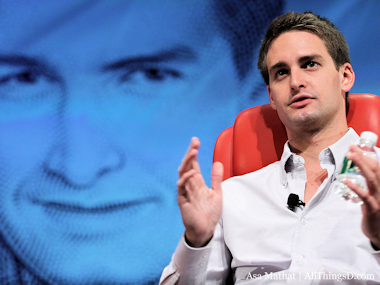
Snapchat Inc. CEO
Evan Spiegel
Snapchat Inc. CEO Evan Spiegel, who has apologized for his crass undergraduate behavior, was apparently one of the frat boys who took part in the Kappa Sigma crudities.

"Let us .... thank both him and the anonymous leaker," Bennett writes, "for the x-ray vision they have given us into a world that many suspected existed but had no real way to know for sure. Then, after giving thanks, I would like to exhort all mothers, fathers, college administrators, young men, young women and, above all, employers to take a deep breath and read the e-mails in their entirety."

Then, says she, all those concerned should "consider: Are these just words? Clearly there is a lot of hormonal prancing there. Yet, given what we know about binge drinking on campus, I think we all know that the references to blackouts are real. Aren’t the references to sexual domination and contempt real, too? And if we long ago acknowledged that what we now only coyly refer to as the N-word is a real word with real powers to hurt, then why do we feel differently about allowing ourselves, our daughters, our sisters to be called bitches and whores as if it were funny?"

My attitude: Bennett is being, if anything, way too tentative here. There can be no doubt — none at all — that applying the B-word and the W-word to women in general is beyond the pale of honorable, decent, civilized behavior. It always has been, it always will be.

There was a time, long ago, when the prancing hormones of young men led them to become knights errant, sworn to uphold the dignity and honor of womankind. Women have more recently said, "We don't need to have our dignity and honor upheld by men; we can do that ourselves. And we don't want to be put on a pedestal."

Men seem to have responded by now dragging women through the sexual mire instead.

Can't there be a happy medium?

Amanda Bennett
Finding it is mainly up to the young men themselves, I'd say. Bennett writes, "Young men: I completely agree with the #notallmen hashtag. It is clearly not all men who are this vile. You who are not need to stand up against those who are."

I'd add that there needs to be a way for men to swear an oath of proper behavior towards women. Oaths are sworn before others, publicly. They are not taken privately. Wouldn't it be nice if the oaths they swear to when joining a college fraternity would contain such language?

Finding the happy medium, Bennett says, also will have to involve parents, schools, employers ... and the young women themselves. She addresses this last group by saying, "You are party to this, too. Read those e-mails. If you like what you see, keep going to those [fraternity] rages. Sex on your own terms is great, ladies. But are you sure it is on your terms? Is it sex you read in those e-mails, or power? Is that really where you want to be on the power spectrum."

Feminists point out that sex was really about power, back in women's pre-liberated past. It still is today. It's just that men have nominally lost their former positions of power ... so they've now begun trampling women beneath their prancing hormonal feet instead. The relative power relationship is the same. But now it's concealed not by the veil of centuries-old tradition but by the haze of alcoholic stupor.


Wednesday, May 28, 2014

Code of Honor

Petula Dvorak's May 27 Washington Post column, "#YesAllWomen: Elliott Rodger's misogynistic ravings inspire a powerful response on Twitter," reveals how appallingly crazy the culture has gotten in terms of men's attitudes toward women.

Rodger is the young man who went on a shooting rampage in California last week, targeting young college women — women who, he said in a previously made "selfie" video posted on YouTube, would not deign to go to bed with him. Rodger died of a gunshot wound to his head, possibly self-administered, during the ensuing police chase.

Dvorak (@petulad on Twitter) says Rodger was but an extreme example of the misogyny that affects "millions [of men] who share the same twisted view of women that he did."

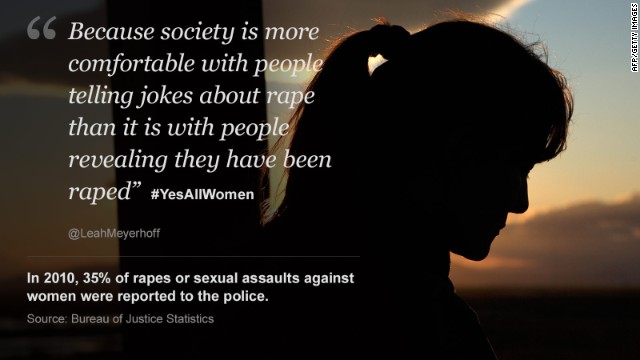
Women by the "hundreds of thousands," Dvorak writes, have posted their resentment of this widespread misogyny on Twitter, using the hashtag #YesAllWomen. Here's an example:


Dvorak adds:

Elliot Rodger has exposed the sick world of the Men’s Rights Activist movement, self-described "alphas" who fume about any and all the times they don’t call the shots with women, specifically the airbrushed, inflated and photo-shopped creatures they assume are there for them.

Mostly, it’s about sex. Or the lack thereof.

A group of them call themselves Pickup Artists. And some sell their wisdom — tips that include stale bar tricks, ways to insult and ignore women as part of their seduction — as online courses, apps or seminars. They call this ability to get women to sleep with them "Game."

When desperate men who shell out cash thinking it will buy them Game fail, they lash out online. Not at the men who try to sell them Game, but at the women who didn’t buy the act.

Of Elliott Rodger himself, Dvorak writes:

He may have been mentally ill, but he was also the product of a culture that objectifies, demeans and sexualizes women. Nearly one in five American women report being raped at some time, according to the Centers for Disease Control and Prevention. The raging sexual assault epidemic in our military and on our college campuses is a reflection of the entitlement too many men feel they have to women’s bodies.

Every day we hear of another military man — powerful, disciplined, bulging with Game — who sexually assaulted a woman in uniform. This month, investigations began at 55 colleges and universities over the way their officials have handled sexual assault. These are our nation’s thought leaders — privileged, educated, bursting with tweedy Game — who have rebranded rape as 'non-consensual sex' so they won’t have to deal with the misogyny on display on their campuses.

Think it’s not real? Consider the texts and e-mails allegedly exchanged between members of a banished frat at American University. The young men — who also were identified as scholars, interns at prestigious nonprofits and senators’ offices — show a shuddering hatred and objectification of their female classmates.

Hatred of women? Objectification? Sexualization? "Game?" Sexual assaults? Rapes? Why is all this happening? And what can we do about it?

Those two questions, I realize, might draw our attention in different directions. The why question suggests we might be able, if we but knew the answer, to pluck out the entire problem by its taproot, as we would dig up a dandelion in our garden.

The what question suggests the problem will have to be solved more indirectly, as when we spray a dandelion with weed killer instead.

My own first inclination would be to go for the taproot. But what, then, is the deepest source of all this blatant misogyny?

*****

I suppose there were misogynists in earlier times, most of them secret, undeclared woman-haters. Today, it's different: misogyny is rampant and blatant. What's changed, and why? Well:


  • Women nowadays occupy societal roles they were once excluded from: as students at coed universities, as soldiers in the military, in professional careers.
  • The sexual revolution put paid to virginity and chastity as cultural norms, particularly for women.
  • Women and men now wait longer to settle down and get married, leading to a time of life experts call "post-adolescence" or "adultescence." (This has to do in part with how long young people are staying in school today. Elliott Rodger was 23 and still a college undergraduate.)
  • The Internet has made porn readily available.
  • Social media have opened up avenues for misogynist rants and other craziness to reach a critical mass.

These fairly recent changes in our culture fall generally into two overlapping categories:


  1. The victory of individual liberty over censorship, as with the availability of online porn, the sweep of unfettered social media, and even our having gotten out from under yesterday's sexual norms of purity, virginity, and chastity.
  2. Changes that no feminists or right-thinking progressives would ever want to roll back: more college- and graduate-level education for both sexes; women in all walks of life; women, unlike in the olden days, being "allowed" to enjoy sex.

If changes of this sort are the taproot of today's blatant and rampant misogyny, or at least the feeder roots, then I guess I'd better reconsider my first inclination, which was to pluck out the misogyny by its roots. The deepest feeder roots are, after all, sacrosanct to feminists, to right-thinking progressives, and to proponents of civil liberties and open exchanges of ideas.

Putting weed-killer on the dandelion of rampant misogyny can, though, only go so far, I feel. We hear of reconfiguring how the military handles sexual assault. We hear of the Obama administration trying to get universities to do more to stop abuses on campus. Worthy approaches, I'd say, but not nearly sufficient.

What we really need is a new code of honor: individual young men need to swear themselves to proper behavior toward women.

It could come as part of a 12-step program, à la Alcoholics Anonymous. Call it Misogynists Anonymous. AA participants are encouraged to confess to their fellows that they have a drinking problem. MA participants would have to confess that they have a woman-hating problem. Then the healing could begin.

As part of it, they would have to pledge to give up what amounts to their "bottle": calling women sluts and whores after picking them up and having sex with them; calling women stuck-up snobs after failing to pick them up and sleep with them; and like expressions of misogynist hostility.


Blush Before You Flush

The Maryland General Assembly recently passed Senate Bill 212, which Gov. Martin O'Malley (D) has just signed into law. Officially called the "Fairness for All Marylanders Act," it protects the rights of transgender people not to be, due to their gender identity, discriminated against in: 

  • places of public accommodation
  • the housing/real estate market
  • employment and the job market

"Places of public accommodation" include public restrooms and "saunas, shower rooms, locker rooms, etc.," as long as these facilities are available in some degree to the general public. That is the understanding I get from the Web site of MDPetitions.com, an organization that is trying to gather enough signatures to force a November ballot initiative. The initiative would, if passed, set aside the act.

MDPetitions says transgender persons can now, under the new law which they call the "Bathroom Bill," use restrooms and similar facilities heretofore considered off limits to anyone not of the designated sex. So, those men who “sincerely [hold] as part of [their] core identity” that they are actually women, despite what their body says, cannot be barred from public ladies' rooms.

A real worry is, accordingly, that men will falsely claim to be transgender so they can prey on women performing their most private acts.

And, of course, vice versa.

How would it be handled? Say a person who is outwardly male walks into a ladies' room. Perhaps a female patron complains to the management, and the police are called. The nominally male person comes out of the ladies' room only to be put into handcuffs. Later in court, s/he tells the judge s/he sincerely self-identifies as a woman. Case dismissed.

S/he may have been telling the truth, in which case s/he has been needlessly inconvenienced and embarrassed.

Or, this person may have been lying about being transgender ... but how would the prosecutor ever prove that to the judge?

*****

Let's now studiously ignore that legal conundrum and look just at the situation without regard to the inner gender identity of the one who, outwardly male, walks into a ladies' room. Let's look at it from the perspective of the woman who went in just before (I'll use the masculine pronoun) he did.

All she really knows is that a man followed her into the loo.

She may or may not call to mind the notion that his inner gender identity is the same as hers. She may even support the right of a transgender individual to occupy the adjoining stall. But she can't really be sure this guy isn't just a sexual predator, can she?

Put bluntly, she's doing her business in a stall next to an individual who had a penis. That's the bottom line. It's downright odd, at the very least. It's discomfiting. It's threatening.

Now turn the situation around: A woman walks past a row of men using the urinals in a men's restroom at the ball park. She goes into a stall. (Or does she actually belly up to a wall-mounted fixture? Such things are never out of the question.) Is this act an assertion of her inner maleness, or is it just a way to avoid the long line at the ladies' room? Whatever ... if she is detained and required to go before a judge, she legally has an out.

Meanwhile, the shoe of discomfiture and embarrassment, undoubtedly well known to truly transgender individuals, is now firmly on the other foot. Pre-SB 212, those unusual individuals had to do their business in the "wrong" room, the "wrong" facility, every time. And one does feel sorry for them.

Still and all, there clearly is no practical way to make sure no one experiences such discomfiture and embarrassment. It's an imperfect world, and there will always be someone, no matter the laws on the books, who will have to blush before they flush.

*****

I am a liberal democrat who generally is in favor of LGBT (lesbian/gay/bisexual/transgender) rights, but I do not support the new law as presently configured. It will subject untold numbers of people to discomfiture, embarrassment, and even implicit threats of sexual predation, just so a tiny minority can feel more comfortable in places of public accommodation. I don't think that's right.

The law does provide for the possibility of gender-neutral restrooms alongside more standard ones ...


... and I think that's good. People could use them or go to the usual men's/ladies' rooms. But few establishments have these extra added attractions. So my objection still stands, and I invite all who agree with me to sign the petition.


Monday, November 04, 2013

Obamacare and Cancelled Individual Health Coverage

I support the Affordable Care Act, aka Obamacare; let that be stated at the outset. Its rollout since Oct. 1, though, has been abysmal. The HealthCare.gov website where many Americans need to go to sign up for coverage has been down way too often, slow way too often, and so poorly imple­mented that insurance companies can't be sure who in fact has signed up for coverage.

HealthCare.gov home page

The kerfluffle over that has however been overshadowed in the last week by the issue over cancelled insurance. Presi­dent Obama promised on many occasions going back to 2009 that "if you like your current health plan, you can keep it." Well, as it turns out, that's not exactly so.

Glenn Kessler, the "Fact Checker" at The Washington Post, recently awarded the president a maximum number of hated "Pinocchios" — four — for "Obama’s pledge that ‘no one will take away’ your health plan."

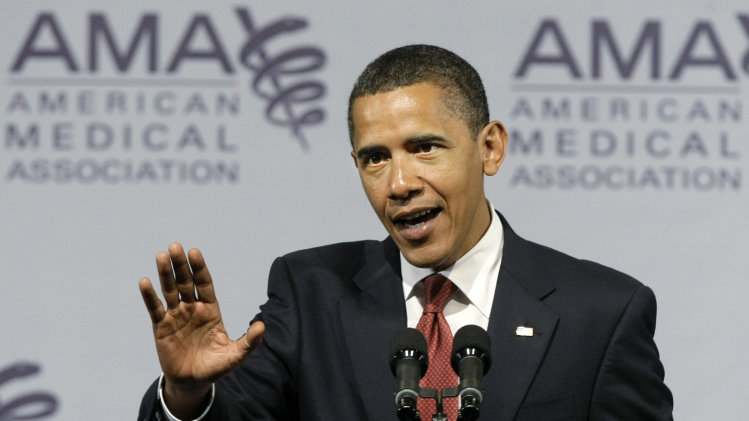
Obama said in a speech to the American Medical Association, June 15, 2009, "... no matter how we reform health care, we will keep this promise to the American people: If you like your doctor, you will be able to keep your doctor, period. If you like your health-care plan, you’ll be able to keep your health-care plan, period. No one will take it away, no matter what.”

President Obama addresses
the American Medical Association
June 15, 2009

Alas, it wasn't, and still isn't, exactly true. Kessler writes:

... a key part of the law is forcing insurers to offer an “essential health benefits” package, providing coverage in 10 categories. The list includes: ambulatory patient services; emergency services; hospitalization; maternity and newborn care; mental health and substance use disorder services, including behavioral health treatment; prescription drugs; rehabilitative and habilitative services and devices; laboratory services; preventive and wellness services and chronic disease management; and pediatric services, including oral and vision care.

Health benefits packages that lack those features will have to be discontinued as of next year. Some people who get their health insurance through their employers may notice increased premiums to help pay for additional coverage. But hundreds of thousands of those who buy their own insurance are now receiving outright cancellation notices.

In many cases, those unfortunates will have to buy completely new health packages that will probably cost them a lot more.

Yet some luckier ones will get no cancellation notices. They will find that their existing plans were "grandfathered" into the government's implementation of the Affordable Care Act, meaning they can keep them.

The unfortunate ones whose plans were not grandfathered in are very likely ones who bought those plans after the magic cutoff date, March 23, 2010, when the ACA was signed into law. Only individual plans that were in hand prior to that date are grandfathered in.

Those who have to scramble to get new, expensive insurance, says the lead article in today's Washington Post, "For consumers whose health premiums will go up under new law, sticker shock leads to anger," are finding the plans that are claimed by their insurers to be the lawfully mandated replacements for their cancelled plans are way more costly:

Marlys Dietrick, a 60-year-old artist from San Antonio, said she had high hopes that the new law would help many of her friends who are chefs, actors or photographers get insured. But she said they have been turned off by high premiums and deductibles and would rather pay the fine. 
“I am one of those Democrats who wanted it to be better than this,” she said. 
Her insurer, Humana, informed her that her plan was being canceled and that the rate for herself and her 21-year-old son for a plan compliant with the new law would rise from $300 to $705. On the federal Web site [HealthCare.gov], she found a comparable plan for $623 a month. Because her annual income is about $80,000, she doesn’t qualify for subsidies. 
A cheaper alternative on the federal exchange, she said, had a premium of $490 a month — but it was an HMO plan rather than the PPO plan she currently has. “I wouldn’t be able to go to the doctor I’ve been going to for years,” she said. “That is not a deal.” 
And both the HMO and PPO exchange plans she examined had family deductibles of $12,700, compared with her current $7,000.

And:

David Prestin, 48, who operates a gas station and diner at a truck stop in Michigan’s Upper Peninsula, was unhappy to learn recently that his premiums are slated to rise from $923 to $1,283 next year under Blue Cross Blue Shield of Michigan. The insurer said it needed to add maternity care to comply with the Affordable Care Act. 
The issue of maternity coverage is a sensitive one for Prestin and his wife, Kathie. They had one child seven years ago, but after she had five miscarriages, they discovered she had an immune issue that prevented her from successfully completing a pregnancy. 
At the same time, Prestin said, the new plan would reduce coverage for things he and Kathie need, such as free annual checkups. 
The Prestins explored HealthCare.gov. They are not eligible for subsidies, but they found a cheaper plan than the one being offered by their insurer. However, there was another problem: It would have required the couple to switch from the doctors they have seen for more than 16 years and travel more than 100 miles from their home to the nearest major hospital center for treatment — in Green Bay, Wis.

And:

After receiving a letter from her insurer that her plan was being discontinued, Deborah Persico, a 58-year-old lawyer in the District, found a comparable plan on the city’s new health insurance exchange. But her monthly premium, now $297, would be $165 higher, and her maximum out-of-pocket costs would double. 
That means she could end up paying at least $5,000 more a year than she does now. “That’s just not fair,” said Persico, who represents indigent criminal defendants. “This is ridiculous.”

Deborah Persico,
whose individual health insurance
plan is being cancelled

In fairness, I have to note that the plans that are now being forced into cancellation by the ACA are ones in which the insureds were able to cherry-pick the types of coverage he/she/they wanted. Don't need maternity coverage? Leave it out. Never expect to need pediatric services? Bypass it. That keeps the buyer's premiums and deductibles down.

But it also keeps dollars from said cherry-pickers from moving through the system to help cover maternity and pediatric care for those buyers of individual coverage who need them but truly otherwise can't afford them. I imagine Marlys Dietrick, who makes $80,000 a year, can scrimp and save and ultimately afford the $490-per-month plan that would make her, sad to say, need to switch doctors.

Yet it's also true that nothing the president said in the last four years adequately prepared Ms. Dietrick — or the Prestins, or Ms. Persico — for this.