Tuesday, October 03, 2017

Remembering Hugh Hefner and the Advent of Playboy

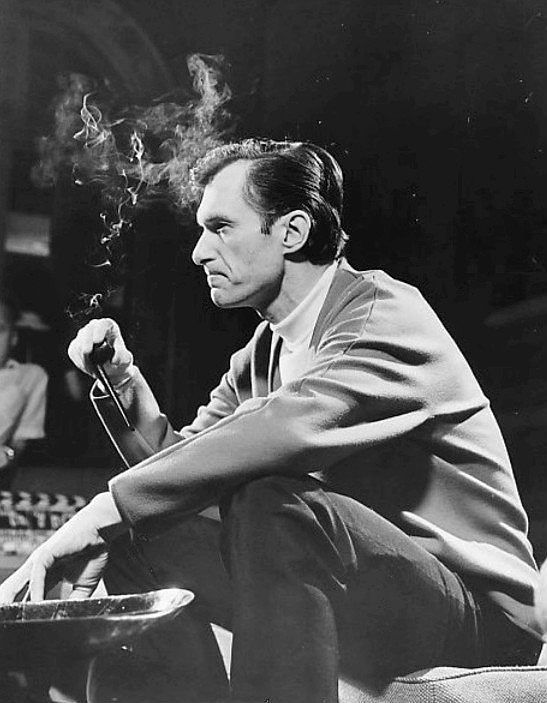
Hugh Hefner in 1966
Hugh Hefner has died. As the founder of Playboy magazine in 1953, Hef changed the world. By the time of his death last week at age 91, he was no longer much of a factor in the culture. The culture had moved well past what he'd once meant to it, back in the day.

I expect my father was one of the original subscribers to Playboy. I don't really remember for sure, though, whether he had the first issue, that of December 1953, with Marilyn Monroe on the cover:

The December 1953 premiere
issue of Playboy

I was only six years old at the time, but by the time I was nine or ten, Dad was letting me peruse the Playboy issues stacked up on a shelf in our house.

I didn't understand then how radical Playboy was. I realized, of course, that photos of buxom young women in the nude were its main attraction, but I didn't know that just a few years prior, no mass-circulation magazine would ever have tried that.

After Hef died, Washington Post columnist Alyssa Rosenberg wrote:

On some major social issues, Hefner was early to take what are today mainstream progressive stances. ... Hefner was an early and avid defender of the gay rights movement, arguing that sexual liberation had to include gay people, too, in order for it to be meaningful. The same instincts led Hefner to publish extensive coverage of the emerging AIDS epidemic, recognizing that a sexually transmitted disease had no sexual orientation.
Hefner threw racially integrated parties in decades when it was not always popular to do so. Playboy picked its first black Playmate in 1965. And his magazine helped jump-start the writer Alex Haley’s career by asking him to interview Miles Davis, and Playboy then gave Haley an entire series, which eventually would include important interviews with Malcolm X and the Rev. Martin Luther King Jr. 

But her praise was not unalloyed:

Hefner may have advocated for women’s equality and independence in the political sphere. But that ideal state of affairs never arrived in Hefner’s lifetime, despite his advocacy for it. And Hefner’s own relationships were not necessarily defined by an equal balance of power.

New York Times columnist Ross Douthat was downright scathing:

Hugh Hefner, gone to his reward at the age of 91, was a pornographer and chauvinist who got rich on masturbation, consumerism and the exploitation of women, aged into a leering grotesque in a captain’s hat, and died a pack rat in a decaying manse where porn blared during his pathetic orgies.
Hef was the grinning pimp of the sexual revolution, with quaaludes for the ladies and Viagra for himself — a father of smut addictions and eating disorders, abortions and divorce and syphilis, a pretentious huckster who published Updike stories no one read while doing flesh procurement for celebrities, a revolutionary whose revolution chiefly benefited men much like himself.

That's unseemly and unfair. It misreads the Hefner legacy by judging it by the feminist and post-feminist standards of today — an ethos that could not have emerged at all in the 1960s absent what Hef did in the 1950s.

In 1948, researcher Alfred C. Kinsey and two other authors published the first of two "Kinsey Reports." Called Sexual Behavior in the Human Male, it would be followed in 1953 by Sexual Behavior in the Human Female.


These reports documented statistical studies that Kinsey undertook to find out what sorts of sexual behavior people were actually engaging in. The reports showed that in addition to the licit types of sexual behavior, there was a surprising amount of nominally illicit sex of various types going on.

My parents kept a copy of at least the Human Male report on a bookshelf, and at some point in my late childhood or early adolescence I pulled it off the shelf and looked it over. I doubt I understood much of it, but I did at least realize that it was telling the world about the ubiquity of sexual expression in our culture.

By 1960, when the first birth control pill was introduced, we were embarking on a sexual revolution, thanks in part to Alfred Kinsey and High Hefner.

Betty Friedan
In 1963, Betty Friedan published her groundbreaking book The Feminine Mystique. Challenging the widely shared belief in the 1950s that "fulfillment as a woman had only one definition for American women after 1949 — the housewife-mother," it sparked the rise of "second-wave" feminism in the U.S (see the Wikipedia article here).

By the late 1960s, Friedan's second-wave feminism was rocketing skyward among my female age peers. There was a supposed "bra burning" in 1969 that protested the Miss America contest in Atlantic City, Apparently, no bras were actually burned, but the event nonetheless ushered in an era in which feminists would conscientiously refuse to wear bras.

In 1973, Playgirl magazine appeared:
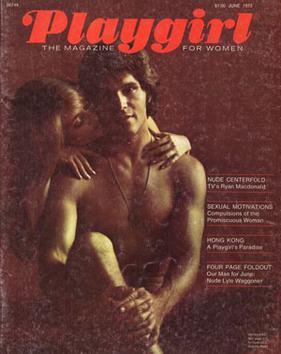
First Playgirl issue, June 1973


It, too, had a centerfold. The first one was Lyle Waggoner, of the "Carol Burnett Show" on TV:

Lyle Waggoner as the first
Playgirl centerfold


So it was a time when sexual liberation and feminism were intertwined. That's not so true now ... but I think the late Hugh Hefner is owed a vote of thanks, anyway!




Friday, September 29, 2017

Our "Cultural President"

Abbie Hoffman
David Brooks of the New York Times calls Donald Trump our "cultural president" in a recent column, "The Abbie Hoffman of the Right: Donald Trump."

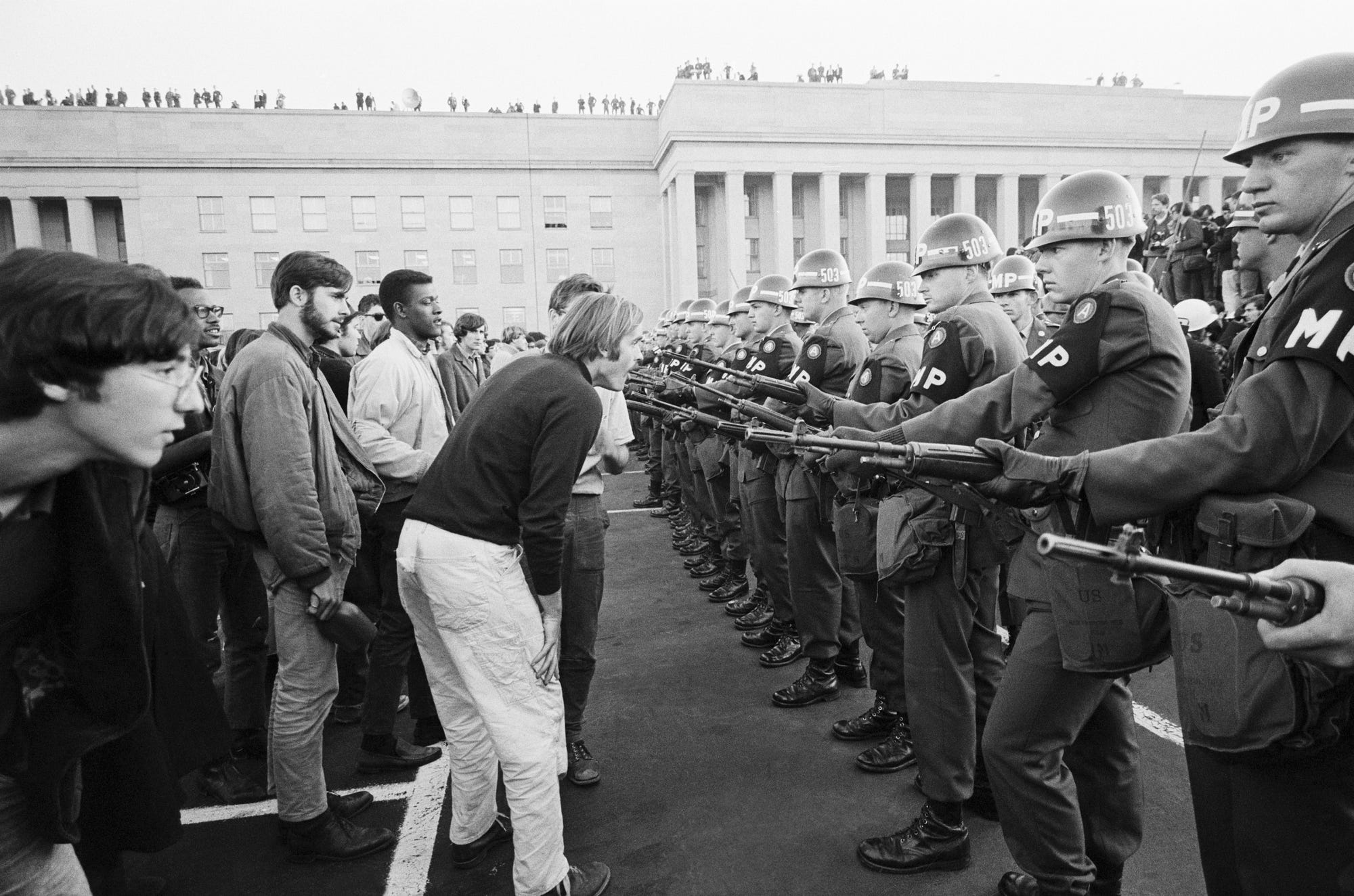
Abbie Hoffman was (alongside Jerry Rubin) Provocateur-in-Chief of the anti-Vietnam War movement in the late 1960s. As a student at Georgetown University in Washington, DC, I participated as an antiwar protester and also as a reporter for our college radio station, WGTB-FM, in the October 21, 1967, "March on the Pentagon."

The 1967 "March on the Pentagon"

This march was a huge gathering of about 70,000 at the Lincoln Memorial to hear protest songs by Phil Ochs ("I Declare the War Is Over") and antiwar speeches by David Dellinger and Dr. Benjamin Spock. Then Hoffman led 50,000 of us on a hike to the Pentagon, where a second rally took place, hippies tried to "levitate" the Pentagon building, and about 650 protestors were arrested for civil disobedience.

It was, yes, a time of cultural upheaval. Now we are experiencing another such upheaval. Brooks writes that "in 2016, members of the outraged working class elected their own Abbie Hoffman as president" — in the person of Donald Trump. Today, the President of the United States is our new Provocateur-in-Chief.

What happened? Brooks says:

After World War II the Protestant establishment dominated the high ground of American culture and politics. That establishment eventually failed. It tolerated segregation and sexism, led the nation into war in Vietnam and became stultifying.

Then came the ascendancy of Hoffman, Rubin, et al. among much of the youth of America. But we Baby Boomers quickly shed our trappings of hippiedom and became the new leaders of our culture:

The late 1960s were a time of intense cultural conflict, which left a lot of wreckage in its wake. But eventually a new establishment came into being, which we will call the meritocratic establishment.

That was us as we entered our late 20s and early 30s: college-educated meritocrats who were setting out to run things our way. We were the ones who:

... cut [our] moral teeth on the civil rights and feminist movements. [We] embraced economic, social and moral individualism. [We] came to dominate the institutions of American society on both left and right.

And, Brooks notes, Hillary Rodham Clinton was one of us.

Hillary Rodham Clinton in 1969

Hillary Clinton's whole life has been oriented toward success. Her family came from the middle echelons of American society. She moved up and away from that starting point, until she came within an eyelash of being elected our first woman president.

As a good meritocrat, she set aside whatever inclinations she'd had as a younger woman to be a cultural provocateur. She learned how to turn her intelligence and drive into national leadership — until, that is, a large segment of the electorate decided to rebel against her sort of leadership.

For me personally, this new cultural transition is hard to accept. Brooks says,"Trump is shredding the culture and ending the dominance of the meritocratic establishment." Well, I was never much of a meritocratic climber myself, but a great many of my friends and associates were. I'm not at all ready to tear down what my generation — however flawed — has built.

Yet there is nothing so constant as change. We all have to adapt. The kids who are just entering adulthood today are especially on the spot. Brooks:

Because of [Trump], a new culture will have to be built, new values promulgated and a new social fabric will have to be woven, one that brings the different planets back into relation with one another. 
That’s the work of the next 20 years.

Good luck to you, all ye children (and, soon, grandchildren) of the meritocrats!


Wednesday, September 27, 2017

Taking Knees and Linking Arms

I write this as a fan of the Washington Redskins. Before last weekend's Sunday Night Football contest between the Redskins and the Oakland Raiders, Redskins' owner Dan Snyder linked arms with some of his African American players on the sideline during the singing of the National Anthem:

Dan Snyder links arms with players.


It was a protest against the way President Trump had, a couple of days before, called for NFL owners to fire players who take a knee during the pregame anthem ... the way San Francisco 49ers quarterback Colin Kaepernick and a few other players had begun doing in 2016 as a protest against police shootings of unarmed black men.

Colin Kaepernick takes a knee.


At other NFL games last weekend, there were similar arm-linkings, knee-takings, and even refusals to leave locker rooms for the anthem. This activity was meant primarily to upbraid Trump. But it was also meant to show solidarity against racial injustice.

In the wake of last weekend's protests, the Washington Post published two op-ed columns, one supportive of the protests and the other against.

The supportive one was by columnist Eugene Robinson, who is black, and was called "If Trump’s not a white supremacist, he does a good impression." The anti-protest column was by columnist Marc A. Thiessen, who is white, and was called "Disrespecting the flag is a disgraceful way to protest Trump."

Robinson's remarks centered on the notion that "We ... have a president who, if he’s not a white supremacist, does a convincing impression of one." He added, "Trump claimed in a Monday tweet that 'the issue of kneeling has nothing to do with race,' but that is a lie. Kaepernick’s method of protest had everything to do with race, as its intent was to focus attention on racial injustice."

Thiessen felt that showing due respect for the American flag is the dominant issue here: "What these players don’t seem to understand is that Americans gave their lives so that they could have the freedom to play a kids’ game for a living. When players disrespect the flag, they disrespect that sacrifice."

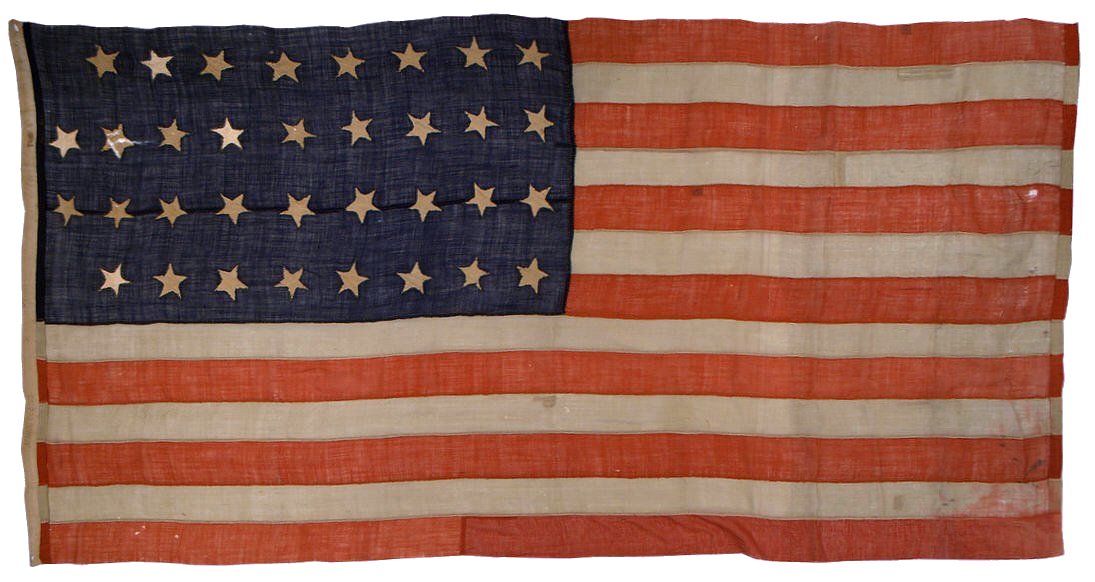
I agree with Robinson and disagree with Thiessen. Given that the underlying issue in the protests against Trump's rhetoric is one of racial justice, I'd say it outranks questions of the proper protocol for respecting the U.S. flag. We can't separate the racial justice issues of today from America's "original sin" of slavery. A lot of Old Glory-defending soldiers died in our Civil War, a struggle that was fought to restore the Union and emancipate Southern slaves. Here is one of the flags which the Union forces fought under:

Civil War flag

The Grand Old Flag represents a Constitution that insists on the equal treatment of all citizens, and on the right of all to exercise freedom of speech. And the anthem celebrates "the land of the free and the home of the brave." I'd say that considerations like these settle the question of whether recent pregame protests on NFL sidelines were indeed proper and just.


Friday, September 22, 2017

The Roots of Trump-Style Politics

David Brooks
My favorite op-ed columnist David Brooks writes in "The Coming War on Business" that everything Donald Trump stands for was presaged some decades back by an essayist/cultural critic named Sam Francis. Brooks knew Francis when the two of them worked at the Washington Times in the late 1980s and early 1990s. Francis opined that:

  • Globalization was screwing Middle America.
  • The Republican and conservative establishment did not understand what was happening.
  • Politics was no longer about left versus right. Instead, a series of smaller conflicts — religious versus secular, nationalist versus globalist, white versus nonwhite — were all merging into a larger polarity, ruling class versus Middle America.

Pat Buchanan
Pat Buchanan shared these views when he ran unsuccessfully for president in the 1996 Republican primaries. But this version of populism and nationalism wasn't yet ready for prime time. By 2016, it was ready. Donald Trump now sits in the White House as our president.

Brooks quotes Francis:

Middle American groups are more and more coming to perceive their exploitation at the hands of the dominant elites. The exploitation works on several fronts — economically, by hypertaxation and the design of a globalized economy dependent on exports and services in place of manufacturing; culturally, by the managed destruction of Middle American norms and institutions; and politically, by the regimentation of Middle Americans under the federal leviathan.

Globalization, in this view, is what was killing American farms and blue-collar manufacturing jobs. That's why the remedy needed to be nationalism. Francis: "A nationalist reaction is almost inevitable and will probably assume populist form when it arrives. The sooner it comes the better."

So, what does our future look like now? Brooks posits two alternatives, the first bad and the second good:

  1. That "Trump may not be the culmination, but merely a way station toward an even purer populism." That is, Trump's nominal pro-business stance will fall away, and "the next populism will ... take his ethnic nationalism and add an anti-corporate, anti-tech layer. Google, Facebook, Amazon and Apple stand for everything Francis hated — economically, culturally, demographically and nationalistically."
  2. Or, that a "cancer [will] destroy Trumpism" — the particular cancer called racism. Francis was a racist who wrote, "The civilization that we as whites created in Europe and America could not have developed apart from the genetic endowments of the creating people, nor is there any reason to believe that the civilization can be successfully transmitted to a different people."

I vote for option #2. If this country is to be saved from the Trumpian politics of nationalism and an outlook based on the principle of us-versus-them aggression, it seems to me it can only be because our willingness to set aside the original sin of America — slavery, with its aftermath of ongoing racial disharmony — ironically provides the ultimate salvific impetus.

This is why the removal of Confederate memorials and statues is such a marvelous sign ...


Tuesday, September 19, 2017

The Triumph of Tribalism?

Michael Gerson
Op-ed contributor Michael Gerson's column in today's Washington Post is a must-read. The headline says "Tribalism triumphs in America." The thrust is that in our country today, politically and culturally, we are ever at daggers drawn. We divide into two tribes (or "phyles"), "reds" and "blues," and each phyle makes perpetual war on the other.

Andrew Sullivan
Gerson's comments extend those of essayist Andrew Sullivan in a recent New York magazine. In "America Wasn’t Built for Humans," Sullivan asks how our democracy can survive the tribalism that has infected us during the last couple of decades. (Actually, I think tribalism of the sort Sullivan describes has been our bête noire since at least the late 1960s, when the country was nearly torn apart by race riots and by civil unrest incited by anti-Vietnam War protesters.)

Never have I read such insightful commentary. I agree with just about everything Gerson and Sullivan say.

My own focus on such matters is not quite as broad, presently, as that of these two gentlemen — who, frankly, are capable of greater intellectual breadth and depth than am I these days. I'm more about race than I am about all the other matters that the "reds" and the "blues" are at daggers drawn about. I don't think we can patch up our differences about all these other matters if we can't get back to patching up our differences about race in America.


Sunday, September 10, 2017

The Tides of Racial Reconciliation

Charles M. Blow
New York Times op-ed columnist Charles M. Blow recently wrote: "Sometimes you simply have to call a thing a thing, and the thing here is that Trump’s inner racist is being revealed, and America’s not-so-silent racists are rising in applause."

Heather Heyer
He was referring, first and foremost, to "Trump’s growing intolerance and his growing adoption and internalizing of white nationalist ideology," as revealed by his reactions to the recent tragedy at Charlottesville in which a counter-protester named Heather Heyer was killed by a vehicle driven by one of the white supremacists protesting the removal of a Robert E. Lee statue.

I've been trying to figure out how best to respond, myself, to Charlottesville.

On the one hand, Blow is right to rue the president's constantly appealing to Americans' worst hatreds, whether racial or ethnic or otherwise. He is right to worry that all the hatred, whether it is of African Americans or Latinos or Muslims or any other group defined by skin color or religion or sexuality or gender, is pulling us in the wrong direction entirely.

Yet it seems clear to me that the tides of history are moving in the direction of reconciliation, not hatred. The most important of these tides is the one that is moving us toward a healing of the scars of African slavery in America.

We have, after all, just lived during the time of the first African American presidency, that of Barack Obama. Fifty years ago, no one would have thought that possible.

Catherine Pugh
I live in the suburbs of Baltimore, Maryland, a city whose mayor, Catherine Pugh, is African American. Citing questions of her city's safety and security, she wisely orchestrated the removal of the city's Confederate monuments in the wake of Charlottesville. For Baltimore to have an African American mayor — the third black mayor in a row since 2007, and the fifth since 1987 — is something that would have seemed possible in 1967.

But the other side of that same coin is a negative one. Baltimore can have had a succession of black mayors in large part because of the white flight to the suburbs that took place during the 1950s and 1960s.

So the overall direction of the tide during the 70 years of my life has indeed been a positive one, in the direction of racial reconciliation. Yet I have to acknowledge that backlash has never ceased to rear its ugly head. The best metaphor I can come up with for that recurrent backlash is that of undertow. And as Charles M. Blow indicates in his column, undertow can be very, very dangerous.


Thursday, August 31, 2017

Whither White Identity Politics? (Part 2)

David Brooks
In Part 1 of this series of posts I talked about how New York Times op-ed columnist David Brooks recently took "white identity politics" to task for coming between today's Republicans and their party's erstwhile "universalist" principles which were conservative yet colorblind. Brooks himself comes out of that sort of conservative universalism, so he is understandably afraid for the future of his party.

I'm a liberal Democrat, so my fear is more for the future of our country. It boggles my mind how an America which had made such great strides in the fight for racial justice, during my 70-year-and-counting lifetime, has now had such a profound racial relapse — witness the recent martyrdom of Heather Heyer in Charlottesville in a counter-protest against white supremacists who were themselves protesting the removal of a statue of Robert E. Lee.

Jean Jaurès
In my own mind I frame this all in a context that will take me a while to explain. The context has to do with a project I am working on with my friend Bob. Bob plans to teach, with some help from me, an Osher Lifelong Learning Institute course on the life of a great Frenchman who was assassinated just over 100 years ago. Jean Jaurès (1859-1914) was a member of the National Assembly in France's Third Republic. He was a great orator, historian, philosopher, newspaper founder-editor, and anti-militarist. On the eve of World War I — specifically, on July 31, 1914 — a nationalist who feared Jaurés might be able to restrain France from entering a looming war with Germany shot him dead in a Paris café.

Jaurès was a leader among France's (and Europe's) socialists of his day. Though born into a bourgeois family in decline, and thus not of the proletariat or working class, Jaurés became the champion of the workers who toiled for too little pay in coal mines and factories. He insistently supported their right to unionize and strike for better wages and working conditions. His anti-militarism was born in part of his realization that many, many of France's proletarian class would die in a nationalist war with Germany.

Now, fast forward to the America of today. The No. 1 nonfiction/general bestseller is currently Hillbilly Elegy: A Memoir of a Family and Culture in Crisis, by J.D. Vance. The people Vance describes, and himself comes from, are families who earlier moved from Appalachia's coal country to places like Middletown, Ohio, to get jobs. In both places they were/are working-class, i.e., of the proletariat. Today, many of these people are out of work, but they once had decent-paying jobs in places like automobile factories.

Their current situation, though, is dire. Vance describes their situation as mainly one of cultural disintegration. It's a lot worse than just not having jobs any more. There are numerous symptoms of social dysfunction: family dissolution, alcoholism, drug dependency, etc. Wikipedia says Vance "feels that economic insecurity plays a much lesser role" in their misfortunes than the social rot does.

Maybe so. But a lot might improve for these erstwhile Appalachian members of America's "proletariat" if they had a champion from the political left, à la Jean Jaurès, who could fight for better economic conditions on their behalf.

In America today, many of our working-class citizens who saw Donald Trump as their champion became the decisive factor in giving him enough Rust Belt electoral votes to put him in the White House in the 2016 election. This shouldn't have happened. But there was no Jaurès to act as a working-class champion from the political left.

Hillary Clinton did not do and say the things that might have made her their champion. Bernie Sanders came closer than Clinton in his rhetoric and policy proposals, but Bernie did not capture the imaginations of the white working class. Other Democrats, such as Elizabeth Warren, are offering policies that would benefit this group of left-behind people, but her image does not resonate with them the way that Jaurès' image resonated with the workers of France. So it was left to Trump, a supreme charlatan, to do all the resonating.

Why don't the subjects of "Hillbilly Elegy" find a true champion on the left? I think a fundamental reason is that in the minds of many Rust Belt voters, white identity politics outweigh the economic policies offered by Clinton, Sanders, Warren, et al. — policy proposals that might boost these Americans' chances of gaining better jobs and richer lives.

In short, in America today race "trumps" class as a decider of elections. Even the great Jean Jaurès might not have been able to overcome that ugly truth, were he to be living in America today.


Whither White Identity Politics? (Part 1)

David Brooks
"A greater percentage of congressional Republicans voted for the Civil Rights Act than Democrats," writes New York Times op-ed columnist David Brooks in a recent piece. Surprised? I am. I was in my late teens in 1964, and I should have known that.

Brooks opines that the G.O.P. of today would never have supported the 1964 act that, per Wikipedia, "outlawed discrimination based on race, color, religion, sex, or national origin. It prohibited unequal application of voter registration requirements, racial segregation in schools, employment, and public accommodations."

What's changed? The G.O.P., writes Brooks, has "become more of a white party in recent years ... the Republican Party has changed since 2005. It has become the vehicle for white identity politics."

Brooks says:
Recent surveys suggest that roughly 47 percent of Republicans are what you might call conservative universalists and maybe 40 percent are what you might call conservative white identitarians. White universalists believe in conservative principles and think they apply to all people and their white identity is not particularly salient to them. White identitarians are conservative, but their white identity is quite important to them, sometimes even more important than their conservatism.

It's a huge step in the wrong direction, not just for Republicans but for the country as a whole. Brooks:
... white identity politics as it plays out in the political arena is completely noxious. Donald Trump is the maestro here. He established his political identity through birtherism, he won the Republican nomination on the Muslim ban, he campaigned on the Mexican wall, he governed by being neutral on Charlottesville and pardoning the racialist Joe Arpaio.

"Things," moreover, "will get uglier." And it all may lead to the dissolution of the party of Lincoln. "When you have an intraparty fight about foreign or domestic issues, you think your rivals are wrong. When you have an intraparty fight on race, you think your rivals are disgusting. That’s what’s happening. ... It may someday be possible to reduce the influence of white identity politics, but probably not while Trump is in office. As long as he is in power the G.O.P. is a house viciously divided against itself, and cannot stand."

Next: "Whither White Identity Politics? (Part 2)" ...


Tuesday, August 22, 2017

David Brooks on what being a "moderate" entails

David Brooks
As I've said before, New York Times columnist is my favorite opinion writer. His recent column "What Moderates Believe" tells why.

By the standards Mr. Brooks lays out in his column, I am most definitely a "moderate." I, like Mr. Brooks, "do not see politics as warfare." I agree that "there is no one and correct answer to the big political questions." I also agree that, "at most, government can create a platform upon which the beautiful things in life can flourish."

Quite syncretistically, or so I think, I often can "hold two or more opposing ideas together in [my] mind at the same time." I prefer "steady incremental reform to sudden revolutionary change." I don't believe in suppressing speakers of the hard truth in the name of maintaining ideological purity. I never "prioritize one identity, one narrative and one comforting distortion." I recognize the limits of (hyper-)partisan debate. And I hope I'm humble enough to admit that "the more the moderate grapples with reality the more she understands how much is beyond our understanding."

So I think this column, like so many written by Mr. Brooks, ought to be taken to heart by the American body politic.

And yet ... I'd like to ask Mr. Brooks to add something like the following:

There are, however, certain absolutes that ought to constrain political discourse. We cannot, for instance, relativize the truth of the equality of all of humankind's races in seeking political amity, and the same is true today of gender equality and sexual equality. Such principles have become enshrined in the American value system over the course of time. Some of these absolutes, such as gay rights and transgender rights, have entered the pantheon of American certainties only quite recently, but this does not mean that any of them ought to be be negotiated away in a search for "steady incremental reform." Remember: President Obama echoed Martin Luther King in saying,“The arc of the moral universe is long, but it bends toward justice.” Once it has achieved the fruits of so bending, I believe we must never bend it back simply to be able to say we are seeking a spirit of political "moderation."

What say you to that, Mr. Brooks?


Sunday, August 06, 2017

On Moral Puberty

New York Times
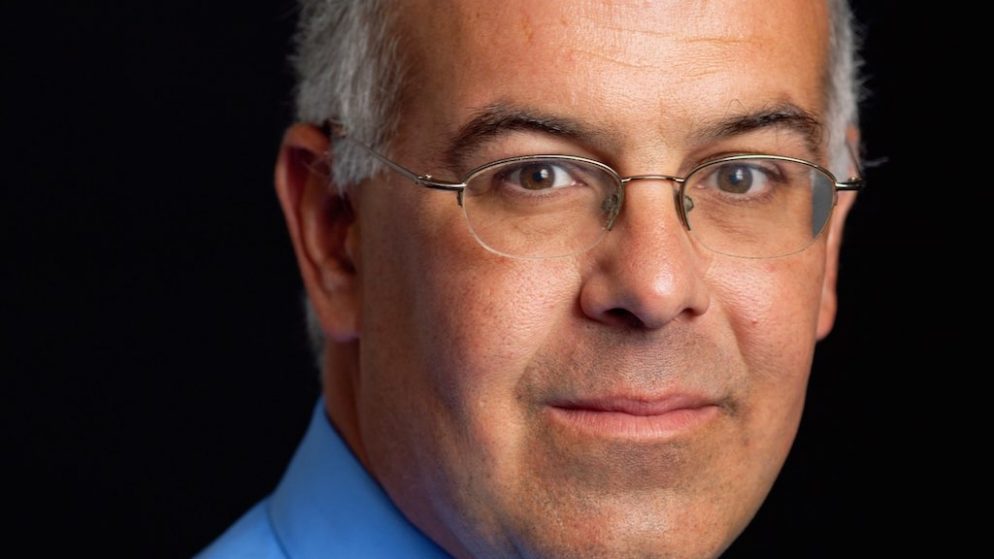
columnist David Brooks
David Brooks of the New York Times is my favorite columnist, in part because he so frequently analyzes current affairs in terms of what is or is not moral. I don't know of any other pundits who are less afraid to use the words "moral" and "morality" in their writing.

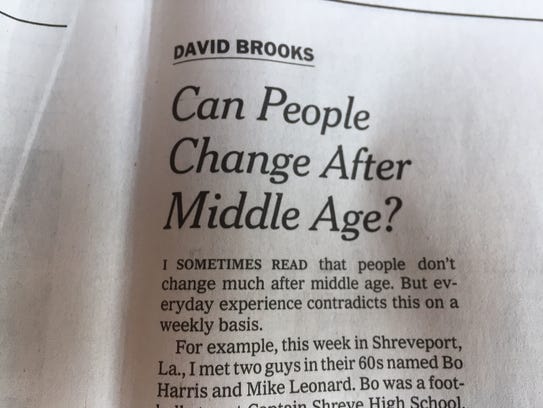
In Brooks' recent "Can People Change After Middle Age?" column, he invokes the term "moral puberty." For several days now, I have found myself thinking about what he meant by that.


The column is about two southern men, now in their 60s, both of whom found themselves undergoing a sort of midlife moral conversion. They had been brought up in an atmosphere of racial bigotry, and they'd inherited their white culture's disparagement of African Americans. That changed dramatically after both men felt called to something higher than self-advancement and ethnic hatred, as they duly "transformed their lives for the final lap."

Brooks was struck by how both men have "gone through a sort of moral puberty, as if a switch turned. They’ve lost most of their interest in egoistic calculation and some sort of primal desire for generativity has kicked in."

I feel that I myself — now nearing my 70th birthday — went through a period of "moral puberty" during the troubled time of my "midlife crisis." Prior to age 38 — the time when my mother died, that is — I almost never thought in terms of what's moral and what's not. I was not at all religious in those days, either, but within a few years I found myself "getting churched" for the first time.

Even so, I resisted the call to moral stricture that my particular church imposed. I wanted what was not really on offer, a sort of "Catholic lite" — à la what Robin Williams said once said about the Episcopal Church vis-à-vis the Roman Catholic: "all the sacraments but half the guilt."

Somehow, though, it was not long until my religious path took me from high-church Episcopalianism to becoming an actual member of the Roman Catholic faith. I was by that time living a pretty decent approximation of a "moral life." Yet I still found myself resisting many of problematic tenets of Catholic moral teaching.

I still do, as a matter of fact. But never mind. My point here is that I know it's indeed possible to undergo some sort of life-changing "moral puberty" in midlife.

* * * * *

That this is indeed possible is a reflection of how we as a society live today. In the distant past, humans could be expected to become "moral adults" at the time of actual puberty. Adolescence, if it existed at all, was brief. Before you were out of your teens, you probably would be married and with children of your own. You would be, by that point, fully embarked upon your grown-up life. If you were not a "moral adult" by that time, you never would be.

Over some number of decades, or even centuries, that pattern has evaporated. The number of years between the onset of sexual maturity and the arrival of a truly grown-up life has grown and grown.

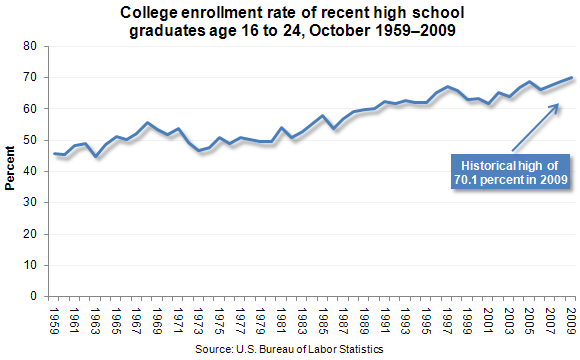
When I was in my teens, in the 1960s, it was becoming true that larger swaths of young people were going to college. That was not as true of the pre-Baby Boomer generations. But since the time we first Boomers began to come of age, the percentage of youths going to college has grown steadily larger:


Plus, many of those college attendees go on to graduate school. Then will come several years of getting established in a career, perhaps having to sleep all the while in mom and dad's basement.

We see in the behavior and lifestyle of many of those "post-adolescents" — or "adultescents" — a stance that lies somewhere between being childishly ignorant of moral questions and having become a full-fledged moral adult. If and when "moral puberty" does strike, it's going to make a tremendous difference.

Meanwhile, today's "kids" — some of whom will be going gray by the time their adultescence ends — are unlike kids from an earlier age. All this was just starting to be so when I myself was a kid. My generation, after all, was the first rock 'n' roll generation.

So I think David Brooks has, as is usual with him, put his finger squarely on the pulse of our present-day sociology and has delineated the historically unprecedented way we go about living our lives today. We now spend a huge chunk of our life spans in adolescence or post-adolescence, morally speaking. And we increasingly find little room in our young lives for organized religion, judging by the percentage of youth who define themselves as "nones" on sociological surveys:


When and if "moral puberty" arrives in midlife, we may find ourselves — as did I — in need of a church. But even if that specific change doesn't happen, we will nonetheless tend to find that our interior life has changed dramatically. Our very conception of who we are and how we are best to live our lives is going to be altered. Only then will we finally be "all grown up."


Friday, August 04, 2017

Democrats Want "A Better Deal"

Washington Post writer Paul Kane (@pkcapitol) recently discussed how Democratic leaders are tweaking their electoral strategy with their “A Better Deal” agenda. "A Better Deal" is, I hope, an important development that can be a route back to liberal Democratic power at both the national and state levels.

Yet it seems not to have gained much traction in its first couple of weeks after being introduced. For example, there is, as of August 4, 2017, no Wikipedia entry on it.

The Atlantic's Michelle Cottle calls "A Better Deal" a "kinder, gentler populism" but says Democrats are struggling to sell it.

"A Better Deal" is a platform-in-progress. It has a number of planks, with new planks being added as time goes on. Senator Chuck Schumer (D-N.Y.) introduced the plan in the New York Times on July 24. Among the planks he cited:

  1. Policies that will increase people's paychecks. Examples: "creating jobs with a $1 trillion infrastructure plan; increasing workers’ incomes by lifting the minimum wage to $15."
  2. Policies to reduce people's everyday expenses. Example: "rules to stop prescription drug price gouging."
  3. Providing workers the tools they need to compete in today's economy. Example: "giving employers, particularly small businesses, a large tax credit to train workers for unfilled jobs."

More recently, says Kane, Schumer proposed another plank: "taxes and penalties on corporations that ship jobs overseas." Such policies are obviously designed to, writes Kane, "build an economic identity so that [Democratic] candidates can run next year on something more than just opposition to President Trump."

However, Kane adds, "The pressure point ... is crafting an agenda that balances the needs of energizing anti-Trump liberal activists without driving away centrist voters and Republicans disillusioned with the president and the lack of results coming from the GOP-led Congress."

So true. If the Democrats can't pull independents and centrist Republicans into their column, they can't "take back the night" in 2018 and 2020. Yet the populist planks of "A Better Deal" could alienate a whole slew of supporters on the Democratic left who might see their agendas as falling by the wayside.

A huge question will be how what Cottle calls "the Elizabeth Warren/Bernie Sanders wing" of the party receives the "A Better Deal" plan. She writes, "As for the guts of the plan, many of its proposals carry the imprint of [that] wing: get tough on monopolies, boost the minimum wage to $15; invest $1 trillion in infrastructure; cut the cost of medications, college, and child care."

But I think it's inaccurate to conflate Senator Warren (D-Mass.) with Senator Sanders, and Kane shows why. He says some liberals wanted the drafters of "A Better Deal" to "advocate more generous policies such as the free college proposal from Sen. Bernie Sanders (I-Vt.)." Yet, he says, "That proposal, along with Sanders’s push for a national health-care system for all, were left out of the early agenda items."

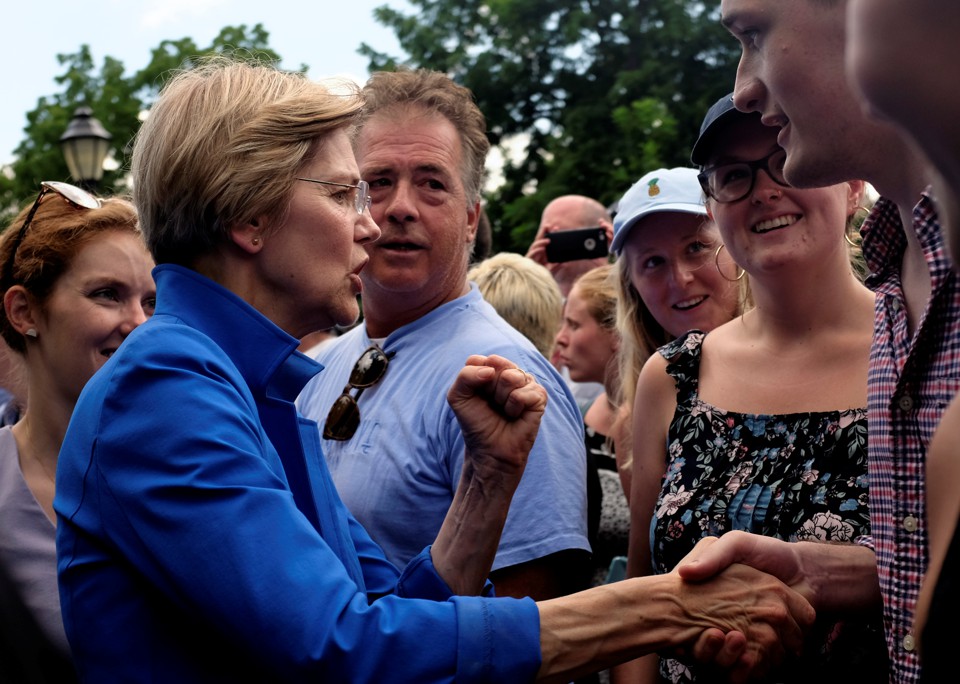
Sen. Warren walks through the crowd after unveiling the Democratic party's "A Better Deal" for working Americans with members of the party leadership in Berryville, Virginia, July 24, 2017

As I wrote here, "In order to get faster economic growth, we need to do what Senator ... Warren is calling for: breaking up the market 'behemoths' that are prospering greatly at the expense of ordinary Americans of all races, ethnicities, genders, etc." "A Better Deal" seems poised to undertake just that kind of populist agenda.

Sen. Bernie Sanders

Senator Sanders, on the other hand, was conspicuously absent when the Democrats unveiled "A Better Deal," according to this New York Times story, even though "the imprint of his presidential campaign was unmistakably present."

I voted for Sen. Sanders in the 2016 presidential primary in Maryland, and I like much of what he stands for. Yet today I feel that Sen. Warren may have an even better feel than Sanders for what needs to happen to get America moving again.


Wednesday, July 19, 2017

Getting Radical About Inequality

"Getting Radical About Inequality" is the title of a recent excellent David Brooks column in The New York Times. The column lets us in on a key feature of the human psyche that predisposes all of us to creating situations of inequality in a society.

French Sociologist
Pierre Bourdieu
The insight comes originally from the late French sociologist Pierre Bourdieu. Bourdieu held that each person possesses two important things, a "habitus" and one or more sources of social power which Bourdieu called "social capital."

A habitus, says Brooks, is simply, "a body of conscious and tacit knowledge of how to travel through the world, which gives rise to mannerisms, tastes, opinions and conversational style. A habitus is an intuitive feel for the social game. It’s the sort of thing you get inculcated with unconsciously, by growing up in a certain sort of family or by sharing a sensibility with a certain group of friends."

You could call the habitus a personalized, idiosyncratic "lens" through which each of us perceives all social relations in our society. This lens gets shaped for each individual person by virtue of his or her upbringing and life experiences. And none of us views how social relations ought to transpire in exactly the same way: "You say toe-MAY-toe and I say toe-MAH-toe."

Social capital is anything we bring to the marketplace of social relationships that helps us
  • get ahead
  • gain power
  • attain "distinction, prestige, attention and superiority"

Brooks talks of various categories of social capital:
We all possess, [Bourdieu] argued, certain forms of social capital. A person might have academic capital (the right degrees from the right schools), linguistic capital (a facility with words), cultural capital (knowledge of cuisine or music or some such) or symbolic capital (awards or markers of prestige). These are all forms of wealth you bring to the social marketplace.
Brooks adds:
We vie as individuals and as members of our class for prestige, distinction and, above all, the power of consecration — the power to define for society what is right, what is “natural,” what is “best.”
It is, accordingly, our arsenal of social capital with which we must vie. All of the things we truly seek in our society, in the view of Bourdieu, require us to compete with the soft weapons of social capital in order to sell ourselves in a "symbolic" marketplace.

Boosting our own status necessarily implies that as we rise, someone else has to, relatively speaking, lose ground. Inequality is an expectable outcome of the dynamics which Bourdieu identified. Brooks:
... Bourdieu reminds us that the drive to create inequality is an endemic social sin. Every hour most of us, unconsciously or not, try to win subtle status points, earn cultural affirmation, develop our tastes, promote our lifestyles and advance our class. All of those microbehaviors open up social distances, which then, by the by, open up geographic and economic gaps. 
Bourdieu radicalizes, widens and deepens one’s view of inequality. His work suggests that the responses to it are going to have to be more profound, both on a personal level — resisting the competitive, ego-driven aspects of social networking and display — and on a national one.
Here, then, is the deep lesson we all need to learn, if we are to quell the political chaos and offset the economic injustice that plague our society today.


Monday, July 17, 2017

"Getting screwed" economically in America

I think economic anxiety is what's driving our rancid politics, and that this is what made a Trump victory possible last November. This idea is the basic takeaway from Franklin Foer's article in the July/August 2017 issue of The Atlantic: "What’s Wrong With the Democrats?"

Sen. Elizabeth
Warren (D-Maine)
Foer talks in the article, towards its end, about the "great hope of the populist left" of the Democratic Party, Senator Elizabeth Warren of Maine, who may run for president in 2020. If she does, her campaign will focus on "the idea of fairness." Put bluntly, fairness simply means "people shouldn't get screwed."

Today, just about everybody below the top (say) twenty percent of income earners — everyone who is not upper middle class or higher — is afraid they will get screwed. If it doesn't happen to them, it will happen to their children or grandkids.

Sen. Warren thinks it is mainly "business concentration" — not enough market competition — that leads to income inequality and people getting screwed.

Foer writes:

Everyone can plainly see the lack of competition in many sectors — the way that there are five big banks, four big airlines, one dominant social-media company, one maker of EpiPens. What’s more, a small set of institutional investors — BlackRock, Fidelity, Vanguard — holds stock in a vast percentage of public companies, so even sectors that look somewhat competitive are less so than they appear. CVS and Walgreens, for instance, have a strikingly similar set of major shareholders. The same is true for Apple and Microsoft. 
... As a senator, [Warren] can see how the ills of finance—the industry’s concentration, its abuse of political power — have been replicated across the American economy. Last June in Washington, she gave an important speech, naming a long new list of enemies — oligopolistic companies like Comcast and Google and Walmart, which she blamed for sapping the life from the American economy. “When Big Business can shut out competition, entrepreneurs and small businesses are denied their shot at building something new and exciting.” ... “Competition in America is essential to liberty in America.” 
... if [Warren] does run [for president], she will likely seek to channel working-class anger toward behemoth firms, their executives, and the government officials who coddle them. It’s not a terribly complicated case to build, since the headlines are so packed with the ... exploits of those firms: the continued predations of banks on their own customers; airline overbooking; life-saving allergy injections that cost hundreds of dollars; cable companies exacting ever-higher fees; the exposure of low-level workers to such erratic hours that it becomes impossible to establish a daily routine; a broad indifference to consumers.

*****

Even if Elizabeth Warren stays in the Senate, it's obvious she thinks breaking up the economic "behemoths" would make life better for just about everybody below the upper middle class — if not everybody beneath the top one percent. Let's say, for the sake of argument, that she can succeed in bringing this about, either as a senator or as president. My question is: Wouldn't it help our politics immensely?

I think it would. For example, Foer mentions that a major strain of Democratic thinkers have been driven in recent decades by "identity politics," the perceived need

to combat the bias and discrimination that [this strain] believes is built into the system. What it seeks isn’t just the protection of minorities’ and women’s rights, but the validation of minorities and women in the eyes of the national culture, which it believes has marginalized them.

Well, it was another "identity group" which feels marginalized — whites without a college diploma — that put Trump over the top last year. In other words, today we have a large number of identity groups, each clamoring for recognition and help — typically, at the expense of other groups. It's a classic case of "there isn't enough to go around, and we need to make sure we get our share."

Stanley Greenberg
Foer describes how this same sort of dynamic propelled Ronald Reagan into the White House by winning the 1980 election. There was much economic dislocation and anxiety then, too. After Reagan won, a Democratic pollster/political scientist, Stanley Greenberg, was dispatched to Macomb County, Michigan, just outside Detroit, to figure out why Reagan did so well. Greenberg hosted focus groups among the disaffected people, mostly white, who had voted for Reagan. He found much seething resentment of black people: "African Americans, [the disaffected] complained, had benefited at their expense."

Greenberg returned to Macomb County following Trump's victory last year and hosted focus groups again. Now, he finds, Macomb's resentments are targeted not at blacks so much as at immigrants. Same dynamic, though a different target.

The upshot of all this seems to me to be that:
  1. If we could only expand the economic "pie" faster than it has grown since the Great Recession of 2008 — indeed, faster than it has grown since about 1970, when income inequality started to widen — we could ease economic anxiety mightily and get Americans pulling together politically more than they have done in many years.
  2. In order to get faster economic growth, we need to do what Senator Elizabeth Warren is calling for: breaking up the market "behemoths" that are prospering greatly at the expense of ordinary Americans of all races, ethnicities, genders, etc.
And so be it!


Wednesday, June 14, 2017

The Beloved Community

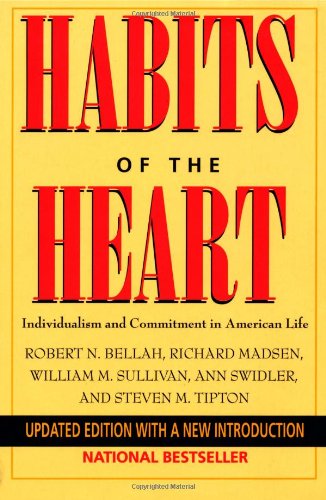
I've been rereading Habits of the Heart: Individualism and Commitment in American Life, in which Robert Bellah et al. write of the challenges posed to America by our culture's elevation of rugged individualism to the highest peak of social value. This book first appeared in 1985, but I'm reading its second edition, from 1996, in which a new introduction refines the authors' argument that we Americans desperately need to be more communitarian — but only if "community" is understood in a "broad and deep enough" way.

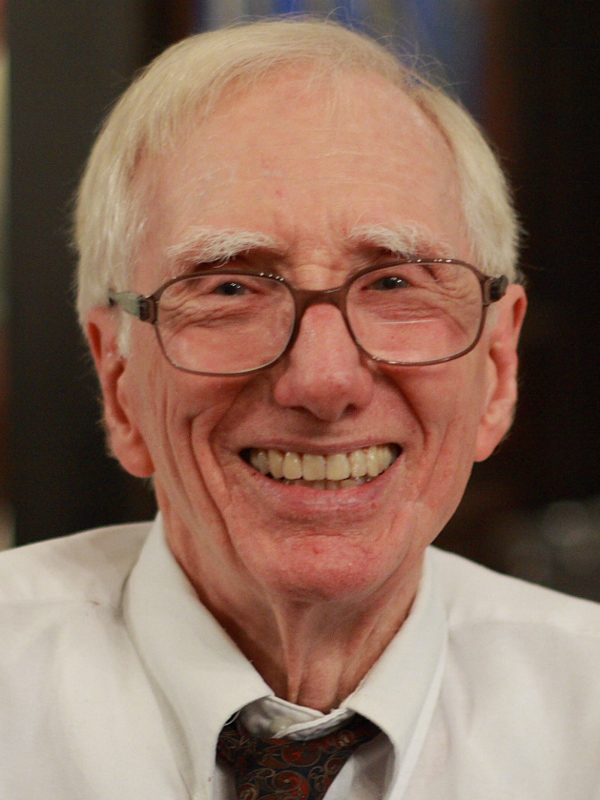
Robert N. Bellah
(From here on, I'll refer to the author of the book as simply "Bellah," even though Mr. Bellah has four additional co-authors.)

"Community" is a word which Bellah maintains has, in our cultural and political discourse, been used too narrowly to signify just "face-to-face groups formed by the voluntary efforts of individuals." Examples: volunteering for soup kitchens, Habitat for Humanity, Meals on Wheels. That aspect of communitarianism is good, but Bellah says it's not good enough:

... we do not believe that the deep structural problems that we face as a society can be effectively alleviated by an increase in devotion to community in this narrow sense. We would agree that an increase in the voluntary commitments of individuals can over the long haul increase our social capital and thus add to the resources we can bring to bear on our problems. But to get at the roots of our problems these resources sources must be used to overcome institutional difficulties that cannot be directly addressed by voluntary action alone.

(Social capital? It's a term academics use to quantify, in the words of Washington Post columnist Robert J. Samuelson here, "the ability of people to work and play together — to cooperate and connect with others." Bellah hopes Americans can reverse our decades-long decline in social capital, a topic which forms a large part of the subject matter of his book.)

Bellah feels "narrow" communitarianism on a very local scale encourages people to join only homogenous groups of other folks who are just like themselves. Bellah disparages that kind of homogenous, localized communitarianism as insufficient to the needs of the larger society. He's right ... but he's also wrong, I think, to be so negative about something that can bring us out of our solipsistic, overly individualized selves.

The problem is not soup kitchens, Meals on Wheels, or (in my own particular case) volunteering to drive local seniors to supermarkets and medical appointments. The problem is whether or not the people who volunteer bring the right spiritual orientation to their endeavor.

Indeed, Bellah later in his introduction echoes my own thinking when he says, "Any community short of the universal community is not the beloved community." This sentence, which could be seen as a mantra for the entire book, is packed with significance. It comes just when Bellah, urging us to renew our common "civic membership," cites the example of Jesus. In chapter 10 of the Gospel of Luke, Jesus is asked "Who is my neighbor?" — inasmuch as he has just commanded his disciples (Luke 10:27) to "Love your neighbor as yourself." Jesus responds to this question with the parable of the Good Samaritan. Bellah writes:

... the true neighbor turns out to be a Samaritan, a member of a group despised in Israel. It is not that Jesus didn't think that a person living next door, or an inhabitant of one's own village, or a member of one's own ethnic group could be a neighbor. But when asked directly, he identified the neighbor as a stranger, an alien, a member of a hated ethnic group.

Martin Luther King Jr.
The "right" spiritual orientation, I'd accordingly say, is one which brings all of closer to realizing the "beloved community." This is what Jesus taught, and it's also what the Reverend Dr. Martin Luther King Jr. taught:

For Dr. King, The Beloved Community was not a lofty utopian goal to be confused with the rapturous image of the Peaceable Kingdom, in which lions and lambs coexist in idyllic harmony. Rather, The Beloved Community was for him a realistic, achievable goal that could be attained by a critical mass of people committed to and trained in the philosophy and methods of nonviolence. 
Dr. King’s Beloved Community is a global vision, in which all people can share in the wealth of the earth. In the Beloved Community, poverty, hunger and homelessness will not be tolerated because international standards of human decency will not allow it. Racism and all forms of discrimination, bigotry and prejudice will be replaced by an all-inclusive spirit of sisterhood and brotherhood. In the Beloved Community, international disputes will be resolved by peaceful conflict-resolution and reconciliation of adversaries, instead of military power. Love and trust will triumph over fear and hatred. Peace with justice will prevail over war and military conflict.

Amen to all that!


Tuesday, June 13, 2017

David Brooks on "The Strange Persistence of Guilt"

David Brooks
I've decided to accept New York Times columnist David Brooks as my prime spiritual guru these days (second only, that is, to Pope Francis). Of all the op-ed contributors that I habitually read in The Times and The Washington Post, he's the one who most consistently hits the nail on the head when it comes to relating our current political, economic, and cultural woes to flaws in our moral and spiritual outlooks.

A case in point is his recent column "The Strange Persistence of Guilt." If we live, as we say we do, in a post-religion, post-sin, post-guilt world today, he asks why our behavior betrays the lingering presence of so much guilt in our minds and lives. Brooks writes:

... society has become a free-form demolition derby of moral confrontation: the cold-eyed fanaticism of students at Middlebury College and other campuses nationwide; the rage of the alt-right; holy wars over transgender bathrooms; the furious intensity at every town-hall meeting on every subject.

How can this be, he wonders, if our adverted cultural posture today is this:

With no common criteria by which to judge moral action [we've] all become blandly nonjudgmental — sort of chill, pluralistic versions of Snoop Dogg: You do you and I’ll do me and we’ll all be cool about it. Whatever feels right.

And his explanation for this conundrum is:

... we’re still driven by an inextinguishable need to feel morally justified. Our thinking is still vestigially shaped by religious categories.

I agree, even if my thinking parts company slightly with Brooks when he writes:

We have words and emotional instincts about what feels right and wrong, but no settled criteria to help us think, argue and decide. ...  we have no clear framework or set of rituals to guide us in our quest for goodness. Worse, people have a sense of guilt and sin, but no longer a sense that they live in a loving universe marked by divine mercy, grace and forgiveness. There is sin but no formula for redemption.

Not precisely true, I'd maintain. As a Catholic, every time I go to church I am reminded of a "formula for redemption" that many of us humans have believed in for 2,000 years. I don't deny that this formula has been called into doubt over the course of the last several centuries of human history. I do realize that German philosopher Friedrich Nietzsche wrote in the nineteenth century that God is dead. But, as the Wilfred McClay essay "The Strange Persistence of Guilt" in the Hedgehog Review — a paper which David Brooks draws his title and inspiration from — says, "With God dead, all would indeed be permitted." That permissiveness was a welcome thing, in Nietzsche's view.

Yet today, per Brooks, all is not permitted. Instead, we're still seeking moral justifications in our lives and culture. Accordingly:

The only reliable way to feel morally justified in [our] culture is to assume the role of victim. ... this move takes all moral striving and it politicizes it. Instead of seeing moral struggle as something between you and God (the religious version) or as something that happens between the good and evil within yourself (the classical version), moral struggle now happens primarily between groups. 
We see events through the lens of moral Marxism, as a class or ethnic struggle between the evil oppressor and the supposedly innocent oppressed. The moral narrative of colonialism is applied to every situation. The concept of inherited sin is back in common currency, only these days we call it “privilege.”

When the students at Middlebury lashed out against political scientist Charles Murray, they were professing empathy with those of their fellow humans who'd long suffered victimhood, I'd say. Murray is one of the authors of a controversial book, The Bell Curve, that claims that African Americans have lower I.Q.'s than other racial groups. So the Middlebury students, many of them white, were, in the mode of understanding of David Brooks, offloading some of their own (perhaps unacknowledged) cultural guilt.

Students at Middlebury College protested
the appearance of Charles Murray.

While Brooks says we have "no settled criteria" to help us think, argue and decide matters of morality and guilt, I'd say we actually have too many sets of moral criteria rattling around in our culture today. Some come from the various faiths and religious denominations that have historically formed threads of the fabric of our culture. One of these religious threads is my own Roman Catholicism. But many of the threads today come out of the realm of secularism that has been on the ascendant in the West at least since the time of Nietzsche.

These various sets of moral criteria are, not surprisingly, in agreement about any number of things — such as, for example, the immorality of murder. But they disagree, often violently, about the validity of other moral prescriptions — such as, for example, about whether abortion is murder.

Disagreements among religions and even among secularists over moral prescriptions is one reason why, I believe, recent polls show that around 20 percent of American adults are "nones," claiming no identification with any particular religion.

Many of the "nones" self-identify, nonetheless, as "spiritual." Even though I may feel the need to grit my teeth as I say this — since I am a member of an organized religion, the Catholic Church — I'd like to think this is a hopeful sign that a spiritual renaissance is possible in America today. Not only is there, as David Brooks points out, an ongoing presence of a sense of guilt in our lives, there is also an abiding presence of spirit. We need that spiritual presence if we are to stop making a hash of our political, economic, social, cultural, and moral lives today.


Monday, June 05, 2017

David Brooks on "The Four American Narratives"

New York Times op-ed contributor David Brooks — my favorite columnist — recently wrote about "The Four American Narratives." He said that they are one of the main reasons we are so divided politically.

There are four of these stories, Brooks says:


  1. The libertarian narrative.
  2. The narrative of globalized America.
  3. The story of multicultural America.
  4. The narrative of America First.


The libertarian narrative is all about "the dynamism of the free market" and values freedom above all other things. It is, says Brooks, the story that "America is a land of free individuals responsible for their own fate." Yet Brooks cites this from a speech by writer George Packer: "the libertarian idea in its current shape regards Americans as consumers, entrepreneurs, workers, taxpayers — indeed everything except citizens."

There is also in today's Republican mix President Trump's America First insistence, about which Brooks quotes Packer: “America First is the conviction that the country has lost its traditional identity because of contamination and weakness — the contamination of others, foreigners, immigrants, Muslims; the weakness of elites who have no allegiance to the country because they’ve been globalized.”

We liberals and progressives prefer globalized America and multicultural America. The former, per Packer, "comes with an exhilarating ideology of flattening hierarchies, disrupting systems, discarding old elites and empowering individuals." Yet, per Brooks, "when you disrupt old structures you end up concentrating power in fewer hands." The idea of concentrating power in fewer and fewer hands is, or should be, offensive to us liberals and progressives. And this puts us on the left in a serious bind, since we progressives are generally on the side of globalism, trade associations, and internationalism.

In multicultural America, we see (says Packer) "Americans as members of groups, whose status is largely determined by the sins of the past and present. ... During the Obama years it became a largely unexamined dogma among cultural elites." Hence this narrative specifically alienates many non-elite voters who helped put Trump over the top in 2016. Thus it is not likely to be a narrative that puts Democrats back in power.

So none of these four narratives can unify us as a nation. The libertarian outlook devalues the obligations that citizens have to each other and to the republic. America First devalues the obligations America has to the rest of the world, e.g., by snuffing out rather than fostering pacts that address climate change. The globalism narrative saps individuals' control over their own lives and destinies by putting power in the hands of a shrinking few. Multiculturalism tends to pit America's social groups against one another.

*****

Brooks proposes that we instead look to "Michael Lind’s fascinating essay 'The New Class War'" for guidance. We ought now to consider the following two "models":


  • The mercantilist model.
  • The model of "the talented community."


The first of these, the mercantilist model, Brooks suggests, is wholly inadequate and inappropriate. It

... sees America not as the culmination of history but as one major power in competition with rival powers, like China, Russia, Europe and so on. In this, to be American is to be a member of the tribe, and the ideal American is the burly protector of his tribe. America’s government and corporations should work closely together to “protect our jobs” and beat back rival powers. Immigration and trade should be closely controlled and foreign entanglements reduced. 

Sound familiar? Hello, Donald Trump! The "talented community" model, Brooks believes, is the right way to go:

This story sees America as history’s greatest laboratory for the cultivation of human abilities. This model welcomes diversity, meritocracy, immigration and open trade for all the dynamism these things unleash. But this model also invests massively in human capital, especially the young and those who suffer from the downsides of creative destruction. In this community, the poor boy and girl are enmeshed in care and cultivation. Everything is designed to arouse energy and propel social mobility.

I'm inclined to agree. Yet I see our current cultural problems — and, therefore, our political and economic ones — as running far deeper than those things which can be addressed just by adopting policies designed to facilitate this "talented community" of ours. Yes, diversity, meritocracy, immigration and open trade are all good things. Investing massively in human capital is both necessary and good. But we need to address something more fundamental: our increasing tendency toward selfishness.

*****

David Brooks talks about the bitter fruits of President Trump's own personal selfishness in his column "Donald Trump Poisons the World." Referring to the notion "that selfishness is the sole driver of human affairs," he calls it "the epitome of the Trump project." Trump's own "core worldview," says Brooks, is that "life is nakedly a selfish struggle for money and dominance."

Put another way, the idea that epitomizes Trump is that life is a vast zero-sum game. The only way we can win is for our adversaries to lose. This is true in sports, contests of strength, war, and Texas Hold'em poker. It is not, however, generally true. Rather, life on earth and human civilizations have advanced by playing positive-nonzero-sum games in which win-win scenarios can be, and are, brought to fruition. (See the book Nonzero: The Logic of Human Destiny, by Robert Wright.)

The selfishness that goes with playing zero-sum, winners-vs.-losers games pervades our popular culture, though. We see it in such phenomena as our addiction to the dystopian Hunger Games novels and films. Most of our thinking about economic matters is suffused in such a jealous, if-they-win-I-lose belief system. And this kind of selfish thinking even pervades our romantic lives today — witness, say, the growth of "revenge porn."

*****

So, back to "The Four American Narratives." In it, David Brooks talks of our erstwhile "unifying national story" as:

... an Exodus story. It was the story of leaving the oppressions of the Old World, venturing into a wilderness and creating a new promised land. In this story, America was the fulfillment of human history, the last best hope of earth. That story rested upon an amazing level of national self-confidence. It was an explicitly Judeo-Christian story, built on a certain view of God’s providential plan.
Brooks is here summarizing (and to an extent giving up on) an earlier column, "The Unifying American Story." Giving up? I'm afraid so, inasmuch as Brooks writes:

... that civic mythology no longer unifies. American confidence is in tatters and we live in a secular culture. As a result, we’re suffering through a national identity crisis. Different groups see themselves living out different national stories and often feel they are living in different nations.

The immigrant groups that built America, Brooks's earlier column says, "could endure every hardship because they were serving in a spiritual drama and not just a financial one."

Financial dramas are often win-win. As Michael Douglas's character Gordon Gekko says in the movie Wall Street:

... greed — for lack of a better word — is good. Greed is right. Greed works. Greed clarifies, cuts through, and captures the essence of the evolutionary spirit. Greed, in all of its forms — greed for life, for money, for love, knowledge — has marked the upward surge of mankind.

However, spiritual dramas are characterized by positive-nonzero-sum outcomes. The term "religion" comes from a Latin root that means "obligation, bond, reverence." In spiritual dramas, we are bound together in a mutual all-for-one-and-one-for-all philosophy. The rise of civilization has involved (see Robert Wright's book) manifesting just such an all-encompassing philosophy.

Hence, if we continue to lose our spirituality, we are in grave danger of losing our civilization.