Sunday, August 26, 2018

Whither Urbanity?

Moderator John Daly
Dorothy Kilgallen,
Fred Allen, Arlene Francis,
Bennett Cerf
I've been binge-watching an old television game show from the 1950s-1970s, "What's My Line." It's the cream of the crop of those old panel-type shows in which well-known celebrities try to guess something — in this case, the unusual line of work of a contestant (decorously called a "challenger.")

The master of ceremonies of the Sunday night program was John Daly, who on weeknights on another network (ABC, not CBS) was the anchorman of the nightly news. The panelists, seated left to right, were usually:


  • Dorothy Kilgallen, who wrote the "Voice of Broadway" column for William Randolph Hearst's New York Journal-American
  • Fred Allen, whose mordant-yet-gentle wit had been the raison d'être of the popular "Allen's Alley" program, the top-rated radio show of 1946-47
  • Arlene Francis, a pioneer for women on television, who from 1954-57 was host and editor-in-chief of "Home," NBC's hour-long daytime magazine program
  • Bennett Cerf, whose Random House publishing firm published such writers as William Faulkner, John O'Hara, Eugene O'Neill, James Michener, Truman Capote, Theodor "Dr. Seuss" Geisel, and many others.


Each challenger in turn was called by Mr. Daly to "come in and sign in, please." He or she did so on a small chalkboard, then walked by the panel shaking hands with each panelist in turn. If the challenger was female, Mr. Cerf and Mr. Allen would rise to shake hands, at which point you could easily see the men were wearing tuxedos. (The women panelists would dress as for a fancy cocktail party.) Once seated next to Mr. Daly, the challenger would field yes-or-no questions from the panelists concerning his or her occupation or profession. Each "no" answer would earn the challenger the vast sum of $5. If the total mounted to $50, the challenger would have stumped the panel, and the game was over. But the panel maintained a .750 batting average over the course of time, guessing the line of work correctly 3 out of 4 times.

The centerpiece of each episode was a "mystery guest." He, she, or sometimes they would appear on the stage only after Mr. Daly had instructed the panel to don blindfolds, since the guest or guests would be instantly recognizable to them (and was instantly recognized by the studio and at-home audience.)

Barbra Streisand as a "mystery guest"
on "What's My Line" in 1964


"What's My Line" was fun not just because the guess-the-occupation or -identity premise was interesting, but also because the moderator and panelists were so urbane, witty, and cosmopolitan. They were bastions of civility with a capital "C." They were unflappably polite, supremely polished, ever-decorous. Though there was a lot of good-natured ribbing, there was never any skewering, any snark, any snideness. It was okay back then for the male panelists to comment (in a gracious way) on how pretty certain of the women challengers were, and the female panelists would not hesitate to extol the handsomeness or ruggedness of certain of the male challengers — this, although all the panelists were well known to be happily married to people who were likewise in the upper crust of the New York social and entertainment world. (In fact, Arlene Francis's husband, actor Martin Gabel, was often a guest panelist on the show.)

It was a show from a more relaxed, happier time, I think — well before all the venom, vituperation, coarseness, and in-your-face sexuality we witness today in our social media and in our popular entertainments.


Wednesday, August 22, 2018

The Bears Ears Controversy

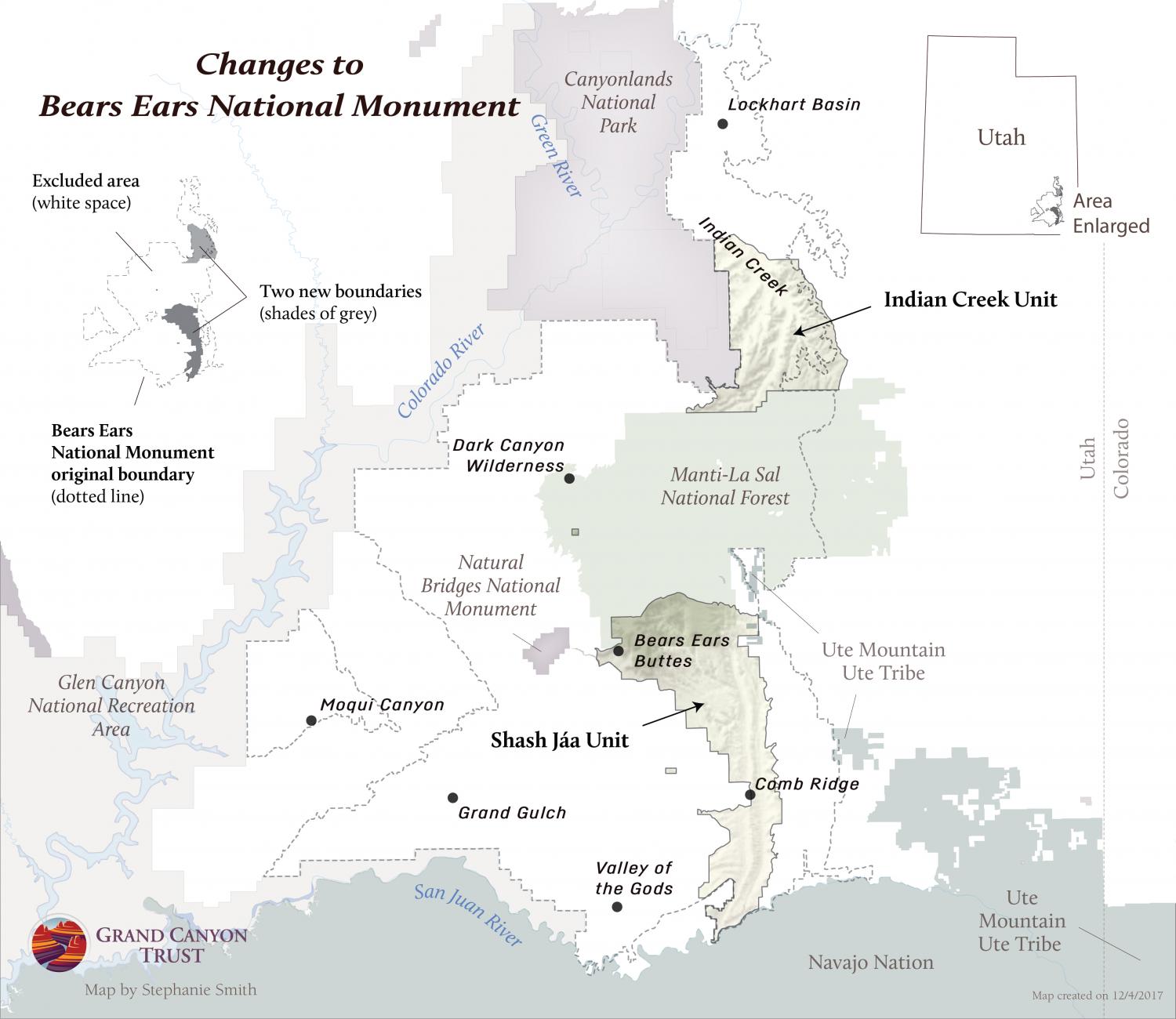
In my last post, "The Coming Green Wave," I mentioned the controversy over Bears Ears National Monument. It's a wilderness area in southeastern Utah that was declared a national monument by President Barack Obama in December 2016. In December 2017, President Donald Trump reduced it drastically in size.

Here's a map. You can click to enlarge it:


Pursuant to President Trump's order, only the Indian Creek Unit and the Shash Jáa Unit will remain protected.

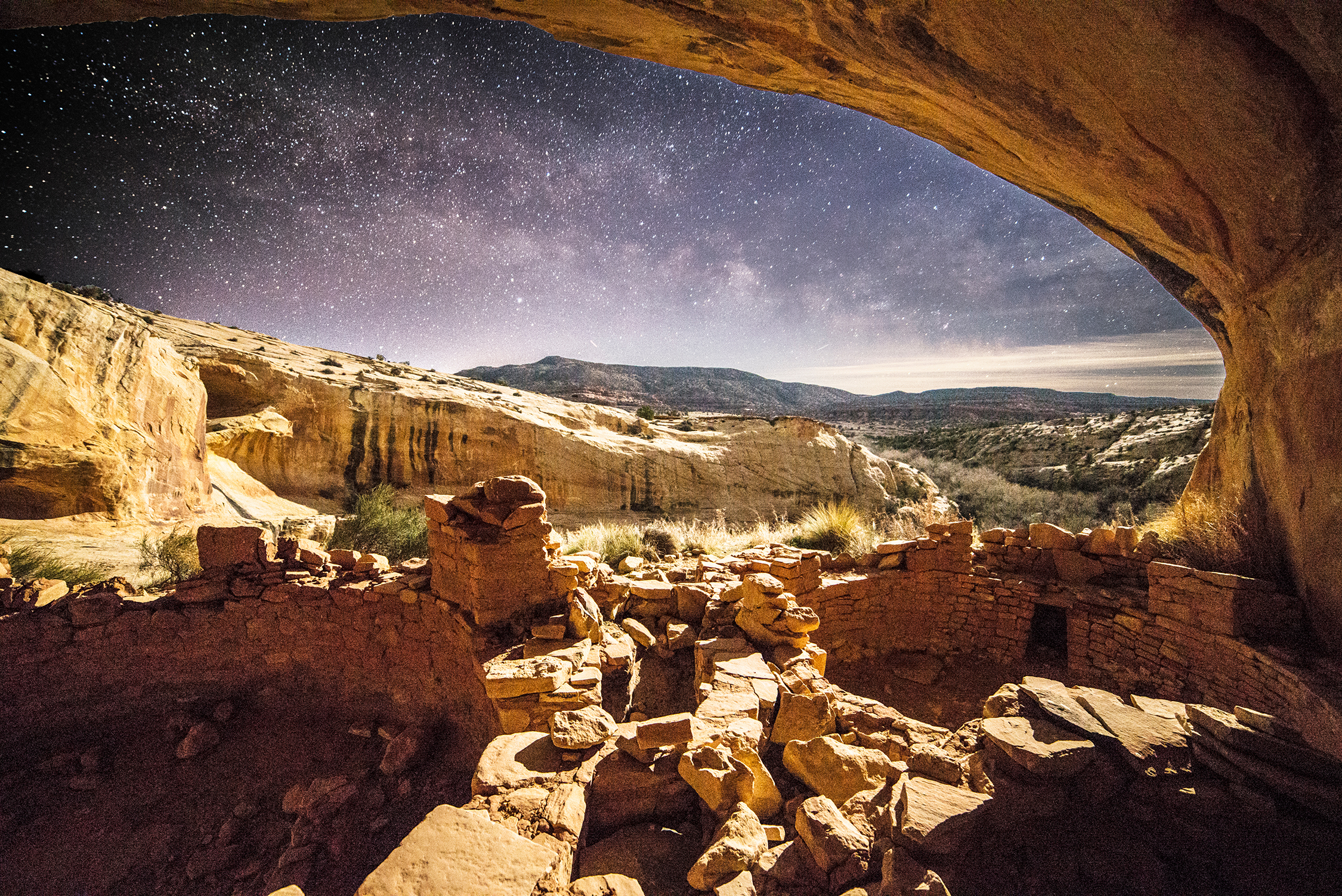
Some Bears Ears photos:


Get the picture? Bears Ears is a national treasure: lovely, vast, unspoiled, once the home of ancient North American Pueblo peoples. Many Native American tribes today still consider sites within Bears Ears sacred:


The Hopi, Navajo, Ute, Ute Mountain Ute, and Zuni tribal governments are working together to defend the Bears Ears National Monument. They support two bills now in Congress: H.R.4518, the Bears Ears National Monument Expansion Act, and S. 2354, the Antiquities Act of 2018. These bills would restore and expand the boundaries of Bears Ears National Monument to the full boundary originally proposed by the five tribes in 2015.

A national monument is "a protected area that is similar to a national park, but can be created from any land owned or controlled by the federal government by proclamation of the President of the United States." The main difference between a national monument and a national park is that the latter must be created by an act of Congress; the U.S. president, acting alone, can declare a national monument. This is what President Obama did with respect to Bears Ears.

My understanding is that if it were to remain a fully protected area, none of the original Bears Ears National Monument could undergo oil or uranium extraction; real estate development; agricultural use other than cattle grazing, which is permitted; destructive forms of recreational use; etc. After being shrunk, some 85 percent of the original site would no longer be protected.

Mr. Trump's Bears Ears order also cut another national monument, Grand Staircase-Escalante, to about half its original size.


Grand Staircase-Escalante


Grand Staircase-Escalante was declared a national monument by President Bill Clinton in 1996.

I am about to donate to the Bears Ear Defense Fund, set up by the Grand Canyon Trust. I invite you to donate to this fund or any other worthy organization that works to defend Bears Ears.


Monday, August 20, 2018

The Coming Green Wave

Timothy Egan
"A Green Wave is coming this November," writes New York Times op-ed columnist Timothy Egan, who calls it "the pent-up force of the most overlooked constituency in America. These independents, Teddy Roosevelt Republicans and Democrats on the sideline have been largely silent as the Trump administration has tried to destroy a century of bipartisan love of the land."

Mr. Egan rightly feels Mr. Trump deserves much blame for supporting our country's continuing to burn coal, thereby exacerbating climate change. He says the record firestorms in the American West and in Canada this year may finally convince voters to vote "green," in view of the fact that climate scientists are at last confirming that global warming causes strange weather patterns that can lead to forest fires, hurricanes, and (as is happening here in Maryland) repeated heavy rainstorms that produce scary, killing, financially costly flash floods.

The coming Green Wave of anti-Trump/anti-GOP voting, Mr. Egan says, will arise because:

... if just one unorganized voting segment, the 60 million bird-watchers of America, sent a unified political message this fall, you’d have a political block with more than 10 times the membership of the National Rifle Association.

Bird-watchers in Colorado


And also because:

While President Trump tries to prop up the dying and dirty coal industry with taxpayer subsidies, the outdoor recreation industry has been roaring along. It is a $374-billion-a-year economy, by the government’s own calculation, and more than twice that size by private estimates.

Huge numbers of outdoorsy potential voters are already in revolt:

The revolt started after Trump shrunk several national monuments in the West last year — the largest rollback of public land protection in our history. The outdoor retailer Patagonia responded with a blank screen on its web page with the statement, “The President Stole Your Land.” It was the first shot in a battle that has been raging all summer.


Bears Ears National Monument in Utah
was shrunk by presidential order this year.

The ultimate size of the revolt could be phenomenal. After all, "144 million Americans ... participated in an outdoor activity last year," writes Mr. Egan, and there were "344 million overall visitors to national parks."

If just a tenth of these patrons of national parks and a tenth of all these outdoors-loving people show up at the polls and vote "green" this year, it could dramatically change our politics going into the 2020 presidential election year.

Thomas L. Friedman
And then, writes Times op-ed columnist Thomas Friedman in "What if Mother Nature Is on the Ballot in 2020?," Katy bar the door!

What if all the extreme weather this year — linked to climate change — gets even worse and more costly? What if the big 2020 issue is not left-right — but hot-cold or wet-dry? What if the big 2020 issue is not “Who lost Russia?” or “Who lost North Korea?” but “Who lost planet Earth?” ...

Mother Nature is done letting us pretend that we don’t know and can’t connect the dots — and that could create some very interesting politics. ...

Sure, Trump will sneer that “green” is girlyman, uneconomic, unpatriotic and vaguely French. But Democrats can easily counter that green is globally strategic, locally profitable and working class — green is the new red, white and blue. That message can play today in Rust Belt battleground states like Michigan and Ohio.

If the "green" message — surprisingly to many, perhaps, it's a highly pragmatic one — plays out the way it ought to in Michigan, Ohio, and other key states, it could turn Mr. Trump into a one-term president!


Monday, August 13, 2018

On Localism and Subsidiarity

E.J. Dionne Jr.
Washington Post columnist E.J. Dionne Jr. titles today's column "Don’t let politics dumb you down." The column asks us to get back to thinking and debating seriously about our politics, rather than just forever chastising Donald Trump's latest tweet. One key to doing so, says Mr. Dionne, is to get involved with the new "localism" in America:

As Washington politics becomes increasingly rancid, a disheartened nation turns toward the many good things happening at the grass roots. In cities and towns across the country, civic and political leaders are — honest and true! — solving problems and finding new missions for old places. Words like “rebuilding,” “reclaiming” and “renewing” are the stuff of local life.

David Brooks
Mr. Dionne points out that op-ed writer David Brooks of The New York Times has also been championing localism of late, as, for instance, in his recent column "The Localist Revolution." In it, Mr. Brooks writes:

Localism is the belief that power should be wielded as much as possible at the neighborhood, city and state levels. Localism is thriving — as a philosophy and a way of doing things — because the national government is dysfunctional while many towns are reviving. Politicians in Washington are miserable, hurling ideological abstractions at one another, but mayors and governors are fulfilled, producing tangible results.

Solving problems. Tangible results. Aren't these supposed to be exactly what politics and government are all about?

Mr. Dionne cautions us that we need to keep in mind, "as many localists do, that some problems require national action. We’re better off having a federal Social Security and Medicare program, and it will take a comparable effort to get health insurance to everyone."

Mr. Dionne's attitude here reminds me of the principle of social organization called "subsidiarity," to wit, that "social and political issues should be dealt with at the most immediate (or local) level that is consistent with their resolution." Subsidiarity is familiar to me, as a Catholic, as the general belief that "matters ought to be handled by the smallest, lowest or least centralized competent authority. Political decisions should be taken at a local level if possible, rather than by a central authority."

George Weigel
I originally learned about that big word, "subsidiarity," from the writings of Catholic essayist-ethicist George Weigel, who is about as conservative as a thinking Catholic can be — and much more conservative than I am. In an anti-Trump 2016 column, "Resisting the Demagogue," Mr. Weigel wrote:

There is nothing remotely Catholic about the Trump sensibility. There is nothing in Mr. Trump’s record or his current campaign to suggest that he gives a fig for the life issues, for religious freedom in full, or for the constitutionalism that is America’s unique expression of Catholic social doctrine’s principle of subsidiarity. Rather than lifting us above anger to renewed common purpose, Mr. Trump is dragging our politics even deeper into the muck ...

In general terms, Mr. Weigel impresses me as being to the political right of Mr. Brooks, while Mr. Dionne is clearly to Mr. Brooks's left. Yet all three champion some form of localism/subsidiarity. All this tells me that the idea of localism/subsidiarity might well constitute the fundamental solution to all our political woes today.


Sunday, August 12, 2018

Democratic Socialists vs. Social Democracy

Sheri Berman
In the Washington Post today, an article by Barnard College professor of political science Sheri Berman is of interest: "Democratic socialists are conquering the left. But do they believe in democracy?"

Much of Berman's article is a quick history of two of the primary branches of European socialist politics, beginning with the Communist Manifesto of Karl Marx and Friedrich Engels in 1848 and ending with the "unraveling" of the post-World War II order in the 1970s. During that extended period, "three camps emerged with different views of capitalism and democracy":


  • One camp — that of Vladimir Lenin, the man who engineered the bolshevik communist takeover of what would, in 1917, become the Soviet Union — set about bringing down capitalism lock, stock, and barrel (and with it, democracy as we know it). The necessary agent that would bring about the end of capitalism was thought by this camp to be "a revolutionary vanguard."
  • Another camp, disdaining the "violence and elitism" of the revolutionary movement with its self-styled "revolutionary vanguard," settled for "agitating against the reigning [capitalist] order and eagerly awaiting its departure." That departure was sure to happen in the not too distant future, it was felt by this camp. This camp thought it wrong to promote governmental "policies to 'reduce capitalist exploitation'." Why? "Alliances or compromises with nonsocialists" would just prop up the existing order. As for democracy per se, safeguarding it was not a priority — just "a means rather than an end." This camp was that of the first "democratic socialists." It wanted to use democratic means solely to put an end to capitalism's exploitation of the working classes.
  • A third camp, the "social democrats," were willing to compromise with the forces of the capitalist bourgeoisie. To leftists of this stripe, capitalism was not necessarily "bound to collapse." But its "downsides" could be ameliorated if its "upsides" were harnessed to the task by means of enacting "concrete reforms" in the here and now.


*****

Bernie Sanders
In 2016, we witnessed a Democratic presidential primary battle between the party's eventual candidate, Hillary Clinton, and Senator Bernie Sanders, who called himself a socialist. Is Senator Sanders a "social democrat," or is he a "democratic socialist"? It's a question I can't easily answer, if the litmus test is simply one's attitude toward capitalism. Neither Sen. Sanders nor Ms. Clinton talked about bringing about an end to capitalism, after all.

Ms. Berman says in her article, "Although traditions are neither monolithic nor unchangeable, democratic socialism and social democracy have worked very differently." And the two camps have accordingly evolved differently. So I think I'm on firm ground when I say Bernie Sanders was and is, at least in today's terms, a "democratic socialist," while Hillary Clinton represented the forces of "social democracy" in our 2016 presidential race. (By the way, I voted for Bernie Sanders over Hillary Clinton in the Maryland presidential primary in 2016.)

Alexandria Ocasio-Cortez
Now, in 2018, we Democrats are trying to resolve the question of what our party should do if we want to deliver as much of a death blow to Trumpism as possible in the upcoming November elections. In particular, should we support latter-day "democratic socialists" like Alexandria Ocasio-Cortez, who is running for Congress in New York's 14th district?

Conor Lamb
Or should we lean more toward today's "social democrats," such as Conor Lamb, who won a special election in March of this year to be able to represent Pennsylvania's 18th district?

Well, I'd say that as a practical matter, we can do both. Wherever the ultra-left Ocasio-Cortez's can get on the ballot, we can support them if we are so inclined. Where the best Democratic hope lies with a more moderate Conor Lamb type, then that candidate can be our standard bearer.

My attitude is: whatever works to give Trump a big, fat black eye is all right with me ...


Saturday, August 11, 2018

Movie: "The Guernsey Literary and Potato Peel Pie Society"

Just watched "The Guernsey Literary and Potato Peel Pie Society" on Netflix. What a sweet film!

Based on a 2008 bestseller by Mary Ann Shaffer and Annie Barrows, it's a love story-cum-mystery taking place in 1946, with flashbacks to 1941, that is set on the English Channel Island of Guernsey, which was occupied by the Germans during World War II.

The story is also about a female protagonist who seeks within herself the ability to break with the social conventions of a time when women were supposed to subordinate themselves to men in a male-run world. Even though Juliet Ashton (Lily James) is already an established bestselling author, will she be able to find the inner strength to write not what she and her public and her publisher want her to write, but instead write what her heart tells her to? And will she be able to follow her own heart as she organizes her life-to-come in her postwar Britain?

At the outset of the movie, the audience is shown that German-occupied Guernsey during the war was subjected to the depredations of inhuman, jackbooted Nazis. Now, the war over, Juliet meets the members of the Guernsey Literary and Potato Peel Pie Society with whom she has been corresponding by mail. To her surprise, she finds them strangely unwilling to open up to her about their experiences during the occupation. She does learn, however, that the "literary society" was founded on the spur of the moment in 1941 merely as an excuse for getting the Germans to overlook their being out and about after curfew. Yet they are also truly devoted to reading and to discussing literary classics such as Charlies Lamb's Essays of Elia and Charlotte Brontë's Jane Eyre.

Can Juliet break through to the society's tiny handful of longstanding members to find out why they don't want to talk about the occupation? If she does, what might she learn? How might learning it change her life?

I invite Netflix members who might wish to learn the answers, or might ling to view a sweet, cozy, romantic film that packs a message about the values that are truly human, to be sure to watch "The Guernsey Literary and Potato Peel Pie Society." Enjoy!


The Blanket Coverage of Trump's Sins

New York Times
columnist
Thomas Friedman
Thomas L. Friedman's latest New York Times op-ed, "Keep Up the Blanket Coverage of Trump. It Hurts Him," prescribes the wrong fix for our ailing democracy. Mr. Friedman's premise: "Just a little wave of disgust among Republican moderates is all that is needed to turn several key states from red to blue."

His prescription (aimed mainly at those in the news media who decide what material gets covered the most): Don't stop the ongoing vituperative coverage of everything the president does wrong and everything he cruelly and falsely utters.

Mr. Friedman's hope: " ... there are decent Republican moderates who, while they may never pull the lever for a Democrat, just might get too disgusted to vote. It’s the best hope."

Too disgusted to vote??? Don't pull any electoral levers at all, if you feel you can't tolerate Trump and refuse to vote Democratic??? The recommendation is itself undemocratic. In itself, if carried out, it would further wound our democracy.

Moreover, Mr. Friedman's logic is self-refuting. He says there has indeed been ongoing blanket coverage of Trump's neverending faux pas. No one would challenge this fact, I agree. Yet in the latest RealClearPolitics average of polls, Trump still has a personal approval rating of 43 percent.

Trump's job approval ratings since he took office in January 2017 are shown by the lower black line in this graph:


They're right where they were just after his inauguration! Though they've leveled off in the last couple of months, in the first half of 2018 they have even climbed, after having bottomed out at 37 percent last December!

So the incessant bad press hasn't really hurt Trump.

Mr. Friedman says, in what I consider a tellingly weak argument:

I want all of this heard and spread from sea to shining sea. Because though [Trump's words of "bullying arrogance"] do rally Trump’s base, they also rally Democrats and evidently embarrass Republican moderates and alienate independents.

The veteran pollster Stanley Greenberg told me that he’s seeing signs of this is in his recent focus groups: One was with moderate Republicans, all of whom “were put off’’ by Trump’s behavior, and another was with “secular conservative Republicans,’’ half of whom were put off.

Overall, it seems the ongoing vituperativeness of most of the media coverage toward Trump has had marginal impact on G.O.P. voters, if only half of secular conservative Republicans have been "put off." Mr. Friedman continues:

In addition, Greenberg said, the full Trump — insulting black sports heroes, threatening conservatives who dare cross him, praising Vladimir Putin and attacking the F.B.I. — “reminds evangelical conservatives of the devil’s bargain they made in supporting him. Seeing him in all of his overreach and mania and self-absorption doesn’t make them second-guess their choice, but it makes them uncomfortable about it.’’

Just "uncomfortable"? Just "put off"? The continuing assault of our rational media upon our irrational president hasn't shown itself to be a great strategy, I'd say. So now the best prescription is: if you're not a confirmed Democrat but are uncomfortable with and put off by Trump, just don't vote?

No, I say, that is the worst sort of prescription, if we want to save our democracy. We need to find a way to convince as many as possible of the 40-45 percent of the electorate who continue to form Trump's base to abandon him at their polling places. We need to convince those who cast no vote at all in the 2016 election, and those strong Democrats who might otherwise fail to vote this November, to come out and vote against Trumpism. Let's maximize voter turnout, not minimize it!


Sunday, August 05, 2018

A History of Sexual Harassment

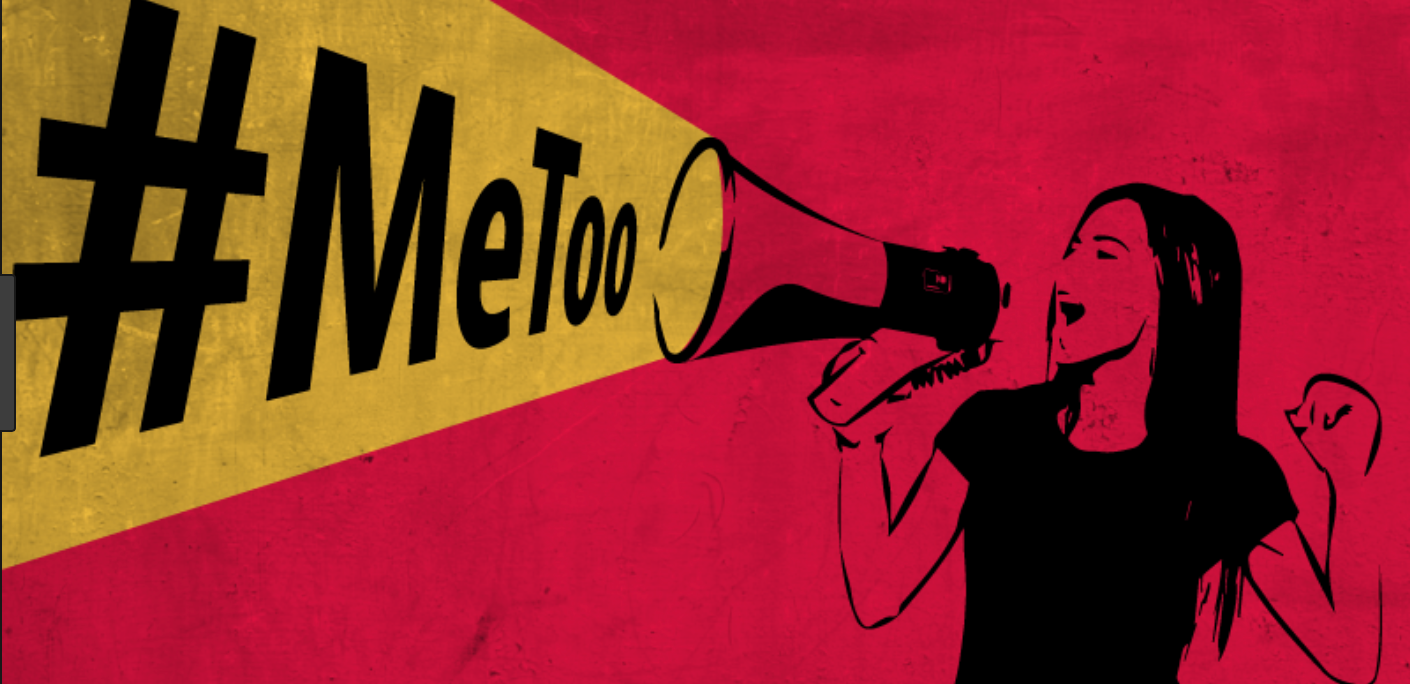
You have to be living on Mars not to know that the last several months have given us a great deal to think about concerning sexual abuse and harassment. The Twitter #MeToo hashtag (see also here on Wikipedia) has swelled to epic proportions via the tweets of women who report having been harassed and coerced into sex — or, sometimes, who refused to be coerced — and then (until recently) felt unwilling to publicly accuse the harasser.

I admit I've been torn as to whether to take #MeToo as seriously as aggrieved women might wish me to. For one thing, I've had a blind spot as to whether I ought to believe most of the women's allegations.

The reasons for which I've had a blind spot have to do in part, I think, with the facts of my age (70) and my gender (male). Plus, I seem to personally nurture a psychological predisposition toward innocence. I want to believe that I myself am innocent of all except minor transgressions, and I want to believe that most other people — including most men — are equally innocent.

My predisposition toward innocence has wrongly led me to believe that the spate of harassment and abuse accusations against men — when they are not false accusations — are the fault of the Sexual Revolution of the 1960s. At that time, old sexual taboos pretty much evaporated. My (incorrect) belief has been that the relaxing of sexual taboos has had as a side effect the engendering of widespread sexual harassing and abuse. Thus if we were to look back to before the Sexual Revolution, we would find little if any sexual harassment.

Wrong!

Yesterday I googled "history of sexual harassment" and found "A Short History of Sexual Harassment" by Reva B. Siegel. Siegel shows that sexual harassment and coercion have been endemic in American life ever since there was American life in the first place. Siegel: "The practice of sexual harassment is centuries old — at least, if we define sexual harassment as unwanted sexual relations imposed by superiors on subordinates at work."

First example: the treatment of black female African slaves by their white male masters. Siegel: " ...  sexual coercion was an entrenched feature of chattel slavery endured by African-American women without protection of law."

After the slaves' emancipation in the mid-1860s, the focus shifted to how women who were not chattel slaves ("property" rather than human beings) but instead "wage-slaves" have been treated. Any woman in the work force might be subjected to harassment and sexual coercion by her male employers or superiors, and have no legal recourse. The law as then practiced thought of every woman, slave or free, as being in effect the possession of some man:

At common law, sexual assault gave rise to an action for damages insofar as it inflicted an injury on a man's property interest in the woman who was assaulted; thus, a master might have a claim in trespass against a man who raped his slave, or a father might bring a seduction action against an employer who impregnated or otherwise defiled his daughter.

As for rape per se, yes, it was clearly against the law. Usually, though, no woman could prove in court that she had been raped unless she could show that she had put up the "utmost resistance" to the act that had been forced upon her. The legal standards that were then in effect cocerning "utmost resistance" were impossible to prove. Any woman who tried would typically just lose her job and/or her good reputation, and the main reason for that catch-22 was that men believed women in general were by nature "promiscuous." If a man had sex with her, the default assumption was that it was at her behest.

What Siegel says in her essay convinces me that sexual harassment and coercion have been rampant not just for decades but for centuries. Wherever and whenever there has been a situation in which a man is in a position of power and a woman is subordinate to him, there has been a substantial likelihood of sexual abuse.

*****

Hands off!
Sexual abuse is thus not just about sex. It's about power. It's about control. And it's very often about class distinctions, inasmuch as the harassing/abusing male is often of a higher socioeconomic class than the woman being abused — the reason being that the higher-ups in an organization are apt to possess more of the attributes of high socioeconomic class than the lower-downs.

And, given the reasons why these class distinctions arise in the first place, it's accordingly often about race and ethnicity, since the abused women are often people of color, whereas the abusing men are often white.

Yet class distinctions and race/ethnicity distinctions are not always present. What is generally present is a difference in the relative levels of power. If the potential abuser can convey to the potentially abused that her (or his, when the abuser is a woman or a gay man) job is at stake unless she complies, and then if she does not keep her mouth shut about the abuse later on, the ground is fertile for abuse.


Sunday, July 29, 2018

Humanism Now!

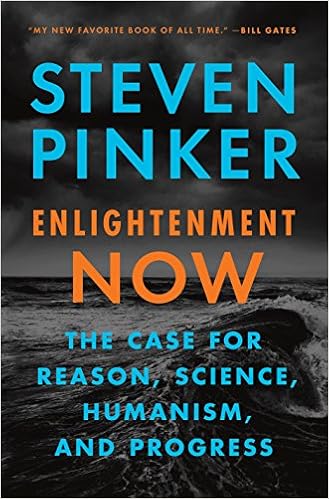
I recently posted "An Open Letter to Steven Pinker," in which I complained about his new book Enlightenment Now that it seems — despite its excellent argument for reason, science, humanism, and progress — to plump for atheism as the basis for his argument.

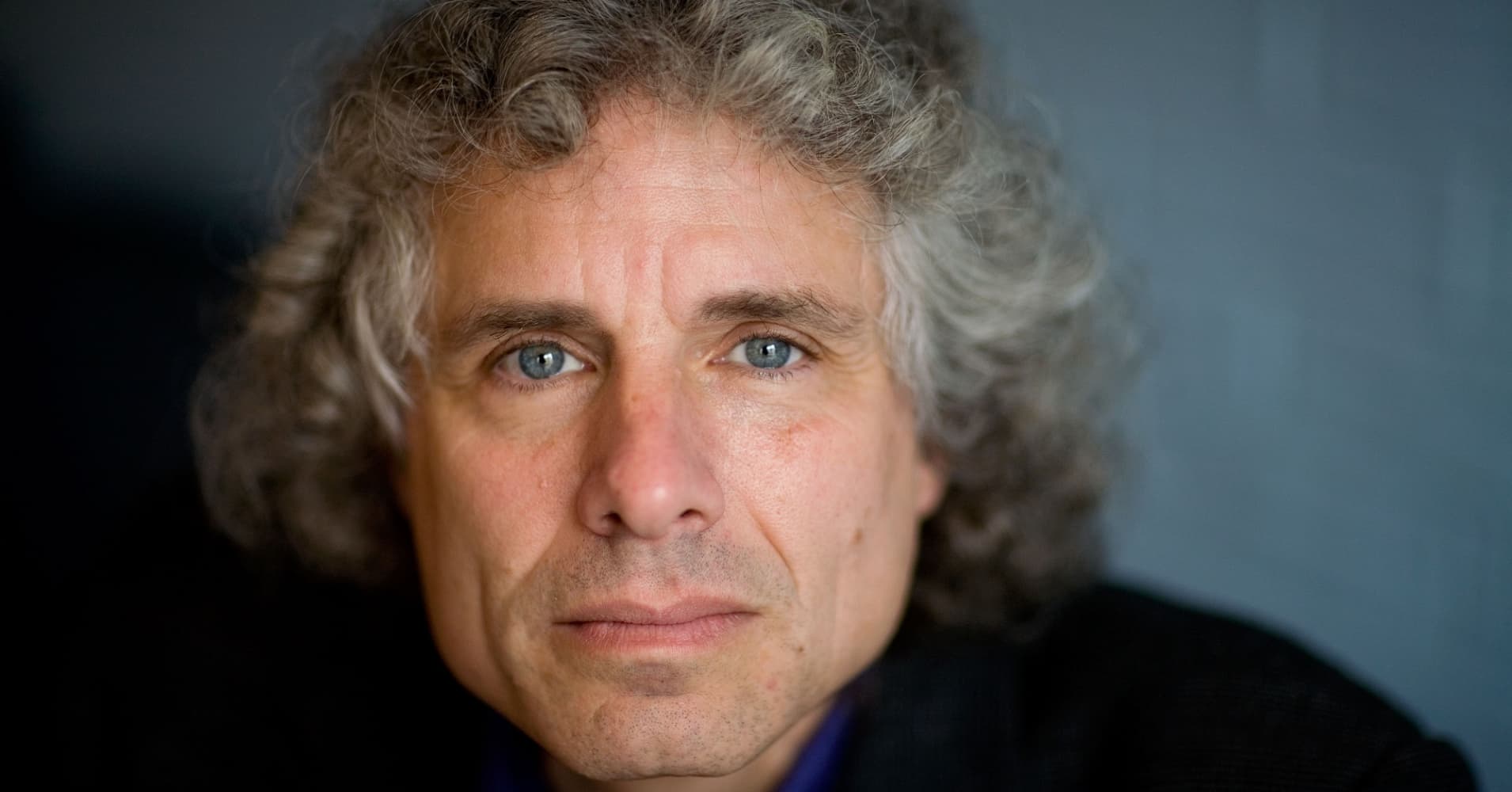
Steven Pinker
I sent the author an e-mail asking him to respond to my open letter — which he so kindly did! (Thank you, Professor Pinker!)

As a result, I have to take back my accusation about atheism. Mr. Pinker said:

I’m actually not a “public advocate for atheism,” though I am a public advocate for humanism, which is not the same thing. (Atheism is simply a failure to believe in a particular proposition, namely the existence of supernatural entities — but there are lots of things lacking evidence that I don’t believe in.)

I thus became intrigued by "humanism," which Wikipedia says is

a philosophical and ethical stance that emphasizes the value and agency of human beings, individually and collectively, and generally prefers critical thinking and evidence (rationalism and empiricism) over acceptance of dogma or superstition.

Wikipedia says, in its article on secular humanism, that it is

a philosophy or life stance that embraces human reason, ethics, and philosophical naturalism while specifically rejecting religious dogma, supernaturalism, pseudoscience, and superstition as the basis of morality and decision making. Secular humanism posits that human beings are capable of being ethical and moral without religion or a god.

But Professor Pinker's life stance is that of a Jewish Humanist. Humanistic Judaism, says Wikipedia, is

a Jewish movement that offers a nontheistic alternative in contemporary Jewish life. It defines Judaism as the cultural and historical experience of the Jewish people and encourages humanistic and secular Jews to celebrate their Jewish identity by participating in Jewish holidays and lifecycle events (such as weddings and bar and bat mitzvahs) with inspirational ceremonies that draw upon but go beyond traditional literature.

The humanorah,
the primary symbol of the
Society for Humanistic Judaism.


In response to my further questions about Jewish Humanism, Professor Pinker told me:

Yes, it’s absolutely OK for Jewish Humanists to carry out traditional religious practices, and their beliefs are their own business – the main commitment is that morality be grounded in considerations other than divine edict. This perhaps grew more naturally out of Judaism than other major religions because Judaism has always been a matter of practice rather than belief. There is no fixed creed, a lot of vagueness and disputation about fundamental theological issues (such as the nature of the afterlife, and whether hell exists), and a don’t-ask-don’t-tell attitude to private belief. What matters is whether you circumcise your sons, light the Sabbath candles, observe the holidays, and so on. So the transition to humanism in the Humanistic, Reform, and Reconstructionist branches was not difficult.

If I were Jewish instead of Catholic, I'd probably be a disciple of Jewish Humanism. I, too, have doubts about some of Catholicism's fundamental theological issues, especially the ones pertaining to moral laws. Yet (beliefs being my own business) I do remain a believer that there is a God above and beyond — and also within — the physical world.

It's important to note that this life stance of mine puts me at odds with many — but by no means all — of my fellow Catholics. Regrettably, it also separates me from what I assume has been the vast majority of God-believers, down through history.

Yet I still think that the Bible and other religious texts — Jewish and Christian, and also Islamic, Buddhist, Hindu, and Taoist — can teach us much, if properly interpreted.


Tuesday, July 24, 2018

An Ewer without a Handle

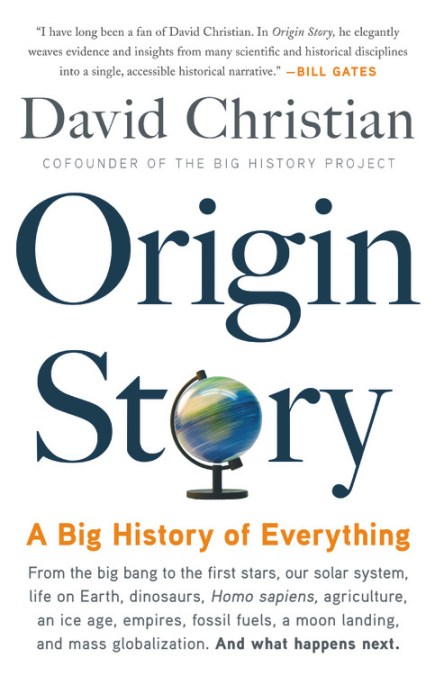
I've begun reading David Christian's new book Origin Story: A Big History of Everything. I expect it will furnish a broad overview of cosmic and human history, a good thing. But I also expect I will end up agreeing with what Washington Post columnist Michael Gerson says about it. Gerson's column in today's Post, "This story of everything misses what matters most," congratulates Christian on a fine book:

Christian has achieved something remarkable: an engaging guide to the physics, chemistry, biology, anthropology, linguistics and sociology that constitute the story of history itself. The author practices what he calls “Big History” — gathering the Big Bang, the advent of molecules, plate tectonics, eukaryotes, dinosaurs, Homo sapiens, climate dynamics and globalization into one sweeping arc. In roughly 300 pages. With no equations.

Yet:

Christian has written a book that succeeds at everything except its stated purpose. Ultimately he wants to provide a replacement for traditional origin stories that come from religion. These he finds contradictory and outdated. But human beings are wired to need explanatory stories, revealing, as Christian writes, “ This is what you are; this is where you came from.” Without this rooting, people can become victim to a “sense of disorientation, division and directionlessness.”

... Christian ... repeats the defining mistake of scientism: the unquestioned assumption that all rational knowledge is scientific knowledge. This is anything but humble. It is a kind of epistemological imperialism that excludes knowledge coming from moral and philosophical reasoning, from theological argumentation and from historical investigation based on reliable witnesses. Not to mention the kind of knowledge that someone loves us. Christian attempts to increase the certainty of knowledge by limiting it to less consequential things. It makes the Cosmic Egg more like a Faberge egg — ornate, beautiful and, ultimately, useless.

As to God, the claim that modern science can provide no direct evidence for a being apart from the natural world is tautological. Does Christian expect transcendence to be like a gas that glows blue when heated?

Christian is a secular humanist, as he makes clear right away in his book. (Aren't "Christian" and "secular humanist" supposed to be antonyms?) My last post, "An Open Letter to Steven Pinker," was addressed to another secular humanist, Dr. Pinker, author of another recent book, Enlightenment Now: The Case for Reason, Science, Humanism, and Progress.

It doesn't take a rocket scientist to see that in today's world a lot of the best minds are those of secular humanists. But not all: Mr. Gerson is a case in point. I side with Mr. Gerson. I think the sum total of our human knowledge that comes only from science, reason, humanism, and progress is like an ewer without a handle. We ultimately need the handle of transcendence beyond the tangible world to overcome our deep “sense of disorientation, division and directionlessness."


Sunday, July 22, 2018

An Open Letter to Steven Pinker

Dear Professor Pinker:

I'm reading your new book, Enlightenment Now: The Case for Reason, Science, Humanism, and Progress. I began reading it with the assumption that I would fully agree with its optimism about the future of our species and our admittedly troubled world. And I do agree with many of your arguments stating that most of us tend to be overly pessimistic about the future, for reasons you cogently lay out. I myself find it all too easy to be pessimistic, given what's going on today.

But I find I also have real problems with the general tenor of your arguments and with your basic outlook.

Let me begin stating my objections by discussing how you deal with the subject of climate change. In your chapter on The Environment, you quite correctly tell your readers that human activity has fueled global warming, and that we need to do something about it, soon. I agree with you. I also like how you laud the ideals of the 18th-century Enlightenment: reason, science, humanism, and progress.

But when you dump a copious amount of mud on religion, I have to part company with you.

With respect to climate change in particular, I think you are mistaken about Pope Francis's 2015 encyclical Laudato Sí: On Care for Our Common Home, whose subject is the need for the world to properly address global warming. You write:

Starting in the 1970s, the mainstream environmental movement latched onto a quasi-religious ideology, greenism, which can be found in the manifestoes of activists as diverse as Al Gore, the Unabomber, and Pope Francis. Green ideology begins with an image of the Earth as a pristine ingénue which has been defiled by human rapacity. As Francis put it in his 2015 encyclical Laudato Si’ (Praise be to you), “Our common home is like a sister with whom we share our life . . . [who] now cries out to us because of the harm we have inflicted on her.” The harm, according to this narrative, has been inexorably worsening: “The earth, our home, is beginning to look more and more like an immense pile of filth.” The root cause is the Enlightenment commitment to reason, science, and progress: “Scientific and technological progress cannot be equated with the progress of humanity and history,” wrote Francis. “The way to a better future lies elsewhere,” namely in an appreciation of “the mysterious network of relations between things” and (of course) “the treasure of Christian spiritual experience.” Unless we repent our sins by degrowth, deindustrialization, and a rejection of the false gods of science, technology, and progress, humanity will face a ghastly reckoning in an environmental Judgment Day.

It's a gross misreading of Laudato Sí to compare it with the Unabomber's ramblings or with any "quasi-religious ideology" such as "greenism." The pope's encyclical is not quasi-religious; it is as fully religious as human forms of expression can ever be. And it is a reasoned argument that admittedly proceeds from a different set of foundational assumptions than your own — but it is a reasoned argument. In wholly accepting the findings of climate scientists, it reaches many of the same conclusions as you do. And in underscoring our human responsibility, as we put the brakes on greenhouse emissions, to protect the needs of people living in developing countries with expanding economies, it is magnificently humanistic.

*****

This is why I think your book actually plumps as much for outright atheism as it does for your stated ideals of reason, science, humanism, and progress. But religion per se is not inherently and ineluctably at war with those Enlightenment values. In fact, the Catholic Church of which I am a liberal member extols those values.

True, it seeks to balance those values with religious faith and tradition. Pope Francis's basic assumptions see humanism, for example, as flowing directly from the teachings of Jesus. And with respect to science, the conservative Pope John Paul II made it clear that one of your favorite topics, evolution, is perfectly consistent with Catholic belief — as long as scientists don't try to peer back before the creation of the universe at the instant of the big bang, and as long as they don't try to deny the existence of the human soul.

Nor am I aware of any teaching of the church that denies the other two of your "big three" scientific understandings. In addition to Darwinian evolution, they are entropy, or a general tendency toward increased disorder, a fundamental principle of how the universe works; and information, any ingredient of cosmic reality which serves to reduce entropy or disorder.

I think you are wrong in maligning religiosity by picking on its very worst aspects, such as a clinging to superstition, as a springboard to championing outright atheism. Wrong, in at least two ways. One, religion as I personally know it has outgrown erstwhile sins like fostering rank superstition, fighting infidels in crusades, and burning nonbelievers at the stake.

Two, evolution has given us humans an innate tendency to believe in a God or gods. That's not going to change. So when you argue for sensible measures to avert climate change while at the same time crossing swords with Pope Francis, you put the backs up of Catholics like myself who would otherwise hope to agree with you. Not an excellent strategy, in my opinion, in that it does not bespeak a rational appraisal on your part of the actual situation of your audience. It is as though you are saying that if we don't take the Enlightenment ideals to the extreme of casting out all of our human religious beliefs, we face a dark future indeed. Put more tersely: the only true basis for optimism is atheism.

That's at the very least a big tactical mistake, Professor Pinker. You want to enlarge the reason-science-humanism-progress choir, not shrink it!

Yours truly,
Eric Stewart


Monday, July 09, 2018

Roe isn’t just about women’s reproductive rights ...

Nancy Northup
of the Center for
Reproductive Rights
Nancy Northup's op-ed in today's Washington Post gives a good reason why even an abortion opponent ought to withhold support from President Trump's nominee to replace Antonin on the Supreme Court. (Trump is expected to announce the identity of his nominee later today from among four possibilities, all of whom are known to be anti-choice.) Northup, president and chief executive of the Center for Reproductive Rights, makes a convincing case that "everyone’s personal-liberty rights are on the line" with this nomination.

The reason is that the 1973 Roe v. Wade decision (as upheld in the 1992 case Planned Parenthood of Southeastern Pennsylvania v. Casey) that held that the government cannot constitutionally interfere with individuals' personal-liberty rights is part of a long line of decisions which do not necessarily affect women's reproductive rights. Northup writes:

Just as Roe rested on past liberty decisions, it became the basis for future ones — including outside the area of women’s reproductive rights. The court cited Roe and Casey’s reasoning in a broad range of subsequent cases. Those include landmark decisions protecting liberty rights, as in Lawrence v. Texas (2003), which held that the government cannot criminalize intimate sexual conduct between same-sex partners, and Obergefell v. Hodges (2015), guaranteeing same-sex couples the right to marry.

This line of precedent protects us all, and a post-Kennedy Supreme Court could not sever it without threatening to destroy our “realm of personal liberty.”

... In deciding Roe, the court looked to cases in the 1920s on the right of parents to educate their children according to their values and ideas, and the justices drew a line to landmark decisions affirming the right to use contraception and, in 1967’s Loving v. Virginia, the right to marry someone of a different race.

I agree with Northup, even though I am personally not all that happy with Roe-legalized abortion. I think reversing Roe and Casey would undermine too much settled personal-liberty law well outside the sphere of reproductive rights.


Sunday, July 01, 2018

Breaking Faith

Todd Gitlin
In today's Washington Post cultural commentator Todd Gitlin says, "This was the most gutting month for liberals in half a century." Gitlin has been a voice for liberal activism for nearly 60 years, since his days as a student at Harvard when he was involved in protesting nuclear armaments.

In his Post article, he's once again rallying the troops of the left:

The challenge for a left that wants to win power is existential as well as strategic and tactical. If you were gobsmacked by Trump’s ascent, the question is whether you can, in the words of the civil rights anthem, “keep your eyes on the prize, hold on.” The prize is not won by wishing, however vehemently. The center is equally challenged: Can it cohabit with the left under a big tent?

Moreover:

Perhaps the evidence that national politics is rigged for the right reinforces the view that America was foredoomed from the days of the slave trade; that racism and nativism are unwavering, foundational, even insuperable; that Barack Obama’s kind of change cannot, in the end, be believed in; that efforts to win over the moderate are silly; that confrontational moves are the only ones that feel authentic. In an emergency, they will say, incrementalism and politics as usual are irrelevant. Be blunt and direct. Denounce the secretary of homeland security at a Mexican restaurant. Ask Sarah Huckabee Sanders to leave.

I disagree. I'm not on board with that view for the reason that it characterizes American politics as being nothing more than a tug of war:


The political right pulls in its own direction as hard as it can. The left does the same in the opposite direction. Since Trump became president, the right has been dominant. Gitlin suggests the left can recoup if it adopts the motto, "Don’t waste any time in mourning. Organize." Put slightly differently, the individuals of the American left just need to coordinate with one another more effectively as they tug on the rope.

David Brooks
But that presupposes what this current blog post rues: the idea that our culture is made up of nothing more than an array of "atomic" units, each of us a radically separate, individual person with no hard-and-fast commitments to any particular social institutions that are supposed to furnish the glue that holds us together. As New York Times opinion writer David Brooks tells us in "Anthony Kennedy and the Privatization of Meaning," in our present-day culture of what I'm calling "atomic individualism" we have broken faith with "communal patterns and shared cultural norms and certain enforced guardrails [that] help us restrain our desires and keep us free."

During my own young adulthood in the mid-to-late 1960s, I bought into the notion of atomic individualism without much thinking about it. It was easy. Given that I was against the Vietnam War, I adopted the attitude that each young man of my generation had the "right" to resist the draft. Millions of my male age peers had the same attitude. The idea that we ought to kowtow to the institutional basis of the draft — the Selective Service System, an arm of the U.S. government — was completely foreign to our way of thinking.

We who opposed the draft also supported, by and large, the idea that the government was correct to step in and promote civil rights for African Americans. We felt we could pick and choose. Strong government = civil rights enforcement, yes. Strong government = draft enforcement, no.

That worldview, taken at its most abstract, means that any institution that stands between us as individuals and that which we consider to be "true" — that people of color should be equal to whites, yes, but not that any of us ought to be subject to the military draft — is disposable. The sundry institutional components of the U.S. government are things we can, if we so desire, freely break faith with.

We of my generation have quite selectively exercised our self-appointed options to break faith with not only particular governmental institutions but also "social institutions like family, schools that take morality seriously and a shared civic order," in the words of David Brooks. We have selectively dodged the "roles that define us — father, mother, neighbor, citizen and legislator." We have embraced the worldview that retiring Supreme Court Justice Anthony Kennedy summarized: "At the heart of liberty is the right to define one’s own concept of existence, of meaning, of the universe, and of the mystery of human life."

And that notion of radical individualism, all mediating institutions be damned, undergirds rightist thought, not just leftist. Thus does the conservatism of President Ronald Reagan mutate into that of President Donald Trump, according to whom the institutions that duly constitute our government in Washington, DC, have morphed into "the swamp."

Once you've selected which governmental institutions you don't reject, you wind up on one end or the other of the rope, in a neverending tug of war.


Monday, June 25, 2018

Ethnicity in America

Pat Buchanan
New York Times opinion writer Charles M. Blow, in "White Extinction Anxiety," talks about the racial views of longtime Republican stalwart Pat Buchanan. Buchanan says that we white Americans are poised to lose our very identity due to demographic trends which mean that the country will be majority-minority even sooner than experts used to think.

Buchanan has said, "You cannot stop these sentiments of people who want to live together with their own and they want their borders protected."

Buchanan's wrong. White people who "want to live together with their own" can instead learn to accommodate themselves to multiculturalism.

My own life is a case in point. I grew up as a racist. I'm no longer a racist.

I was born into the white American middle class in 1947. At that time, virtually no progress had been made in civil rights. I imbibed my parents' view that blacks were inferior to whites intellectually and morally.

I knew very few African Americans during my childhood. My family had a once-a-week "colored" maid, Frances. She was a nice enough person, but she could barely read and write.

My elementary school was all-white, but the janitor was a black man, Rev. Snowden. I assumed he was just a janitor because of his racial inferiority.

In the early 1960s the civil rights movement began to pick up steam. I was opposed to it. I thought racial integration was never going to work. I also thought all white people felt the same way.

In 1963 and 1964, I had a summer job in the mail room of the National Republican Congressional Committee. No non-whites worked at the NRCC. Our mail room was, however, occasionally visited by a young black man who was a message courier. One day, not knowing he was in another part of the room, I accidentally uttered the N-word in his presence. My co-workers shushed me. I was quite embarrassed at having hurt the courier's feelings by using a word that I usually never spoke. The next time he arrived in our mail room, I apologized ... and he accepted my apology. It may have been the first time I ever dealt with a black person as an actual human being.

When I was a freshman at Georgetown University in 1965, I let it drop to a new friend — a white man with whom I am still friends — that I thought blacks to be inferior to whites. My friend reamed me out for believing such a thing. It was the first time I ever knew that white people could truly accept "Negroes" (as African Americans were then called) as equals.

For quite a while from that time on, I was on the fence with regard to black equality and civil rights. But I was no longer an out-and-out racist. Looking back, I can't quite explain why I was shifting my views. I guess it may have been because I found I had very few white friends who were themselves out-and-out racists.

There came a time perhaps 20 years ago when my nearly all-white neighborhood turned multiethnic. My next door neighbors were black. Then, by about 10 years ago, my neighbors on the other side of my house were also a black family. I was at first scared that the neighborhood was going downhill. But that didn't happen. In fact, I found I got along well with my new black neighbors.

As time has marched on, I've come to know any number of black people ... and found that I like all of them.

You can't really like people unless you realize they are like you. Black people are not different from whites in any really important way. Oh, there are a great many differences between black cultural norms and white ones. But those differences are only superficial ones. Deep down, whites and blacks are just alike. The realizing of that fact was what has (gradually) made it possible for me to stop being a racist.

If that can happen to me, it can happen to anyone who is a white racist. It can even happen to Pat Buchanan.


Wednesday, June 20, 2018

Celebrating Our Differences

Andressa Maciel
Andressa Maciel is a black Brazilian woman whose return to a natural hairstyle has been, in her words, a "political act." She and a lot of other Brazilian women of color have stopped straightening their hair, says a recent article in The Washington Post. "Black Brazilians are ditching hair straighteners and white standards of beauty," the article's headline reads.

Black and brown Brazilians make up more than half Brazil’s population, the article says. Their dark-hued ancestors were brought to Brazil as slaves from Africa in past centuries. Upon their arrival in the New World, their heads were promptly shaved. Their situation undermined, the article tells us,

... any sense of ethnic belonging that those people could have carried in their relationship with their hair," said Amanda Braga, who wrote a book about the history of black beauty in Brazil.

Fast forward to today. We read in the Post article that the brasileira Aline Bibiano was bullied as a child by her white classmates for her "bad" hair. Today, ten-year-old Ana Luiza, the daughter of Aparecida Jesus, likewise gets bullied in school for not conforming to white standards of female beauty in Brazil.

My concern here has to do with the bullying aspect of it. This article makes me realize that bullying is what happens when one group, call them the "power elite," seeks to disparage another group for being (a) "different" and (b) not part of the power elite.

I was on the receiving end of bullying when I was in junior high school. What was "different" about me was simply that I walked to and from school with a bunch of girls. It was supposedly not something any self-respecting boy of 12 or 13 was supposed to do.

To me today that seems a very minor difference, certainly not one that is as instantly obvious as having dark skin or kinky hair in a society in which white coloration or hair textures characterize the power elite. But we humans do seem to be ultra-sensitive to the ways in which others don't conform to our supposed norms.


*****


The Beatles

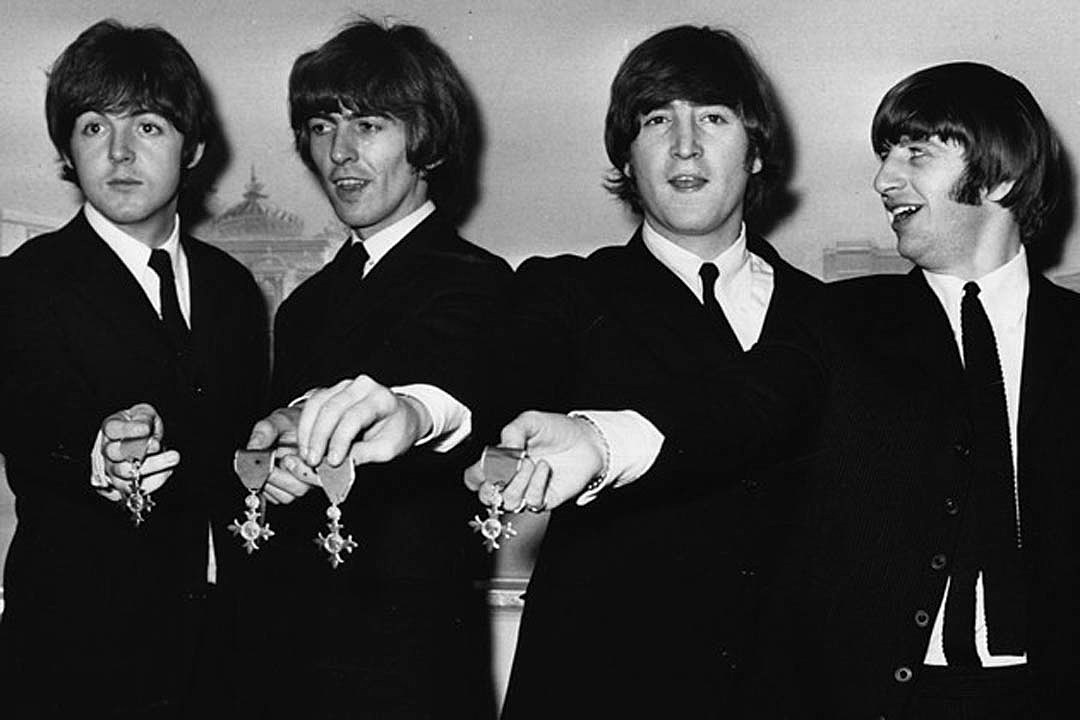
Just a few years after I got bullied in 1959 or 1960 as a seventh or eighth grader, along came the Beatles. John Lennon, Paul McCartney, George Harrison, and Ringo Starr defied the norms of their day by growing their hair long. Strange as it may seem now, they got accused of effeminacy. Yet within a year or so, young American white men were likewise growing their hair long.

Black men such as Jimi Hendrix followed suit:

Jimi Hendrix

As did black women such as Diana Ross:

Diana Ross

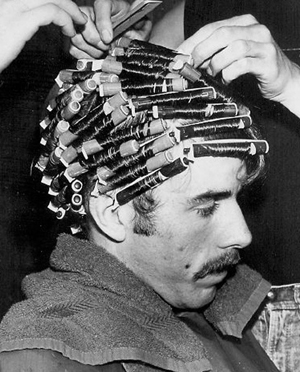
By the 1970s, numerous young whites (female and male) were getting permanents that yielded an Afro look.


The old stigmas were gone. It had not only become OK for men to grow long hair, it was even OK for white girls and boys to sport curly or kinky hair. A number of of our cultural norms had been (at least temporarily) repealed.


*****


What hadn't been repealed, though, was our human tendency to impose cultural norms in the first place, and to bully those who don't conform. Apparently, though, the norms that were still in force in Brazil in the 1960s and '70s concerning race, color, and hair type didn't change. This is why letting one's hair grow out naturally curly or kinky still carries a political message in today's Brazil.

I don't think we can change human nature. But we can alter how we express our intrinsic human nature:

  • We can cease to be slaves to our worst, most inhumane tendencies.
  • We can teach our children to celebrate, rather than malign, our differences.
  • We can stop bullying one another.


Monday, June 18, 2018

On Relationalism, Part II

Or, "Harmony of the Soul: Lessons from Dead Man Walking."

Profundity from John Kelly's column in a recent Washington Post, "An unnerving Father’s Day gift has left me pondering portraiture — and the soul":

We’ve all heard about people from primitive cultures who fear photography, certain it will steal the soul. But some modern people have felt that way, too. In his memoir, the 19th-century French photographer Félix Nadar wrote that writer Honoré de Balzac believed physical bodies were made of layers of ghostly images that were laid atop one another like thin skins.

Balzac, Nadar wrote, “concluded that every time someone had his photograph taken, one of the spectral layers was removed from the body and transferred to the photograph. Repeated exposures entailed the unavoidable loss of subsequent ghostly layers, that is, the very essence of life.”

Honoré de Balzac,
photo by Nadar
Ghostly layers of the body, peeled away by photographic portraiture? I think this recondite notion is really a metaphor for the layers of the human soul, not of the physical body. I think a photo can indeed transfer one of the laminae of the soul — again, speaking metaphorically — to a piece of paper or onto a web page.

In my earlier post "On Relationalism, Part I," I talked about my belief that the "stuff" of reality actually consists of a set of relationships and is not merely an aggregate of individual, separate entities that are only secondarily in relationship with one another.

I used the analogy of a seesaw:


A seesaw is only a seesaw when a plank is balanced on a fulcrum. Otherwise, it's just a plank lying by itself on the ground and, quite separately, some sort of "upright pointy thing."

Now let me add that a seesaw is only really a seesaw when the two children we see silhouetted in the picture are playing on it. The kids are an essential part of the seesaw relationship.

OK, I admit that all this is more than a bit recherché and abstruse. You ask, what's the point? I'll try to answer that question now. To do so, I'd like to talk about the movie Dead Man Walking. (The following constitutes a spoiler for the ending of the movie, so stop reading now if you don't want the outcome spoiled.)

Dead Man Walking is the real-life story of a relationship that develops between a Catholic nun, Sister Helen Préjean (played by Susan Sarandon), and a convicted killer, Matthew Poncelet (Sean Penn). Poncelet is on death row in a Louisiana prison after a jury has found him guilty of involvement in the killing of a young couple who were engaging in private intimacies while parked in a car in the woods. The young woman was raped and then shot. Her boyfriend was shot to death.

Poncelet, desperate to escape death by lethal injection, has written to Sister Helen to get her help in obtaining a new trial. Sister Helen is not, at the outset, sure why she's agreed to see him at all. When she first visits him, she finds his personality reprehensible. She can't stand the man — and neither can we, the movie's audience.

Though Poncelet adamantly maintains his innocence of committing either murder or rape, she does not feel his tale of innocence matches his personality type. Yet she has a vague notion that her Christian duty means that she mustn't simply spurn him.


Over the course of the relationship between Sister Helen and Poncelet as it develops, she focuses mainly on the fact that he is refusing to own up to the horror of what he did. He, on the other hand, insists that he did nothing except, while under the influence of liquor and drugs, bend to the will of the other man involved in the rape-murder. He, Poncelet, claims he even tried to stop the other man from carrying out his heinous acts.

Sister Helen keeps on visiting Poncelet in prison. Meanwhile, she takes it upon herself to visit with the families of the dead young man and woman, to offer aid and succor. The boy's father meets with her — his wife has left him in the wake of the loss of their son — but refuses to give up his justifiable anger. The girl's parents prove to be even angrier.

Weeks and months go by. The lawyer whom Sister Helen has interested in the Poncelet case tries every available legal strategy to get Poncelet's conviction set aside. None of the strategies pay off. With the day of Poncelet's execution rapidly approaching, that man on death row gets Sister Helen to arrange for him to take a lie detector test. The test is inconclusive. Either Poncelet is lying, or the stress he is naturally under as his execution day approaches has kept him from responding conclusively on the polygraph.

Sister Helen feels intuitively that Poncelet is lying, as much to himself as to the rest of the world. Then the day of his execution arrives. As promised, Sister Helen comes to the prison to stand beside him. This is not because she thinks him innocent, but out of the Christian realization of "the example of Jesus who said that every person is worth more than their worst act."

With just minutes left to live, Matthew Poncelet finally unburdens himself to Sister Helen. He admits, as much to himself as to her or to God, that he was in fact the one who put the fatal bullet in the young victim's head, and that he also took part in the rape of the young woman just before the other perpetrator shot her. Poncelet is now what he never could have been before: truly sad about the pain he has caused the families of his victims. It is a scene in which Sister Helen, like the movie's audience, realizes that in his act of self-honesty and repentance, Matthew Poncelet has finally found God.

As Poncelet takes his final walk to the execution chamber, Sister Helen walks behind him while placing her hand on his shoulder, steadying him. She stills his fear by telling him, "Christ is here."

*****

Diagrammatically, it is as if Sister Helen and Matthew Poncelet match up with the two individuals shown as children silhouetted on a seesaw in the illustration above. And the fulcrum between them is ... Jesus Christ. He is present in the finally fully truthful relationship the nun and the man have at last established within and between themselves at the eleventh hour of the man's appointed time on earth.

But keep in mind that Sister Helen's and Matthew Poncelet's relationship with one another was cemented well before he broke down and repented his acts to her at the eleventh hour ... and well before she arrived at the full self-knowledge by which to explain why she kept going back to the prison to visit Poncelet.

What was going on at that earlier stage of their relationship? I'd say the relationship was at that point one that had been established between two of the shallower layers of their respective psyches.

But neither person was yet being fully honest with themselves, or with each other. Yes, they were already bound together in a relationship that would eventually lead to full self-understanding and reciprocal honesty between them.

Just as David Brooks, in his op-ed piece "Personalism: The Philosophy We Need," tells us "people are always way more complicated than you think," Dead Man Walking tells us the same thing. We see two people, Sister Helen Préjean and Matthew Poncelet, who are as yet only in touch with at best an "outer" layer of their human soul. Yet the movie also winds up showing us the fullness of what every one of us truly is. It shows us, that is, the Christ within.


*****

The many layers of a human soul are a prime example of what I'm calling relationalism. One way to visualize those layers in their relational complexity comes from the nature of musical chords.

A musical chord is a combination of notes being sounded together. The piano notes C, E, and G, played together, make up a C major triad. In general, a "triad" is any group of three notes played together. If you play the notes, not together, but in rapid succession, you have "arpeggiated" the chord.

If the C of the C major chord C-E-G is the lowest note that you play, the chord is in "root position." The "root" of the C major chord is, unsurprisingly, C. The C major chord C-E-G is in root position if the lowest note that is being sounded is C — no matter whether you arpeggiate the chord or not.

Suppose you move the note C up one octave on the piano keyboard. Now the C major triad can be played as E-G-C rather than C-E-G. E-G-C is the "first inversion" of the C major triad C-E-G. It has E as the lowest note that is being sounded. It sounds noticeably different from C-E-G ... and yet the ear can also tell it's the same C major chord.

The same is true of the "second inversion" of the C major triad, G-C-E. The second inversion is achieved by moving both C and E up an octave, making G the lowest note that is being sounded. The ear somehow "knows" that G-C-E, E-G-C, and C-E-G are all in some way the "same" chord, even when different notes of the chord are the lowest sounded notes. And this is true whether the notes of the chord are sounded at exactly the same time or are arpeggiated in rapid succession.

I'd like to extend the analogy, now, by saying that root-position triads and their first and second inversions are all equally "legitimate." G-C-E, E-G-C, and C-E-G are all, if put in terms of music theory, equally harmonious. They all have just as good a place in the grand scheme of things.

The real question is, indeed, one of harmony. When the notes are in proper harmony, the music is sweet. When the many layers of the human personality are in harmony with one another, the soul is sweet.

That, I think, is what it means to find the Christ within: to experience the harmony that comes when the various layers of our psyche are all in perfect accord with one another.

Matthew Poncelet found that perfect accord just before he was put to death by lethal injection. And in finding out why she needed to be there, walking behind him, consoling him, Sister Helen likewise found the Christ within her own soul.

The analogy between musical harmony and soul harmony explains why every human is "different, yet the same." We are all, in so many ways, different. Some of us are men, some women. Some of us are laborers, some lawyers. Some of is are conservatives, some liberals. Yet, just as G-C-E, E-G-C, and C-E-G are all equally harmonious versions of the C major triad, all of us have an equal potential for establishing our soul harmony, the Christ within.